
By Ginsburg Law Group | TCPA & Robocall Rights
Two New Jersey consumers told a solar company to stop calling. They say the calls kept coming, sometimes almost daily, from a different phone number each time. On November 16, 2026, a federal judge dismissed their lawsuit anyway.
The calls weren’t found to be legal. The court said the complaint didn’t explain how they knew the later calls came from the company they sued. That gap trips up a lot of consumers, and it’s one you can close yourself, starting with the next unwanted call.
The case
In Oguekwe v. Momentum Solar, LLC, No. 3:25-cv-18758 (D.N.J.), Judge Georgette Castner granted the company’s motion to dismiss without prejudice (memorandum opinion on GovInfo; docket).
As described in the opinion, the complaint alleged:
- One plaintiff had his cell number on the National Do Not Call Registry since 2008. During a November 13, 2025 call, he said he was “being very polite and clear that I do not want to continue this call.” The caller allegedly answered, “yea but you haven’t hung up have you? So let’s talk about our options.” He then got roughly 10 to 15 more calls, including five in one day.
- The other plaintiff got a November 4, 2025 call from someone who identified as Momentum Solar. He asked to be put on the company’s internal do-not-call list. He says he got two more calls the next day and eight more over the following week, each from a different number.
They sued under the TCPA’s do-not-call rules: the national registry rule (47 C.F.R. § 64.1200(c)) and the rule requiring telemarketers to keep and honor their own internal do-not-call lists (§ 64.1200(d)).
Why the court dismissed it
A do-not-call claim under 47 U.S.C. § 227(c)(5) requires more than one call within 12 months “by or on behalf of the same entity.” Each plaintiff could tie the first call to the company, but one call isn’t enough.
For the later calls, the judge found the complaint listed only dates and phone numbers. It didn’t say who was calling, what they said, or how the calls resembled the first one. The plaintiffs pointed out that the numbers shared an 888 area code. The court said that proves little, because 888 is a common toll-free prefix that many businesses use. A general statement that the calls were “for the purpose of soliciting Defendant’s solar power products” was too conclusory.
The important part for consumers: the dismissal was without prejudice and with leave to amend. The plaintiffs can file an amended complaint that adds the missing details. This was a pleading problem, not a ruling that the calls were legal.
The lesson: link every call to a company
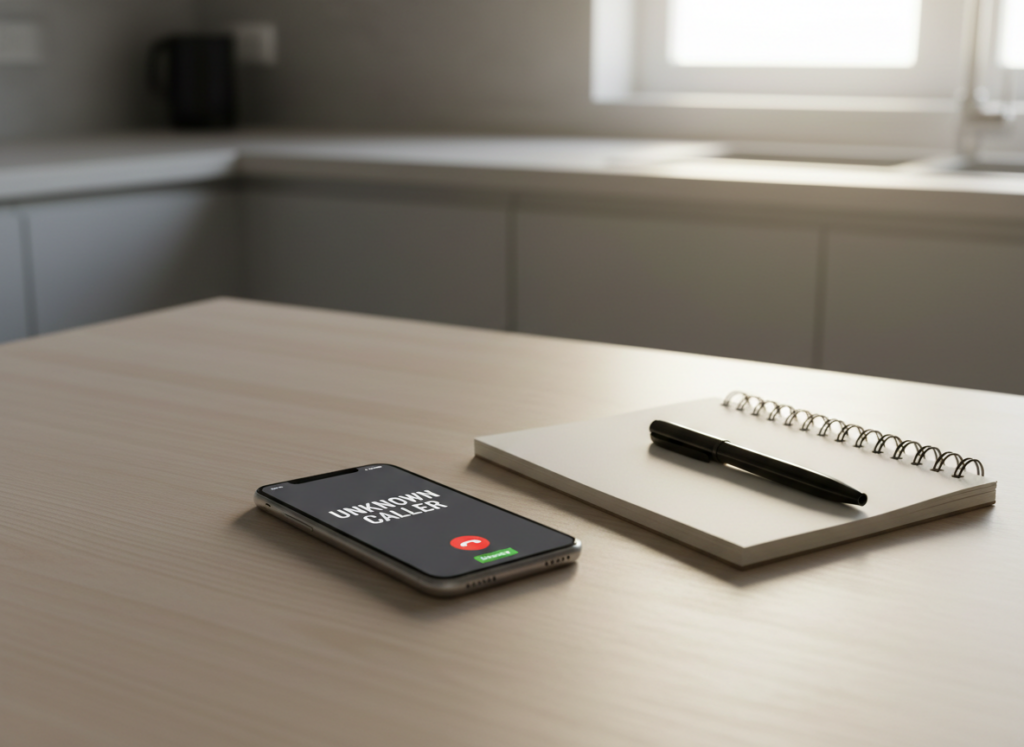
Telemarketers often rotate or “spoof” caller-ID numbers, so the number alone rarely proves who called. Courts look for facts like these:
- The caller’s name for the company. Did they say “Momentum,” “a solar program,” or a company name you can write down?
- What they were selling. Same product, same pitch, same script as the earlier call?
- Callback numbers and websites. If they gave you a number or website, write it down. Calling the number back, or visiting the site, can show who answers.
- Follow-up texts or emails. A confirmation email, appointment text or quote from the company after a “random” call is strong evidence.
- Voicemails and recordings. Keep every voicemail. Where your state allows it, recording the call can help; check your state’s consent-to-record rules first.
- The salesperson’s name and any reference number they mention.
Our guides on building a strong TCPA case without becoming a spam detective and keeping a paper trail include simple log templates.
A simple question that helps
When a sales caller won’t identify the company, it’s fair to ask: “What company are you calling on behalf of, and what’s your callback number?” Write down the answer, or note that they refused. If a lead generator calls on someone else’s behalf, the company that benefits may still be responsible. That’s the idea behind vicarious liability in TCPA cases. You still need facts that connect the call to that company.
Your rights when you say “stop”
- Internal do-not-call lists: Telemarketers must keep a do-not-call list, have a written policy available on request, train their staff, and honor your request within a reasonable time (§ 64.1200(d)).
- National registry: Sales calls to a number registered for at least 31 days are generally prohibited unless an exception applies (§ 64.1200(c)(2)). Register at donotcall.gov.
- Damages: Up to $500 per violating call, and up to $1,500 per call if the violation was willful or knowing (§ 227(c)(5)).
Saying “stop” is your right. Writing down when you said it, and who you said it to, is what turns that right into a claim.
Still getting sales calls after you said stop? Contact Ginsburg Law Group. Bring your call log and voicemails, and we’ll help you figure out who is really behind the calls.
This article is for general information only and is not legal advice. Reading it does not create an attorney-client relationship. Case descriptions are based on the court’s opinion and the allegations it summarizes.