

By Ginsburg Law Group | TCPA & Robocall Rights
If you live in Texas and your phone fills up with marketing texts you never asked for, two federal courts in your state just made it harder to sue under federal law. But that isn’t the end of the story. Texas has its own telemarketing laws, and the Legislature expanded them in 2025 to cover text messages.
Here’s what happened, what it means for you, and what to do the next time a spam text arrives.
What the courts decided
Dallas, November 16, 2026. In Starling v. What If Holdings LLC, No. 3:26-cv-01039 (N.D. Tex.), Senior U.S. District Judge Jane J. Boyle dismissed a proposed class action over at least 24 unwanted marketing texts sent to a number on the National Do Not Call Registry (docket; memorandum opinion). The court didn’t find that the texts were wanted. It held that a text message is not a “telephone call” under 47 U.S.C. § 227(c)(5), the part of the Telephone Consumer Protection Act (TCPA) that lets people sue over do-not-call violations.
The judge relied on the ordinary meaning of “telephone call” and on the fact that Congress added the words “text message” to other parts of the TCPA in 2018 and 2019 but not to this one. A second claim, based on the FCC’s caller-ID rule for telemarketers, failed for the same reason. The dismissal was without prejudice: the plaintiff may amend by December 1, 2026, but only with facts beyond the texts themselves.
Houston area, November 6, 2026. In Siringi v. Crust Pizza Co., No. 4:25-cv-04266 (S.D. Tex.), U.S. District Judge Drew B. Tipton reached the same conclusion about § 227(c)(5) and dismissed the federal claims (docket; order).
Texas courts don’t all agree. Other federal judges in Texas have held earlier this year that texts are calls under the same provision, including in Duron v. Kings Capital Holding (W.D. Tex.) and Alvarez v. Fiesta Nissan (S.D. Tex.). The Fifth Circuit, the appeals court that covers Texas, has not resolved the question. Nationally, the Seventh Circuit has sided with the narrow reading, a trend we covered in Courts Keep Saying Texts Aren’t “Calls” and Two Courts Just Narrowed the Do-Not-Call Rules.
The detail Texans should notice
The Siringi order contains an important point for consumers. The defendant argued that once the federal claim failed, the Texas claim had to fail too. Judge Tipton disagreed.
Texas Business & Commerce Code § 305.053 lets a person who receives a communication that violates the TCPA, a regulation adopted under it, or Texas’s own rules sue the person who originated it. The court said the lack of a federal private right of action under § 227(c)(5) “does not by itself establish” that a Texas claim based on an FCC regulation fails. It hasn’t decided yet whether that claim survives, and other Texas federal courts have treated the federal and state claims as rising and falling together. So this is an open question, but it’s a live one.
Damages under § 305.053 track the TCPA: the greater of $500 per violation or actual damages, up to $1,500 per violation (or three times actual damages) if the violation was knowing or intentional.
Texas law now says texts count
In 2025 the Texas Legislature passed Senate Bill 140, effective September 1, 2025 (enrolled bill text). It changed the definition of “telephone solicitation” in Chapter 302 of the Business & Commerce Code to include “a transmission of a text or graphic message or of an image” sent to get someone to buy, rent, claim or receive something. Its key effects:
- Seller registration. A seller generally may not make telephone solicitations to a purchaser in Texas without a registration certificate from the Texas Secretary of State (§ 302.101). Marketing texts now fall inside that rule. The chapter has a long list of exemptions, so not every business must register.
- Deceptive Trade Practices Act. A Chapter 302 violation is a false, misleading or deceptive act under the Texas DTPA, and DTPA remedies may be used to enforce it (§ 302.303). SB 140 added the same DTPA hook to Chapter 304 (the Texas no-call list) and Chapter 305.
- Civil penalties. Violating Chapter 302 carries a civil penalty of up to $5,000 per violation (§ 302.302).
- Repeat claimants. SB 140 says recovering under these laws more than once can’t be used to limit a later claim.
The Texas no-call list law already defines “telephone call” to include texts and images sent to a mobile number (§ 304.002). Its private lawsuit right has preconditions, including notifying the telemarketer and filing a verified complaint with a state agency within 30 days (§ 304.257), so get advice before relying on it.
These state rules apply only to conduct on or after their effective dates. They also come with exemptions and procedural requirements, such as the DTPA’s pre-suit notice rule, that a lawyer should check for your situation.
Federal protections that still apply to texts
The federal rulings are narrower than they sound:
- Autodialed texts. The Siringi court dismissed the federal autodialer claim because the complaint didn’t plead enough facts about the dialing system, not because texts fall outside § 227(b). Texts sent with true autodialer technology can still violate federal law.
- Opt-outs. The FCC’s revocation rules require businesses to honor a “STOP” sent by any reasonable means, and new requirements take effect November 25, 2026. See our guide to the FCC’s new opt-out rules.
- Voice calls are unaffected. If the same company also called you, those calls can support a do-not-call claim.
What to do when the spam texts come
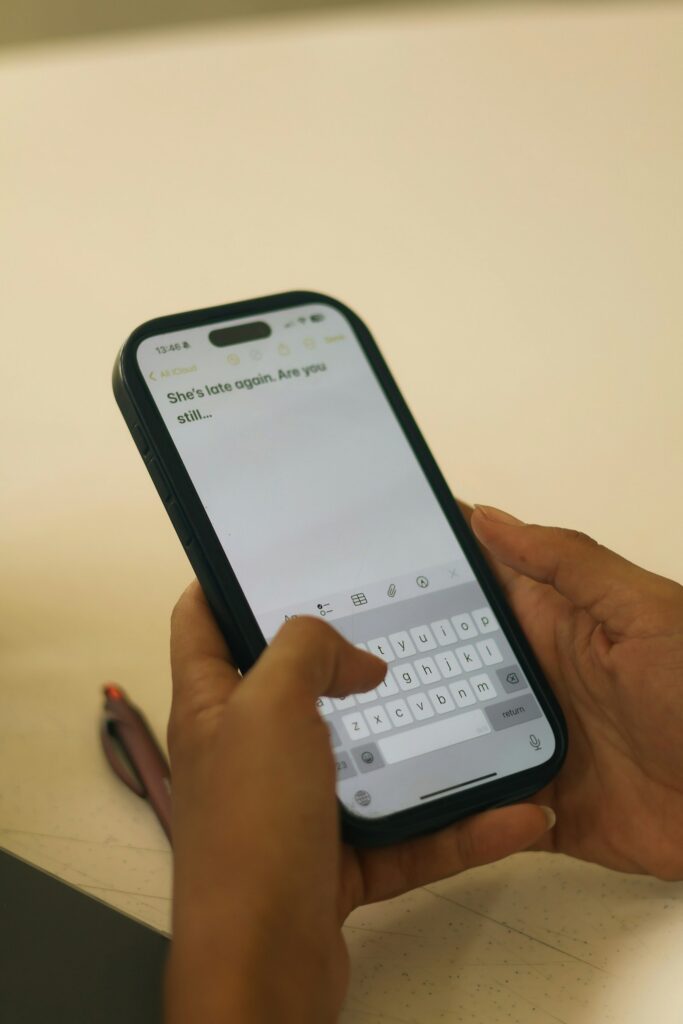
1. Screenshot everything. Capture the sender number, date, time, full message and any links or company names.
2. Reply STOP once, then screenshot the reply and any confirmation. Every text after that is evidence.
3. Register your number on the National Do Not Call Registry and the Texas No Call list.
4. Identify the seller. Note the website, the product and any business name in the text. Under SB 140 the seller’s registration status may matter, and a lawyer can check it.
5. Write down any calls too. A voice call from the same company changes the federal analysis.
6. Don’t wait. Evidence on your phone disappears when you delete threads or change devices.
Getting marketing texts in Texas that won’t stop? Contact Ginsburg Law Group. Bring your screenshots, and we’ll look at both your federal and Texas options.
This article is for general information only and is not legal advice. Reading it does not create an attorney-client relationship. Case descriptions are based on the courts’ published orders; the law in this area is changing quickly.