

More Than an Annoyance: The Real Harm Robocalls Cause Consumers and Why Congress Passed the TCPA
Ginsburg Law Group, P.C. | Consumer Protection & TCPA Litigation
It’s Not Just a Phone Call. It’s an Invasion of Your Life.
Your phone rings in the middle of dinner.
You answer because it might be your child’s school, a family member, or an important medical appointment.
Instead, you hear a prerecorded voice trying to sell you something.
Later, your phone rings again. This time, it’s a different number. Tomorrow, there may be another call. And another.
You block the numbers, but the calls continue.
Eventually, you stop answering calls from numbers you don’t recognize.
And that’s when the real harm becomes apparent.
You have changed the way you use your own telephone because other people refuse to respect your privacy.
Robocalls are often dismissed as an everyday annoyance. But Congress recognized decades ago that unwanted automated and prerecorded calls can cause real harm.
They invade people’s homes, interrupt their work, disturb their sleep, exploit their trust, and interfere with their ability to communicate.
For some consumers, they create financial risks. For others, they cause anxiety, frustration, and a persistent feeling of being harassed.
For nearly everyone subjected to repeated unwanted calls, they take something valuable: time, privacy, and peace of mind.
That is why the Telephone Consumer Protection Act exists.
The History of the TCPA: Congress Recognized the Problem in 1991
The Telephone Consumer Protection Act, commonly known as the TCPA, was enacted in 1991 in response to growing concerns about intrusive telemarketing and automated telephone technology.
As businesses gained the ability to place large numbers of calls at relatively little expense, consumers increasingly faced unwanted solicitations and prerecorded messages.
Congress recognized that automated calling technology could allow businesses to reach thousands of people while shifting much of the burden of those communications onto the people receiving them.
The problem was not simply that consumers disliked advertisements.
It was that telephone marketing could intrude into private spaces, interrupt daily activities, and impose costs on people who never asked to be contacted.
In the TCPA’s legislative findings, Congress recognized that:
“Unrestricted telemarketing … can be an intrusive invasion of privacy.”
Congress also recognized that many consumers considered automated or prerecorded calls a nuisance and an invasion of privacy, regardless of the content of the message.
The law was designed to address these harms while balancing legitimate commercial communications and other protected interests.
What Did the TCPA Do?
The TCPA established restrictions on certain automated and prerecorded telephone calls and authorized regulatory protections against unwanted telephone solicitations.
Over time, federal regulations and statutory amendments added and refined consumer protections, including do-not-call requirements.
The law also created private remedies for certain violations, allowing consumers to pursue statutory damages without necessarily having to establish a specific financial loss.
The basic principle was straightforward:
Consumers should not be forced to surrender their privacy simply because technology makes it inexpensive for businesses to contact them.
More than three decades later, that principle remains important.
1. Robocalls Invade Personal Privacy
One of the most significant harms caused by unwanted robocalls is the intrusion into personal privacy.
Our telephones are not merely marketing channels.
They are how we communicate with family members, friends, doctors, schools, employers, and emergency contacts.
A phone number is often an essential part of daily life.
When a business uses automated technology to place unwanted calls, it enters that personal space without necessarily having permission to do so.
The intrusion may occur while someone is working, resting, spending time with family, or dealing with an important personal matter.
Unlike an advertisement that someone can choose to read or ignore, a ringing telephone demands immediate attention.
Even when a consumer does not answer, the call may interrupt an activity, trigger a notification, or require the person to determine whether the communication is important.
Repeated calls can make that intrusion feel constant.
Privacy is not just about keeping personal information secret. It is also about having control over when and how other people interrupt your life.
2. Robocalls Steal Consumers’ Time
Every unwanted call takes time.
It may take only a few seconds to look at a ringing phone and reject a call.
But those seconds add up.
Consumers may spend time answering calls, listening to recorded messages, blocking numbers, documenting calls, requesting removal from calling lists, and trying to identify the companies responsible.
They may have to contact businesses repeatedly to demand that the calls stop.
Some consumers spend hours attempting to resolve problems they never created.
And when calls occur during work, the disruption may interfere with concentration, productivity, or employment responsibilities.
Consider a person who receives several unwanted calls each day.
Even if each call causes only a brief interruption, the cumulative effect over weeks or months can be substantial.
The business placing the calls may view each attempt as inexpensive.
But the consumer bears the cost of the interruption.
A business’s inexpensive marketing strategy should not become a consumer’s daily burden.
3. Robocalls Can Cause Stress, Anxiety, and Emotional Distress
The harm caused by unwanted calls is not always visible.
For someone already managing financial difficulties, health concerns, family responsibilities, or other stressful circumstances, repeated unwanted calls can add to an existing burden.
The phone rings.
The consumer wonders whether the call is important.
They answer, only to discover another unwanted solicitation.
Or they ignore the call and worry that they may have missed something important.
This cycle can create frustration and uncertainty.
Some consumers may feel powerless when calls continue despite repeated requests to stop.
Others may become concerned that their personal information has been shared or that they are being targeted by fraudulent callers.
The experience can be particularly distressing for people who are already vulnerable or who rely heavily on their telephones for essential communications.
Not every unwanted call causes clinically significant emotional distress. But repeated intrusions can create meaningful stress and frustration even when they do not result in a medical diagnosis.
Consumers should not have to prove that an unwanted call caused a medical condition before their privacy deserves protection.
4. Robocalls Disrupt Sleep, Work, and Family Life
A call that arrives at the wrong time can cause harm far beyond the few seconds it takes to answer.
Consider a nurse who works overnight and sleeps during the day.
Or a parent who finally gets a baby to sleep.
Or an employee who is interrupted during an important meeting.
Or an older adult who struggles to reach the phone, only to discover that the call is another recorded advertisement.
For these consumers, unwanted calls may disrupt rest, concentration, and daily routines.
A single call may seem insignificant to the business making it.
But the business often has no idea what the person receiving the call is doing.
And when the same consumer receives repeated unwanted calls, the cumulative disruption can be much greater.
The TCPA recognizes that consumers have legitimate interests in being free from certain intrusive calling practices.
Those interests do not disappear simply because a business wants to generate another lead.
5. Robocalls Can Make Consumers Afraid to Answer Their Phones
One of the most troubling consequences of widespread unwanted calling is the erosion of trust in telephone communications.
Consumers who repeatedly receive unwanted calls may begin ignoring unfamiliar numbers altogether.
That response is understandable.
But it creates a new problem.
A legitimate call from a doctor’s office, school, employer, delivery service, or emergency contact may come from an unfamiliar number.
When consumers no longer trust incoming calls, they may miss important communications.
This is a broader harm that extends beyond the individual unwanted call.
The telephone becomes less useful because consumers can no longer reliably distinguish legitimate communications from unwanted solicitations and potential scams.
A communication system that people are afraid to answer is a communication system that is no longer serving them as well as it should.
6. Robocalls Can Expose Consumers to Fraud and Financial Exploitation
Not every robocall is fraudulent.
Some are legitimate communications. Others are unlawful marketing calls. Still others are used to facilitate scams.
But automated calling technology can be used by bad actors to reach large numbers of potential victims quickly and inexpensively.
Fraudulent callers may impersonate government agencies, banks, insurance companies, technology providers, or other trusted organizations.
They may claim that a consumer owes money, faces arrest, has a compromised account, or must act immediately to prevent a financial loss.
These calls can be especially dangerous when they use fear, urgency, or deception to pressure consumers into sharing information or sending money.
Older adults and other vulnerable consumers may face particularly serious consequences when a fraudulent call succeeds.
The harm can include financial losses, identity theft, exposure of sensitive information, and emotional distress.
Although the TCPA does not prohibit every fraudulent call or provide a remedy for every telephone scam, restrictions on certain automated calling practices are part of a broader framework of consumer protection.
Consumers should not have to constantly question whether answering their own telephone will expose them to a scam.
7. Repeated Calls Can Make Consumers Feel Powerless
Perhaps one of the most frustrating aspects of unwanted robocalls is the feeling that there is no effective way to make them stop.
A consumer asks to be removed from a calling list.
The calls continue.
The consumer blocks a number.
Another number appears.
The consumer tells a representative not to call again.
Days later, the telephone rings with another solicitation.
When this happens repeatedly, consumers may feel that businesses have more control over their telephones than they do.
That is precisely why meaningful consumer protection laws matter.
Depending on the type of call and applicable legal requirements, businesses must comply with valid consent revocations and do-not-call requests.
The right to say “stop calling me” should have real meaning.
And when businesses violate applicable requirements, consumers may have legal remedies.
8. Why the TCPA Allows Damages Even Without a Financial Loss
One of the most important features of the TCPA is that certain violations can support statutory damages without requiring consumers to prove that they lost money.
Why?
Because many of the harms associated with unwanted calls are difficult to quantify.
How much is a disrupted family dinner worth?
What is the financial value of being awakened after a long work shift?
How do you put a price on repeatedly having to answer calls from businesses you never wanted to hear from?
What is the value of being able to answer your telephone without fear of another unwanted solicitation?
These harms may be real even when they do not generate medical bills, lost wages, or other easily documented financial losses.
Congress provided statutory damages for covered violations, generally $500 per violation, with the possibility of an award of up to $1,500 for knowing or willful violations.
These statutory remedies can make enforcement possible even when the financial impact of an individual call would be difficult to prove.
Not every unwanted call is actionable, and federal standing requirements and other legal defenses may affect whether a particular lawsuit can proceed.
Nevertheless, the statutory damages framework reflects the importance of protecting consumers from prohibited calling practices.
9. The Harm Is Multiplied When Businesses Call Thousands of People
An unwanted call affects one consumer at a time.
But automated calling technology can allow a business to contact thousands or even millions of people.
That means a single unlawful calling campaign may produce widespread intrusions into consumers’ lives.
Each call may interrupt a different person.
Each recipient may be working, sleeping, caring for children, managing a medical issue, or simply trying to enjoy a quiet moment.
When unlawful calling practices are repeated on a large scale, the cumulative harm becomes significant.
That is also why the financial consequences for businesses can be substantial.
Under applicable TCPA provisions, a business responsible for 10,000 actionable violations could face theoretical statutory damages of $5 million, potentially reaching $15 million if maximum enhanced damages were awarded for every violation.
Actual liability and recoveries depend on the facts, defenses, applicable law, and judicial determinations.
But the underlying point remains:
When a business unlawfully calls thousands of consumers, it is not committing one harmless marketing mistake. It may be invading thousands of people’s privacy.
10. The TCPA Is About People, Not Just Penalties
Discussions about the TCPA often focus on lawsuits, settlements, and statutory damages.
Those remedies are important.
But they are not the reason consumers need protection.
The TCPA exists because unwanted automated and prerecorded calls can interfere with people’s daily lives and privacy.
The law is about the parent who wants to answer a call from a child’s school without hearing another sales pitch.
The employee who wants to work without constant interruptions.
The older adult who should not have to worry that every unfamiliar caller is attempting a scam.
The consumer who has asked a company to stop calling and deserves to have that request respected.
And the person who simply wants to enjoy a quiet evening without repeated unwanted solicitations.
These are ordinary people asking for something reasonable.
Leave them alone when the law says they have the right to be left alone.
What Consumers Can Do to Protect Themselves
If you are receiving repeated unwanted calls, consider taking the following steps:
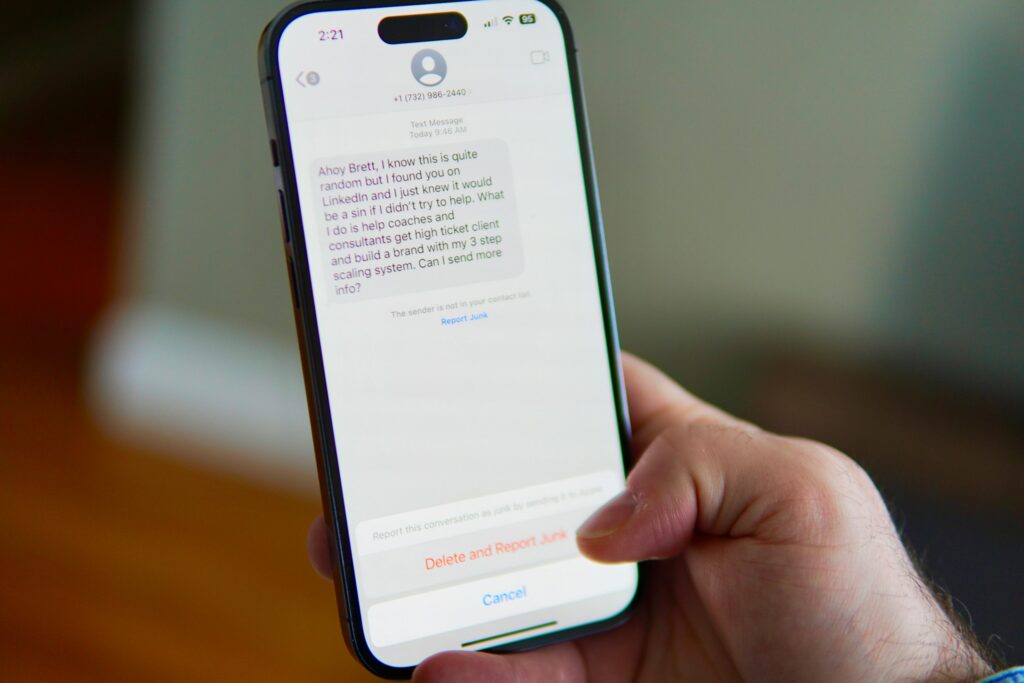
- Save your call history. Preserve screenshots showing the telephone numbers, dates, and times of unwanted calls.
- Keep voicemails and prerecorded messages. These may help identify the caller and establish the nature of the communication.
- Document requests to stop calling. Keep copies of written requests and notes about verbal requests, including when and how they were made.
- Register eligible numbers on the National Do Not Call Registry. Visit https://www.donotcall.gov.
- Be cautious about sharing personal information. Do not provide sensitive financial or identifying information merely because someone calls claiming to represent a trusted organization.
- Learn whether you have legal rights. A consumer protection attorney can evaluate whether the calls may violate the TCPA or other applicable laws.
More Than 35 Years After Congress Acted, Consumers Still Deserve Protection
Congress enacted the TCPA in 1991 because it recognized that technology could make intrusive telephone marketing easier and more widespread.
The technology has changed dramatically since then.
Consumers now carry telephones almost everywhere they go. Their phones are used for work, family communications, medical appointments, banking, education, and emergencies.
That makes unwanted calls potentially even more disruptive to modern life.
The need for consumer privacy has not disappeared.
If anything, the central principle behind the TCPA remains as relevant as ever:
People deserve control over their own telephones and protection from calling practices that violate the law.
Businesses should not treat consumer privacy as an obstacle to sales.
They should treat it as a fundamental responsibility.
Because the true cost of robocalls is not measured only in statutory damages, settlements, or litigation expenses.
It is measured in the time consumers lose, the interruptions they endure, the trust they surrender, and the peace of mind they deserve.
Robocalls are not always just an annoyance. They can cause real harm. And consumers have every right to expect better.
Receiving Unwanted Robocalls? Know Your Rights.
At Ginsburg Law Group, P.C., we represent consumers in matters involving the Telephone Consumer Protection Act and other federal and state consumer protection laws.
If you are receiving repeated unwanted telemarketing calls, prerecorded messages, or calls after asking a company to stop, you may have legal rights.
Our team can review the circumstances and help determine whether a violation may have occurred.
Ginsburg Law Group, P.C.
Website: https://www.ginsburglawgroup.com
Phone: 855-978-6564
Attorney Advertising. This article is intended for general informational purposes and does not constitute legal advice. Not all unwanted calls violate the TCPA. Available remedies depend on the specific facts and applicable law. Prior results do not guarantee similar outcomes. Contacting the firm does not establish an attorney-client relationship.