
If you’ve ever noticed that an item rang up for more than the shelf tag said, you’re not alone. According to a new federal lawsuit, it happens at Dollar General often enough that the company logged more than 29,000 complaints about it in just over three years.
On October 26, 2026, the Federal Trade Commission and 20 states sued Dollar General Corporation in the U.S. District Court for the Middle District of Tennessee. The complaint alleges the chain has, for years, charged customers more at the register than the prices shown on shelves, price tags, circulars, its website and its app, and failed to fix the problem despite knowing about it.
The states that joined are Alabama, Arizona, Arkansas, California, Connecticut, Florida, Illinois, Iowa, Kansas, Louisiana, Michigan, Mississippi, Nebraska, New Jersey, North Carolina, Ohio, Oklahoma, Tennessee, Utah and Wisconsin. (California’s claims are brought by Los Angeles County Counsel on behalf of the People of California.)
These are allegations. Dollar General has not yet responded in court, and no judge has decided whether the claims are true.
What the complaint alleges
- Tens of thousands of complaints. From January 1, 2023 through March 31, 2026, Dollar General received at least 29,265 customer complaints categorized as “Did Not Honor Marked Price,” from all 48 states where it operates.
- Failed state inspections. Most states test store pricing using a federal NIST procedure, where a store fails if more than 2% of sampled items are priced wrong. The complaint says Dollar General failed more than 39% of inspections in Kansas and more than 45% in Utah since 2023, and that Tennessee’s failure rate rose above 10% in early 2026, up from 5% in 2025. One Utah store allegedly failed ten inspections in a row.
- Undercover purchases, including in Pennsylvania and Maryland. The complaint describes 2026 test purchases in which 10% of items rang up wrong at a store in Sharpsburg, Pennsylvania, and 8.5% at a store in Baltimore, where every error was an overcharge. A Cleveland, Ohio store had a 22.4% error rate.
- Repeat settlements didn’t fix it. Between 2019 and 2026, Dollar General entered seven pricing settlements with six states and paid more than $6 million, including $1.2 million to New Jersey in 2023 and $1.55 million to Pennsylvania in 2025.
- Who gets hurt. The complaint stresses that about 80% of stores are in towns of 20,000 people or fewer and that households earning $35,000 or less make up 60% of the company’s revenue, so a few dollars per trip matters.
The legal claims
The FTC says the pricing is a deceptive practice under Section 5 of the FTC Act. It also brings an unusual second claim under the Gramm-Leach-Bliley Act, which bars using false statements to get people’s financial account information. The theory: by advertising one price and then charging a higher one when shoppers swipe a card or pay by check, Dollar General obtained their payment information through misrepresentations. That claim matters because it lets the FTC ask the court for refunds to consumers.
Each state adds claims under its own consumer protection law, including the Arizona Consumer Fraud Act, California’s Unfair Competition and False Advertising Laws, the Florida Deceptive and Unfair Trade Practices Act (with civil penalties of up to $10,000 per willful violation, or $15,000 when the victim is a senior or a person with a disability), the New Jersey Consumer Fraud Act and the Tennessee Consumer Protection Act.
The plaintiffs ask for a permanent injunction, money for consumers, civil penalties, disgorgement and fees. The complaint doesn’t name a dollar figure.
Why this matters if you’re in Pennsylvania or Maryland too
Pennsylvania and Maryland didn’t join this lawsuit, but stores in both states show up in the complaint. Pennsylvania’s 2025 settlement, like Colorado’s, requires Dollar General to post signs saying it will honor the lowest price when there’s a discrepancy. If you shop at a Pennsylvania Dollar General, look for that sign and point to it if you’re overcharged.
What to do at the register
- Snap a photo of the shelf tag or sale sign before you head to checkout, especially on sale items, “buy two, get one” deals and clearance.
- Watch the screen as items scan, or check your receipt before you leave the store. Several consumers in the complaint only noticed the overcharge at home.
- Ask for the posted price. Show the cashier or manager your photo. Many states’ weights-and-measures offices and attorneys general take price-accuracy complaints seriously.
- Report it. File a complaint with your state attorney general and at ReportFraud.ftc.gov. Those complaints are the kind of evidence this lawsuit is built on.
- Know you may have your own rights. Most state consumer protection laws let individuals sue, but the rules vary. Pennsylvania’s law, for example, requires a purchase and a real money loss. New Jersey’s Consumer Fraud Act allows triple damages and attorneys’ fees for consumers who prove a loss. A single small overcharge is rarely worth a lawsuit alone, but a pattern can support a larger case.
Hidden price increases at checkout are a cousin of the junk fees we’ve written about before. See our guide, Hidden Fees Are Finally Under Fire.
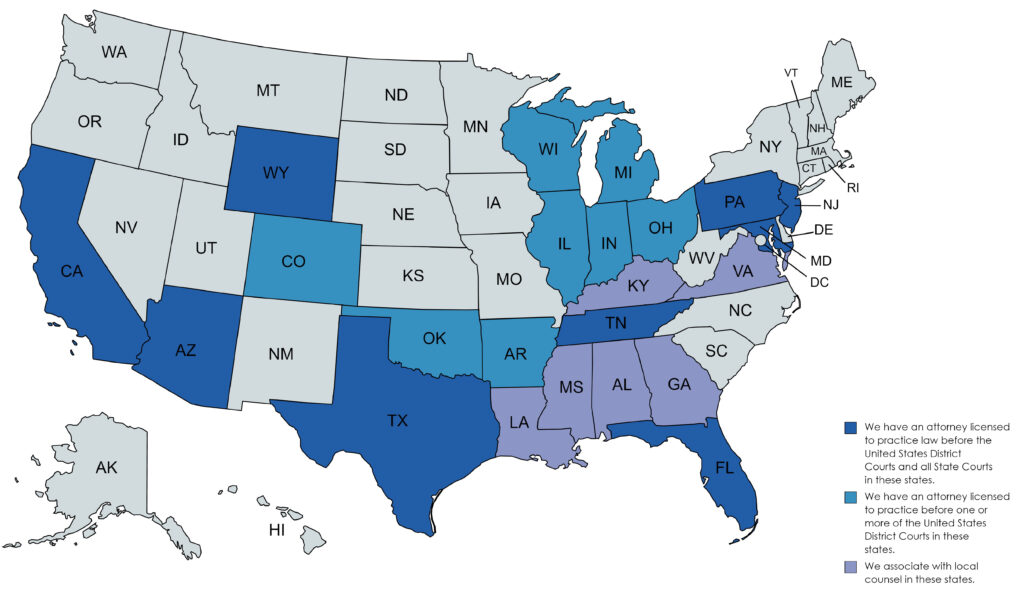
Ginsburg Law Group represents consumers in deceptive-pricing, consumer fraud and debt defense matters in Pennsylvania, New Jersey, Maryland, California, Texas, Tennessee, Arizona, Florida and Wyoming. If a business charged you more than it advertised, or the debt that followed is now in collections, contact us for a review.
This article is for general informational purposes only and is not legal advice. FTC et al. v. Dollar General Corporation is a pending lawsuit, and its claims are allegations only. Consumer protection laws vary by state. Consult a licensed attorney about your specific situation.
Authoritative Sources
- FTC: FTC and State Partners Sue Dollar General for Charging Consumers More than Advertised for Many Products (Oct. 26, 2026)
- Complaint, FTC et al. v. Dollar General Corporation (M.D. Tenn.)
- FTC case page: Dollar General Shelf Pricing
- CNBC: FTC sues Dollar General along with 20 states (Oct. 26, 2026)
- Report fraud to the FTC