For generations, participating in court meant one thing:
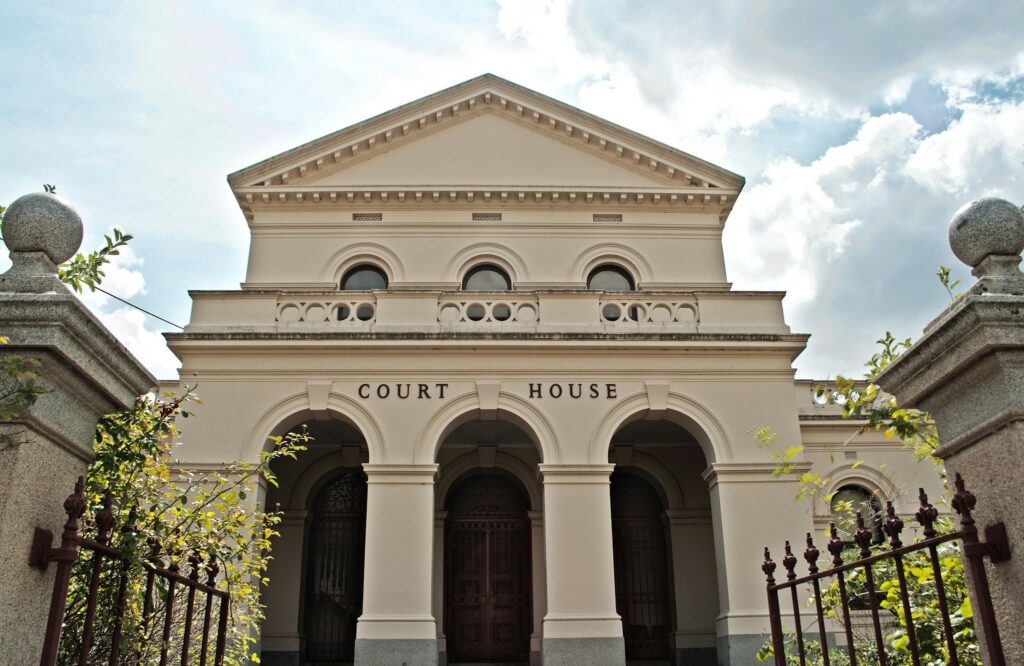
You went to the courthouse.
You drove downtown. You found parking. You went through security. You found the correct courtroom. You sat on a bench and waited for your case to be called.
Sometimes you waited 20 minutes.
Sometimes you waited three hours.
For lawyers, that inconvenience is part of the profession.
For an hourly employee, single parent, elderly litigant, person with a disability, or someone who lives an hour from the courthouse, it can be something much more serious.
It can determine whether that person participates in the case at all.
The rapid expansion of virtual court proceedings showed us that there is another way.
Zoom and other remote platforms aren’t appropriate for every proceeding. Jury trials, complicated evidentiary hearings, credibility-intensive matters, and certain other proceedings may benefit substantially from everyone being physically present.
But should a consumer really have to lose an entire day’s wages to appear for a five-minute scheduling conference?
Should a single mother have to arrange childcare, drive 45 minutes, pay for parking, and spend three hours in a courthouse to tell a judge that she contests a $3,000 credit card lawsuit?
Should an attorney have to bill a client for two hours of travel to attend a hearing that lasts seven minutes?
In 2026, we should be asking a different question:
Why isn’t virtual court an ordinary option for routine proceedings in more courts?
COVID Forced Courts to Conduct an Accidental Experiment
Before 2020, remote court appearances existed, but they were far from universal.
Then COVID-19 arrived.
Courthouses could not operate normally, but cases still needed to move.
Courts across the country rapidly adopted Zoom, Webex, Microsoft Teams, telephone conferences, electronic filing, electronic signatures, and other technologies.
Judges adapted.
Lawyers adapted.
Court staff adapted.
Litigants adapted.
And something important happened.
We discovered that many proceedings that we assumed required everyone to be physically present actually didn’t.
A status conference could happen by video.
A scheduling conference could happen by telephone.
Routine motions could be argued remotely.
Settlement discussions could occur without everyone driving to the courthouse.
People could participate in the justice system from their homes, offices, and workplaces.
It wasn’t perfect.
But it worked.
Now that courthouses have returned to normal operations, we shouldn’t automatically discard what we learned.
Consider a Typical Consumer Debt Case
Imagine an hourly employee who is sued over a $4,500 credit card account.
Her hearing is scheduled for 9:30 a.m.
She earns $19 per hour.
The courthouse is 35 minutes away.
To appear in person, she may need to take at least half a day off work.
Four lost hours already cost her $76.
Add gasoline.
Add parking.
Maybe add childcare.
And if the docket runs long, four hours can easily become an entire workday.
Eight hours of lost wages means $152.
Now consider the alternative.
The court permits remote appearances.
She tells her employer that she has a court hearing at 9:30 and needs a private room for an hour.
She logs onto Zoom at 9:20.
Her case is called at 9:50.
The proceeding lasts 12 minutes.
She returns to work.
Same judge.
Same lawyers.
Same lawsuit.
Same legal issues.
Completely different burden on the consumer.
That is access to justice.
Virtual Court Is Especially Important for Hourly Workers
People with flexible professional jobs may not appreciate how difficult a weekday court appearance can be.
If you’re a lawyer, accountant, executive, or business owner, you may be able to rearrange your schedule.
Millions of Americans cannot.
A restaurant employee can’t simply decide to arrive three hours late.
A warehouse worker may be disciplined for missing a shift.
A home health aide has a patient expecting care.
A teacher can’t leave a classroom whenever necessary.
A cashier needs someone to cover the register.
A construction worker may be assigned to a jobsite an hour away.
And many of these workers don’t receive paid time off for attending a civil court proceeding.
When we require physical appearances that aren’t actually necessary, we effectively impose a participation fee on these litigants.
The fee isn’t paid to the courthouse.
It’s paid in lost wages.
Virtual Court Can Be Transformative for Single Parents
Now add children.
A parent scheduled for an 8:30 a.m. court appearance may need to arrange school transportation.
A hearing at 3:00 p.m. may conflict with school dismissal.
A proceeding that runs longer than expected can create an emergency with daycare pickup.
Parents of infants and young children may need to pay for additional childcare simply to sit in a courthouse waiting for their case.
These burdens don’t appear on a docket sheet.
But they are very real.
A remote appearance can eliminate many of them.
A parent may still need privacy and appropriate childcare during the actual proceeding, but participating for 30 minutes remotely is dramatically different from spending half the day traveling to and waiting inside a courthouse.
Transportation Is Another Barrier We Rarely Discuss
Not everyone owns a reliable car.
Public transportation may not conveniently serve the courthouse.
In rural communities, the nearest courthouse may be many miles away.
In cities, parking can be expensive.
People with disabilities may face additional transportation challenges.
Older adults may no longer drive.
A person shouldn’t effectively lose access to the court system because her car won’t start that morning.
Virtual court doesn’t solve every accessibility problem.
But it solves some remarkably well.
Virtual Proceedings Can Help Lawyers Serve Consumers More Affordably
There is another benefit that receives less attention:
Virtual court can reduce the cost of legal representation.
Attorney time costs money.
Imagine an attorney needs to attend a 15-minute hearing in a courthouse 90 minutes away.
The actual legal work may take 15 minutes.
But the attorney may spend:
90 minutes driving there.
45 minutes waiting.
15 minutes in court.
90 minutes driving back.
A 15-minute proceeding has consumed four hours.
Depending on the attorney’s billing arrangement, that time either increases the client’s legal bill or makes it economically difficult for a law firm to accept smaller cases.
Now make that proceeding virtual.
The attorney logs in.
Handles the hearing.
Logs out.
The economics of representation change considerably.
That matters tremendously in consumer cases where the amount in dispute may only be a few thousand dollars.
This Could Help Close the “Justice Gap”
One of the largest problems in our civil justice system is the gap between people who qualify for free legal services and people who can comfortably afford private attorneys.
There are millions of Americans in the middle.
They make too much to qualify for certain legal aid programs.
But paying an attorney $300 or $400 per hour to travel to court and wait for a case to be called isn’t realistic either.
Virtual proceedings can’t solve the entire justice gap.
But reducing unnecessary attorney travel and waiting time can make certain types of representation more economically feasible.
That is a meaningful improvement.
Consumers May Be More Likely to Actually Show Up
This may be one of the strongest arguments for remote access.
In high-volume debt collection dockets, consumers frequently fail to appear.
There can be many reasons.
Some don’t understand the paperwork.
Some are afraid.
Some mistakenly believe there is no point in appearing.
But others face practical obstacles.
Work.
Transportation.
Childcare.
Health.
Distance.
If a person can participate by clicking a secure link rather than sacrificing an entire workday, common sense suggests that at least some people who otherwise wouldn’t participate may be able to do so.
That benefits more than defendants.
Courts should want litigants to participate.
A justice system functions better when cases are resolved after both sides have an opportunity to be heard rather than through procedural default.
Virtual Court Doesn’t Mean “Casual Court”
One objection deserves to be addressed.
Court is serious.
It should remain serious.
A Zoom hearing shouldn’t mean someone participates while driving, shopping at Target, cooking dinner, or sitting in a noisy restaurant.
Courts can—and should—establish expectations.
Participants should be in a quiet location.
They should dress appropriately.
Their camera should generally be on when required.
They should identify themselves properly.
They should not record proceedings unless authorized.
They should mute themselves when they aren’t speaking.
They should behave with exactly the same respect expected inside a physical courtroom.
Remote doesn’t have to mean informal.
A courtroom is defined by the authority of the court, not merely by four walls.
Technology Isn’t Equally Accessible to Everyone
There is also a legitimate concern on the other side.
Not everyone has high-speed internet.
Not everyone owns a computer.
Some people aren’t comfortable with Zoom.
Others may have limited English proficiency, hearing or visual impairments, or disabilities that make certain technology difficult to use.
That is precisely why the answer shouldn’t be:
“Everything must be virtual.”
The better answer is:
Give people meaningful options.
Maintain physical courtrooms.
Allow in-person appearances for people who prefer or require them.
But when a proceeding can reasonably be conducted remotely, consider allowing litigants and attorneys to appear virtually.
Access shouldn’t mean replacing one barrier with another.
Courts Can Build Safeguards
Virtual court also raises legitimate procedural concerns.
How do we know who is in the room with a witness?
How do we prevent improper coaching?
How are exhibits handled?
What happens if someone’s internet connection fails?
How do confidential attorney-client conversations occur?
These aren’t trivial questions.
But neither are they unsolvable.
Courts have already developed procedures addressing many of them.
Electronic exhibits can be exchanged in advance.
Witnesses can be instructed about who may be present.
Breakout rooms can allow confidential attorney-client discussions.
Telephone backup numbers can be provided.
Judges can require cameras for certain proceedings.
Rules can specify when an in-person appearance is necessary.
Technology doesn’t require abandoning procedure.
It requires adapting procedure.
Not Every Hearing Belongs on Zoom
There are proceedings where physical presence may matter greatly.
Jury trials are an obvious example.
Complex trials involving substantial physical evidence may be another.
Hearings where credibility is central may present additional concerns.
Criminal proceedings raise constitutional and practical issues that are different from routine civil matters.
But that doesn’t justify treating every proceeding exactly the same.
There is an enormous difference between a three-week jury trial and a 10-minute status conference.
Our court procedures should recognize that difference.
Start With Routine Civil Proceedings
If courts are reluctant to make remote access broadly available, there is an obvious place to begin.
Routine civil matters.
Scheduling conferences.
Status conferences.
Certain uncontested proceedings.
Settlement conferences where appropriate.
Routine motions.
Case-management conferences.
And many high-volume consumer debt proceedings.
If no witness testimony is being taken and no complicated evidence is being presented, requiring everyone to physically travel to a courthouse deserves a practical justification.
“We’ve always done it this way” isn’t enough.
Think About What Courts Save Too
Remote appearances aren’t only convenient for litigants and attorneys.
They may benefit the judicial system.
Fewer people physically entering courthouses can mean less congestion.
Less demand for parking.
Shorter security lines.
Reduced courtroom crowding.
More efficient scheduling.
Potentially fewer continuance requests caused by transportation or logistical problems.
Judges may also be able to schedule short conferences more efficiently when nobody needs to coordinate travel.
Efficiency isn’t the only goal of a court system.
Justice is.
But when efficiency and accessibility point in the same direction, we should pay attention.
Geography Should Matter Less in the Digital Age
Virtual court can also dramatically reduce the significance of distance.
A consumer who lives two hours from the courthouse shouldn’t necessarily need to drive four hours round-trip for a proceeding lasting 10 minutes.
Neither should an attorney.
This is especially important in rural communities and geographically large jurisdictions.
It can also expand access to attorneys.
If lawyers can handle appropriate proceedings remotely, consumers may have access to attorneys located farther away who would otherwise be unable to economically accept the case because of travel.
Technology can effectively make the legal-services marketplace larger.
That is good for consumers.
The Question Should Change
For years, the default assumption was:
Everyone appears in person unless there is a compelling reason not to.
Perhaps it is time to reconsider that assumption.
For routine proceedings, the question could instead be:
Is there a compelling reason this particular proceeding requires physical presence?
If testimony, evidence, credibility, security, or some other legitimate concern requires an in-person appearance, then require it.
But if four lawyers and six litigants are going to drive to a courthouse simply to stand before a judge for eight minutes and discuss scheduling, we should at least ask whether that is the best use of anyone’s time or money.
This Isn’t About Making Court Convenient
Courts aren’t supposed to be convenient.
Litigation will always require effort.
Deadlines matter.
Preparation matters.
Participation matters.
But there is a difference between the unavoidable burden of litigation and burdens we impose simply because technology didn’t exist when our procedures developed.
Driving to a courthouse isn’t an essential component of due process.
Waiting on a wooden bench isn’t an essential component of justice.
Paying $25 for parking doesn’t make a hearing more legitimate.
Losing eight hours of wages doesn’t make someone a more responsible litigant.
The meaningful part is the proceeding itself:
The opportunity to appear.
The opportunity to listen.
The opportunity to present an argument.
The opportunity to challenge the other side.
The opportunity to be heard.
If technology allows us to preserve those things while removing unnecessary barriers, that isn’t weakening our justice system.
It is improving it.
We Learned Something Important
The pandemic forced the legal system to change almost overnight.
Nobody would have chosen the circumstances that caused it.
But we shouldn’t ignore what the experience taught us.
We learned that judges can conduct hearings remotely.
We learned that attorneys can advocate remotely.
We learned that litigants can participate remotely.
We learned that legal proceedings don’t always require everyone to occupy the same physical room.
And perhaps most importantly, we learned that where someone sits shouldn’t determine whether that person has meaningful access to justice.
For the single mother who cannot afford to miss a shift, virtual court matters.
For the hourly worker who will lose a day’s wages, it matters.
For the elderly litigant who no longer drives, it matters.
For the person with a disability for whom courthouse travel is difficult, it matters.
For the consumer who lives 90 minutes from the courthouse, it matters.
And for the person who otherwise simply wouldn’t show up, it may matter most of all.
Keep the Courthouse Doors Open—Including the Virtual Ones
Physical courthouses will always have an essential role in our justice system.
They should.
But in 2026, access to a courthouse doesn’t necessarily have to mean walking through its front door.
Sometimes access can mean clicking a link.
For routine proceedings where physical presence adds little or nothing to the administration of justice, courts should strongly consider continuing to offer remote appearances.
Not because Zoom is easier.
Not because lawyers don’t want to drive.
And not because court proceedings should become casual.
Because a justice system is strongest when the people whose rights are being decided can actually participate in it.
If virtual court means fewer default judgments caused by logistical barriers, more working people able to appear, lower costs for litigants, greater access to attorneys, and more cases decided after both sides have been heard, then virtual court isn’t merely a technological convenience.
It is an access-to-justice tool.
And we should be expanding it, not abandoning it.
This article is for general educational and informational purposes only and does not constitute legal advice. Rules governing remote appearances vary substantially among states, courts, judges, and types of proceedings. Litigants should never assume they may appear remotely without first confirming the requirements of the court handling their case.