

The “5-and-5 power” is one of the most common provisions in a well-drafted irrevocable trust. It is also one of the most misunderstood. In its simplest form, it gives a beneficiary the right to withdraw up to the greater of $5,000 or 5% of the trust’s value each year. If the beneficiary doesn’t use the right, it expires, and federal tax law treats that expiration as a non-event.
We covered the basics, and how a 5-and-5 power differs from a HEMS distribution standard, in The 5-and-5 Power: How Annual Trust Withdrawals Work and Why They Matter. This article goes a level deeper. It covers where the 5-and-5 limit actually comes into play in real estate plans: annual exclusion gifts to Crummey trusts, the income tax side most families never hear about, creditor protection and what happens in the year the beneficiary dies.
The rule in one paragraph
A right to withdraw trust property for yourself is a general power of appointment for tax purposes. When a general power expires unused, the tax code normally treats it as if the holder released it, which means the holder made a gift of that property to the other trust beneficiaries. Internal Revenue Code Sections 2041(b)(2) (estate tax) and 2514(e) (gift tax) carve out an exception. The lapse of withdrawal powers during a calendar year is treated as a release only to the extent the lapsed amount exceeds the greater of $5,000 or 5% of the aggregate value of the assets the withdrawal could have come from, measured at the time of the lapse. Anything within that limit lapses tax-free. Anything above it is a taxable release.
Two details matter. First, the $5,000 figure is not indexed for inflation. It has been $5,000 since 1951. Second, the limit is an annual cap on all lapses during the calendar year, not a separate allowance for each gift or each power.
Where it really matters: Crummey gifts and the annual exclusion
Most families meet the 5-and-5 rule through a Crummey trust, such as an irrevocable life insurance trust, a gifting trust for children or a SLAT that receives annual gifts. To qualify a gift to a trust for the gift tax annual exclusion, each beneficiary gets a temporary right to withdraw his or her share of the contribution, usually for 30 days. The courts approved this in Crummey v. Commissioner, 397 F.2d 82 (9th Cir. 1968). See our article on how a Crummey trust reduces gift taxes.
Here’s the mismatch. For 2026, the annual exclusion is $19,000 per recipient, or $38,000 when spouses split gifts (Rev. Proc. 2025-32). The 5-and-5 safe harbor, however, is only $5,000 unless the trust is large enough that 5% exceeds the withdrawal amount.
Example. A parent gives $19,000 to a trust for an adult daughter, and the daughter has a 30-day Crummey withdrawal right over the full gift. After the gift, the trust holds $120,000. When the right lapses, 5% of the trust is $6,000, which is greater than $5,000. The first $6,000 lapses tax-free. The remaining $13,000 is treated as a gift by the daughter to whoever takes the trust after her, such as her own children. Because that gift is a future interest, it doesn’t qualify for her annual exclusion. If it’s a completed gift, it technically requires a Form 709 and uses part of her lifetime exemption.
Do the math in reverse and the problem disappears for larger trusts. Once a trust is worth about $380,000 or more, 5% of its value covers a full $19,000 lapse. For a couple splitting gifts into a single beneficiary’s share, the trust needs to be about $760,000. Many insurance trusts and young gifting trusts never get there.
How drafters solve the “excess lapse” problem
- Limit the withdrawal right to the 5-and-5 amount. This is the simplest option. Each beneficiary’s Crummey right is capped at the greater of $5,000 or 5%. The downside is that part of each gift may not qualify for the annual exclusion.
- Use a “hanging” power. The full Crummey right is granted, but only the 5-and-5 amount lapses each year. The rest “hangs,” meaning it stays withdrawable, and lapses in later years as room opens up under the 5-and-5 limit. Hanging powers have to be drafted carefully. The IRS has objected to versions written as tax-triggered savings clauses, and an unlapsed balance is still in the beneficiary’s estate if he or she dies while it is hanging.
- Make the excess lapse an incomplete gift. If the beneficiary has a testamentary limited power of appointment over the trust, the beneficiary keeps control over where the lapsed property ultimately goes. Under the gift tax regulations (Treas. Reg. § 25.2511-2), a gift is incomplete when the donor keeps that kind of power over who will receive the property. The tradeoff is that the property can then be pulled back into the beneficiary’s estate.
- Give each beneficiary a separate share. When each beneficiary has a separate trust or share, the lapse simply shifts value from the beneficiary to his or her own future interest. It doesn’t become a gift to siblings. This keeps the consequences contained and easier to track.
No single approach is right for every family. The choice depends on the size of the trust, how many beneficiaries there are and whether estate tax is a real concern for the beneficiaries themselves.
The income tax side: Section 678
Most discussions of 5-and-5 powers stop at gift and estate tax. They shouldn’t. Under IRC § 678, a person other than the grantor who holds a power, exercisable solely by himself or herself, to take trust principal or income is treated as the owner of that portion of the trust for income tax purposes. That means the beneficiary, not the trust, can be taxed on the income attributable to the withdrawable portion.
- While the power is open, the beneficiary can be taxed on income from the portion subject to withdrawal, even if no money is withdrawn.
- After the power lapses, Section 678(a)(2) can keep the beneficiary treated as owner of the lapsed portion if he or she keeps an interest in the trust, such as a right to income or discretionary distributions. Over many years, a beneficiary can become the income tax owner of a growing share of the trust.
- If the trust is a grantor trust as to the person who created it, the grantor’s status generally takes priority under Section 678(b), and the grantor remains taxable. This is common with SLATs and intentionally defective grantor trusts, and it often makes the issue disappear while the grantor is alive.
This is not necessarily bad. Individual income tax brackets are far less compressed than trust brackets, so shifting income to a beneficiary can reduce the family’s overall tax. But the trustee and the CPA need to know it’s happening so the trust’s Form 1041 and the beneficiary’s return report the income correctly.
The estate tax: what happens in the year of death
The 5-and-5 safe harbor protects powers that lapse during the beneficiary’s life. It does not protect a power the beneficiary still holds at death. The estate tax regulations (Treas. Reg. § 20.2041-3(d)(3)) give a straightforward example. A beneficiary with a noncumulative right to withdraw $10,000 a year from a $200,000 trust owes no estate tax on prior years’ lapses, but the $10,000 withdrawable in the year of death is included in the estate, less anything already withdrawn that year.
If the withdrawal right is larger than 5-and-5, each year’s excess lapse is treated as if the beneficiary transferred that slice of the trust while keeping the income from it. A proportionate share of the trust, valued at death, can be pulled into the beneficiary’s estate (Treas. Reg. § 20.2041-3(d)(4)-(5)). With the 2026 federal exemption at $15,000,000 per person, this won’t create federal estate tax for most families. It can still matter in states with their own estate tax, such as Maryland, and for families whose combined assets approach the federal exemption.
Creditors, divorce and public benefits
A withdrawal right is money the beneficiary can demand. That makes it a target. Under Uniform Trust Code § 505(b), adopted in some form by many states, a beneficiary who holds a power of withdrawal is treated like the settlor of a revocable trust as to the property subject to the power while it can be exercised. That means the beneficiary’s creditors may be able to reach it. After the power lapses, the beneficiary is treated as a settlor only to the extent the lapse exceeded the greater of the 5-and-5 amount or the annual exclusion.
Florida’s version, for example, is Fla. Stat. § 736.0505(2). It protects a lapsed amount up to the greater of the 5-and-5 amount or the annual exclusion, doubled to $38,000 for 2026 when the donor was married. State law varies, so the protection depends on where the trust is administered and which law governs it. See our recent post on trust situs.
- Divorce: A spouse’s attorney may argue that an open withdrawal right is an available resource when dividing property or setting support.
- Medicaid and SSI: An amount the beneficiary can withdraw is generally treated as an available resource. A beneficiary who may need means-tested benefits usually should not hold a 5-and-5 power at all.
- Bankruptcy: A withdrawal right that is open when a beneficiary files may become property of the bankruptcy estate.
For these reasons, many planners keep the withdrawal window short, such as the last day of the calendar year or a 30-day period, so that the exposure exists only briefly.
Practical drafting and administration checklist
- Decide why the power is there. Is it giving a responsible adult some independence, or qualifying Crummey gifts? The purpose drives the design.
- Define the base. Specify whether “5%” is measured on the whole trust or one beneficiary’s share, and on what date.
- Make it noncumulative. Unused amounts should expire each year unless a hanging power is intended.
- Set a short window to limit creditor and estate exposure.
- Coordinate with other powers. All lapses in one calendar year share one 5-and-5 limit, including Crummey rights.
- Send and keep notices. Crummey notices and written withdrawal requests should be documented every year.
- Tell the CPA. Section 678 reporting and any Form 709 filings for excess lapses should be on the annual checklist.
- Revisit when circumstances change. Examples include divorce, creditor problems, disability or a beneficiary who may need public benefits.
Bottom line
The 5-and-5 power is a precise tax tool, not a casual “5% a year” allowance. Used well, it gives beneficiaries real flexibility, lets Crummey gifts work without creating hidden gifts by the beneficiaries, and keeps estate inclusion small. Used carelessly, it can create taxable gifts by your children, unexpected income tax, exposure to creditors and estate inclusion nobody planned for. The right structure depends on the size of the trust, the beneficiaries and the state whose law governs the trust.
Related reading: SLATs Explained, What Can’t My Kids Do With a HEMS Trust? and Crummey Trust vs. 529 Plan.
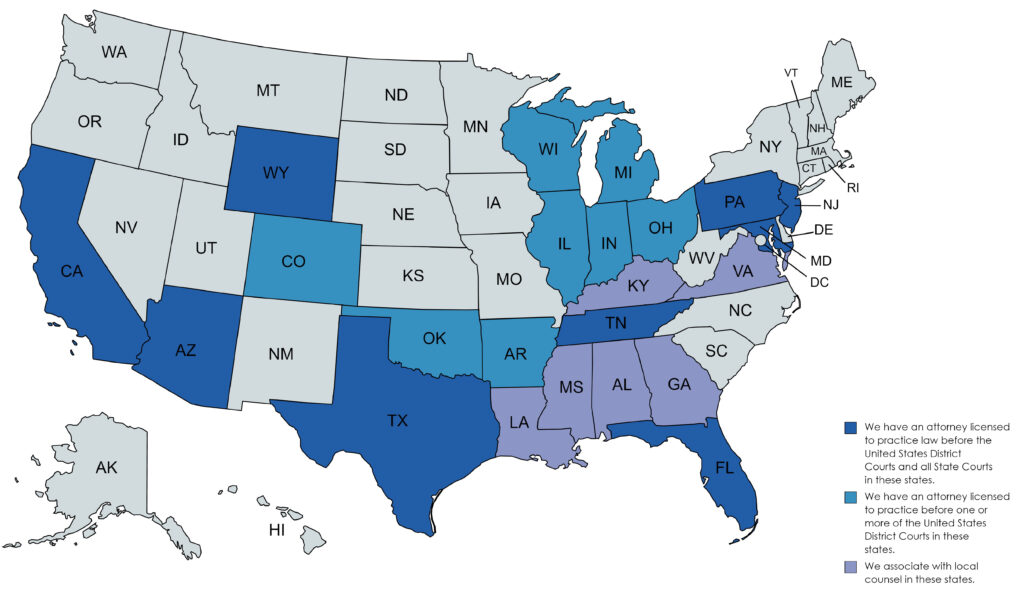
Ginsburg Law Group drafts and reviews irrevocable trusts, Crummey trusts and withdrawal provisions for families in Pennsylvania, New Jersey, Maryland, California, Tennessee, Texas, Arizona, Florida and Wyoming. To have your trust reviewed, contact us or email info@ginsburglawgroup.com.
This article is for general informational purposes only and is not legal or tax advice. Tax laws, IRS guidance and state trust laws change, and the consequences of any withdrawal power depend on the exact trust language and your circumstances. Consult a licensed attorney and a qualified tax advisor about your situation.
Authoritative Sources
- 26 U.S.C. § 2041 (powers of appointment, estate tax)
- 26 U.S.C. § 2514 (powers of appointment, gift tax)
- 26 U.S.C. § 678 (person other than grantor treated as owner)
- 26 U.S.C. § 2503 (annual exclusion)
- Treas. Reg. § 20.2041-3 (lapse of general powers)
- Treas. Reg. § 25.2514-3 (gift tax, release and lapse)
- Treas. Reg. § 25.2511-2 (when a gift is complete)
- IRS Revenue Procedure 2025-32 (2026 inflation adjustments)
- IRS Instructions for Form 709
- Fla. Stat. § 736.0505 (creditor claims, powers of withdrawal)