

We often hear some version of this question: “I live in Pennsylvania, but I own a condo in Florida and a cabin in Tennessee. Where is my trust? Can I set it up somewhere else?” The short answer is yes, a trust can be based in a state other than the one you live in. Whether that actually works, and whether it changes anything, depends on the connection, or “nexus,” between the trust and the state you choose.
Here’s how trust situs works, how out-of-state real estate fits in, and the tax rules that decide which state gets a say.
What “situs” actually means
People use “trust situs” loosely, but it’s really three separate questions. They don’t all have to point to the same state:
- Governing law. Which state’s law decides what the trust document means and whether its terms are valid?
- Place of administration. Where is the trust actually managed? Which courts supervise the trustee, and which state’s rules govern the trustee’s duties?
- Tax situs. Which states can tax the trust’s income? This turns on each state’s own tax statutes and constitutional limits, not on what the trust document says.
You can pick the first two in the trust document, within limits. You can’t simply choose the third. Tax situs follows facts like where you lived when the trust was created, where the trustee lives and where the assets are located.
Choosing a different state: you need a real connection
Most states, including Pennsylvania, New Jersey, Maryland, Florida, Tennessee, Arizona and Wyoming, have adopted versions of the Uniform Trust Code (UTC). California and Texas have their own trust codes with similar concepts.
- Governing law (UTC § 107). The trust document can name the state whose law governs its meaning and effect. That choice is generally honored unless it’s contrary to a strong public policy of the state with the most significant relationship to the issue.
- Principal place of administration (UTC § 108). A trust’s designation of where it is administered is valid if a trustee lives in or has its principal place of business in that state, or if all or part of the administration happens there. In other words, you need a trustee or real trust activity in the state you pick.
- Moving a trust. The UTC lets a trustee move the principal place of administration to another state if it’s in the beneficiaries’ interests, generally after at least 60 days’ notice to the qualified beneficiaries.
Putting “this trust is governed by Wyoming law” in a document doesn’t give you Wyoming benefits if the trustee, records and decisions are all in New Jersey. To get the benefits of another state, most families appoint a trustee there. That could be a trust company, an individual resident or a co-trustee, and the trust is actually administered there.
Why people choose a different state
- No state income tax on accumulated trust income. States like Wyoming, Florida, Tennessee and Texas don’t have a personal income tax. Moving the administration of an irrevocable, non-grantor trust there can reduce or eliminate state tax on income the trust keeps, but only if your home state no longer has a basis to tax the trust (see below).
- Asset protection. Some states, including Wyoming, allow self-settled “domestic asset protection trusts,” which generally require at least one qualified trustee located in that state. Many states don’t allow these trusts at all, and courts in the creator’s home state may not respect them.
- Flexibility. Some states have modern laws for directed trusts (where an investment adviser or “trust protector” handles certain decisions), decanting (moving assets into a new trust with updated terms), long-lasting dynasty trusts and privacy.
- Convenience. Sometimes the reason is practical. The trustee, often an adult child, lives in another state, and it’s simpler to administer the trust where the trustee is.
Out-of-state real estate: the property follows its own state’s law
Real estate is different from bank and brokerage accounts. No matter where your trust is based, land is governed by the law of the state where it sits. That state’s law controls how title is transferred, how deeds must be prepared and recorded, property taxes and reassessment, homestead protections and landlord-tenant rules.
That’s why out-of-state property is one of the best reasons to have a revocable living trust:
- Avoiding ancillary probate. If you die owning real estate in your own name in another state, your family usually needs a second probate proceeding there, called “ancillary” probate, on top of the one in your home state. That means a second court, a second attorney and more delay. Real estate that’s properly deeded to your trust passes under the trust without that second proceeding.
- The deed must follow local rules. A deed into your trust must meet the requirements of the county and state where the property is located, including transfer tax exemptions, recording forms and title insurance considerations.
- Local tax benefits can be affected. Florida allows a homestead exemption for a home held in a qualifying revocable trust, but the trust must be drafted correctly. In California, transfers into your own revocable trust generally don’t trigger property tax reassessment, but later transfers to children are subject to Proposition 19.
- Alternatives exist. Some states allow transfer-on-death deeds, such as Arizona, Texas and, starting October 1, 2026, Maryland. Some owners hold rental property through an LLC. Each option has tradeoffs for liability, taxes and control.
Which states can tax your trust’s income?
This is where nexus matters most. For federal tax purposes, situs doesn’t matter. A revocable trust is a grantor trust, so you report its income on your own return, and your home state taxes it the same way. For irrevocable, non-grantor trusts, states use very different tests:
- Where the creator lived. Pennsylvania, New Jersey and Maryland generally treat a trust as a “resident trust” based on where the creator lived when the trust was created or became irrevocable, or where the person who created it by will lived at death. Maryland can also tax a trust that’s principally administered there.
- New Jersey’s nexus exception. New Jersey says a resident trust isn’t subject to New Jersey income tax if it has no tangible assets in New Jersey, no New Jersey-source income and no New Jersey trustees. Moving the trustee and assets out of state can matter a great deal.
- Constitutional limits. In McNeil v. Commonwealth (Pa. Commw. Ct. 2013), the court held that Pennsylvania couldn’t constitutionally tax a trust whose only connection to Pennsylvania was the creator’s residence decades earlier. In North Carolina Department of Revenue v. Kaestner 1992 Family Trust (2019), the U.S. Supreme Court held that a state couldn’t tax a trust based only on the in-state residence of beneficiaries who had no right to demand distributions.
- Where the trustee and beneficiaries live. California looks at the residence of the trustees and “noncontingent” beneficiaries, not the creator. A California beneficiary or trustee can pull trust income into California tax.
- Where the income comes from. Almost every state taxes income sourced in that state. Rent from a Pennsylvania rental property is Pennsylvania-source income no matter where the trust is based.
Estate and inheritance taxes follow the property
Moving your trust’s situs won’t keep real estate away from the estate or inheritance tax of the state where it’s located. Maryland, for example, can impose estate tax on Maryland real estate owned by a nonresident, and Pennsylvania’s inheritance tax can reach Pennsylvania real estate owned by a nonresident. Whether the property is held in a trust or an LLC can affect the result, and the rules vary by state. These questions should be analyzed property by property.
Your domicile, the state you consider your permanent home, still matters most for your personal taxes and for which state’s estate tax applies to your intangible assets. If you’re moving, or splitting time between two states, see our posts on establishing Florida residency and the 183-day myth.
Common mistakes we see
- Signing the trust but never deeding the out-of-state property into it. The trust can only avoid ancillary probate for property it actually owns.
- Naming another state’s law with no trustee or administration there. The choice may be ignored when it matters.
- Assuming situs controls taxes. A trust “based” in Wyoming can still owe Pennsylvania, New Jersey or California tax if the facts give that state nexus.
- Forgetting that a revocable trust is taxed to you. State income tax planning through situs generally only works for irrevocable, non-grantor trusts.
- Ignoring local property rules. Homestead, reassessment and transfer-tax rules belong to the state where the property is located.
Key takeaways
- A trust can be governed by and administered in a state other than where you live, but you generally need a trustee or real administration in that state.
- Real estate is always governed by the law of the state where it’s located. Deeding it into your trust is the main way to avoid ancillary probate.
- State income tax on trusts depends on each state’s test (the creator’s residence, trustee or beneficiary residence, administration or source of income), within constitutional limits.
- Estate and inheritance taxes generally follow real estate, regardless of the trust’s situs.
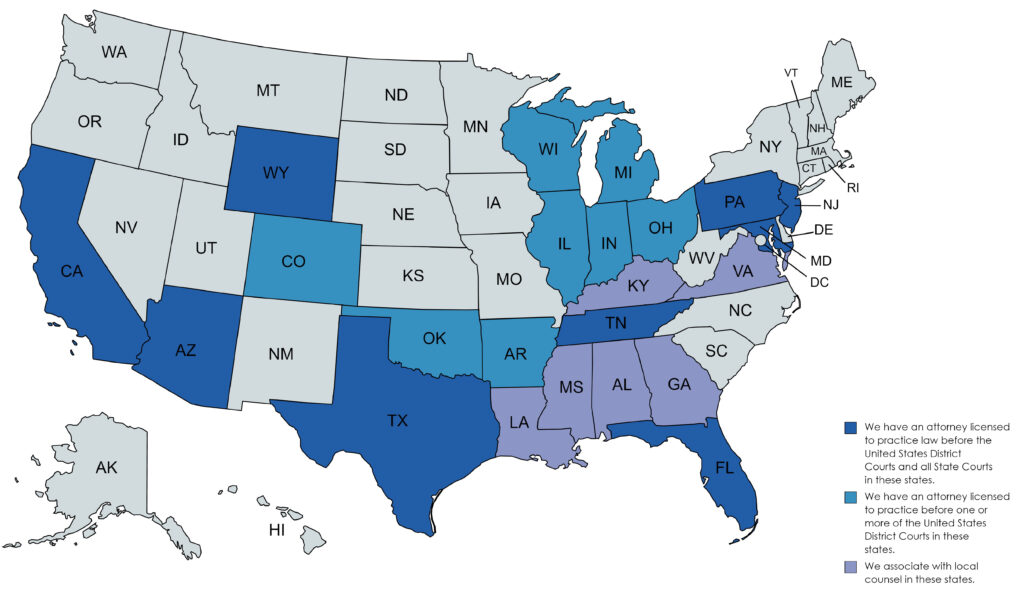
Ginsburg Law Group is licensed in Pennsylvania, New Jersey, Maryland, California, Tennessee, Texas, Arizona, Florida and Wyoming, and we regularly help families who own property in more than one state. To review where your trust should be based and how to title your out-of-state property, contact us or email info@ginsburglawgroup.com.
This article is for general informational purposes only and is not legal or tax advice. Trust, property and tax laws vary by state and change over time. Consult a licensed attorney and a qualified tax advisor about your situation.
Authoritative Sources
- Uniform Law Commission: Trust Code
- New Jersey Division of Taxation, GIT-12 Estates and Trusts
- California Franchise Tax Board, Form 541 Instructions
- North Carolina Dept. of Revenue v. Kimberley Rice Kaestner 1992 Family Trust (2019)
- Pennsylvania Department of Revenue: Inheritance Tax
- Wyoming Statutes Title 4 (Trusts)