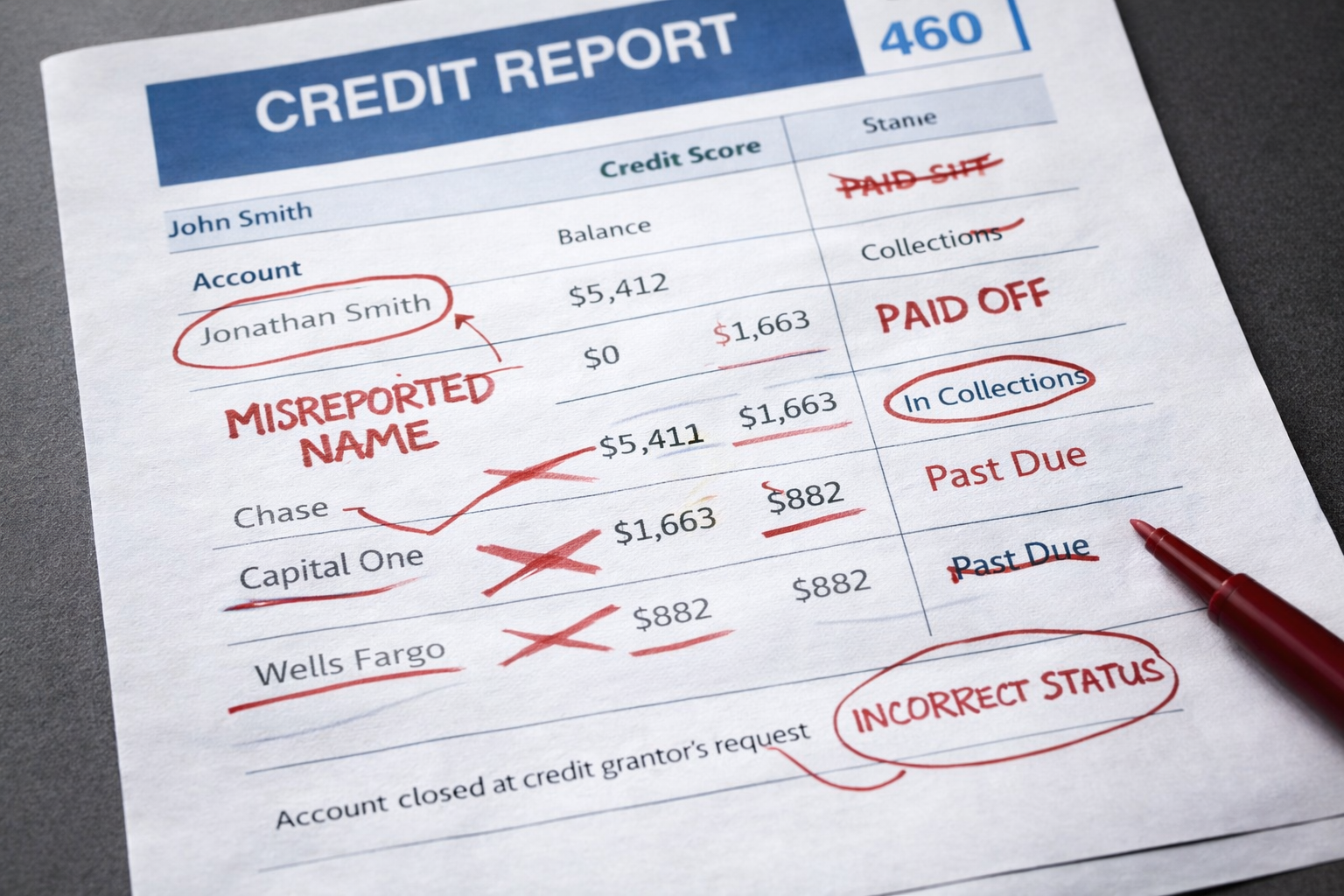
Debt collectors don’t just call—they often report debts to credit bureaus. But there are strict rules governing what they can report and how they must do it.
Understanding these rules can help you protect your credit and identify violations.
Can Debt Collectors Report to Credit Bureaus?
Yes. Debt collectors can report debts to:
- Experian
- Equifax
- TransUnion
However, the information must be:
- Accurate
- Complete
- Not misleading
FDCPA + FCRA: How They Work Together
While the FDCPA governs collection behavior, the Fair Credit Reporting Act (FCRA) regulates credit reporting.
Together, they prohibit:
- Reporting false information
- Failing to update inaccurate data
- Reporting debts not owed
Common Credit Reporting Violations
Reporting Incorrect Amounts
Inflated balances or unauthorized fees
Reporting the Wrong Person
Mixing up identities or accounts
Failing to Mark Debt as Disputed
If you dispute a debt, it must be noted
Re-Aging Debt
Changing dates to make old debt appear new
What Happens If You Dispute a Debt?
When you dispute:
- The collector must investigate
- They must report the dispute
- They must correct inaccuracies
Can a Collector Report Without Contacting You?
Yes—but they must still comply with validation and accuracy requirements.
How Credit Reporting Affects You
Negative reporting can:
- Lower your credit score
- Affect loan approvals
- Increase interest rates
How to Protect Yourself
- Monitor your credit reports regularly
- Dispute inaccurate information
- Keep documentation of all communications
What If a Collector Reports Incorrect Information?
If false information is reported:
- Dispute with the credit bureau
- Notify the collector
- Contact an attorney
What Damages Can You Recover?
If your rights are violated, you may recover:
- Statutory damages
- Actual damages
- Attorney’s fees
Final Thoughts
Debt collectors have the power to impact your credit—but they must follow strict rules. When they don’t, you have the right to fight back.
If you notice errors or unfair reporting, taking action quickly can protect your credit and potentially lead to compensation.