The quick idea
If your credit report has errors, the dispute process is as much about paperwork as it is about the mistake itself. The goal is to create a clean record: what you disputed, when you disputed it, what you provided, and how the bureau responded.
Common credit report errors
- Accounts that aren’t yours
- Incorrect balances or payment history
- Duplicate accounts
- Wrong dates (late payments, charge-offs)
- Mixed files (someone else’s data)
- Old negative items that should have dropped off
Step-by-step: a practical dispute process
Step 1) Pull your reports and save copies
Get reports from all three bureaus. Save:
- PDFs or screenshots
- The date you accessed them
- The specific line items you’re disputing
Step 2) Identify exactly what is wrong
Be precise:
- “Account ABC is not mine.”
- “Payment history shows 60 days late in March 2025, but I paid on time.”
Step 3) Gather supporting documents
Examples:
- Identity documents (as required)
- Proof of address
- Bank statements or canceled checks
- Letters/emails from the creditor
- Police report or FTC identity theft report (if identity theft is involved)
Step 4) Dispute in writing when possible
Online disputes can be convenient, but written disputes help you keep a clear paper trail.
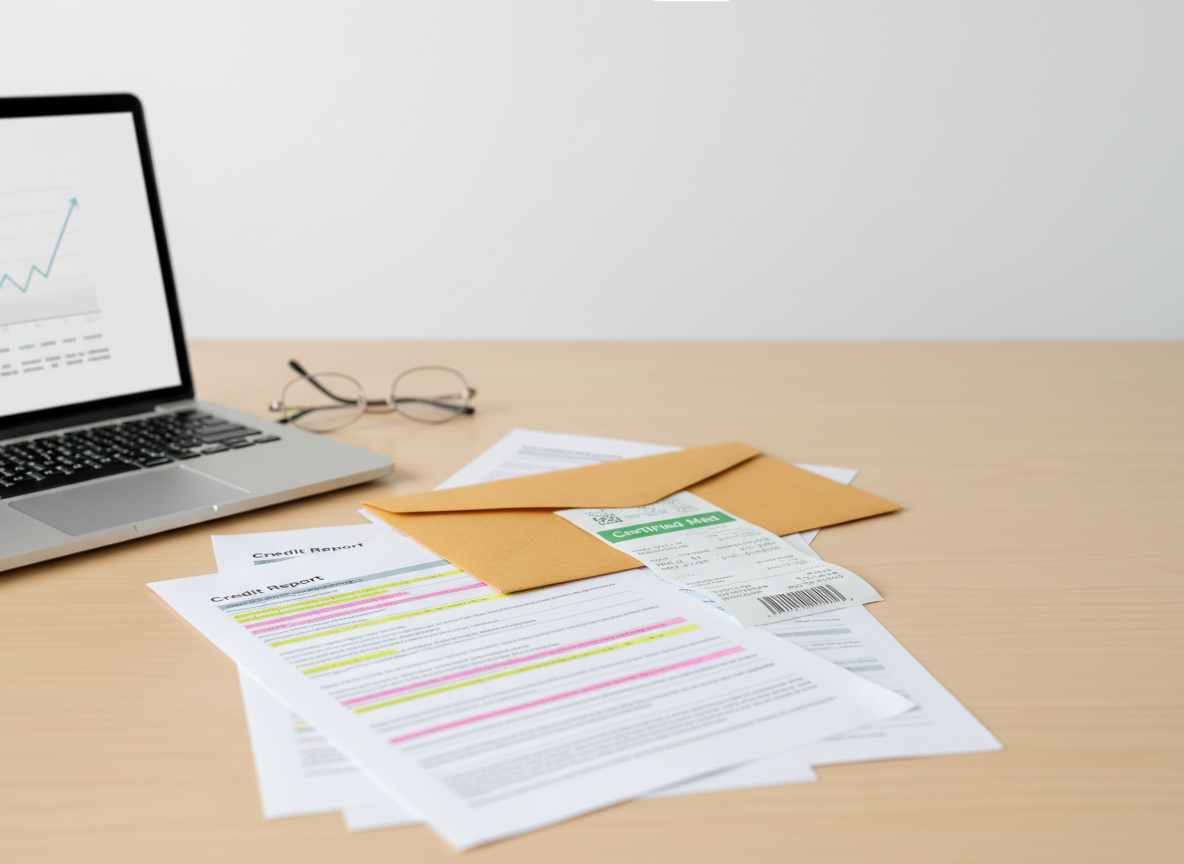
Your dispute packet should include:
- A short cover letter listing each error
- Copies (not originals) of supporting documents
- A copy of the credit report with the disputed item highlighted
- Proof of mailing (certified mail receipt, tracking)
Step 5) Track the response timeline
Create a simple tracker:
- Date sent
- Date delivered
- Response date
- Outcome (deleted/updated/verified)
Step 6) Review the results carefully
If the bureau says “verified,” compare:
- Did they actually change anything?
- Did they verify the correct information?
- Did they ignore key documents?
What to document (your evidence checklist)
- Copies of each dispute letter
- Proof of delivery
- All bureau responses
- Updated credit reports after the investigation
- Any creditor communications
A simple dispute letter outline
- Identify yourself (name, address, DOB last 4 if appropriate)
- Identify the account/item
- State what is inaccurate
- State what you want (delete/update)
- List attached documents
- Request written results
If you’ve disputed errors and they keep coming back—or the bureau’s response doesn’t make sense—Ginsburg Law Group, PC can review your dispute history and help you understand your options. Contact us for a free case evaluation – intake@ginsburglawgroup.com.