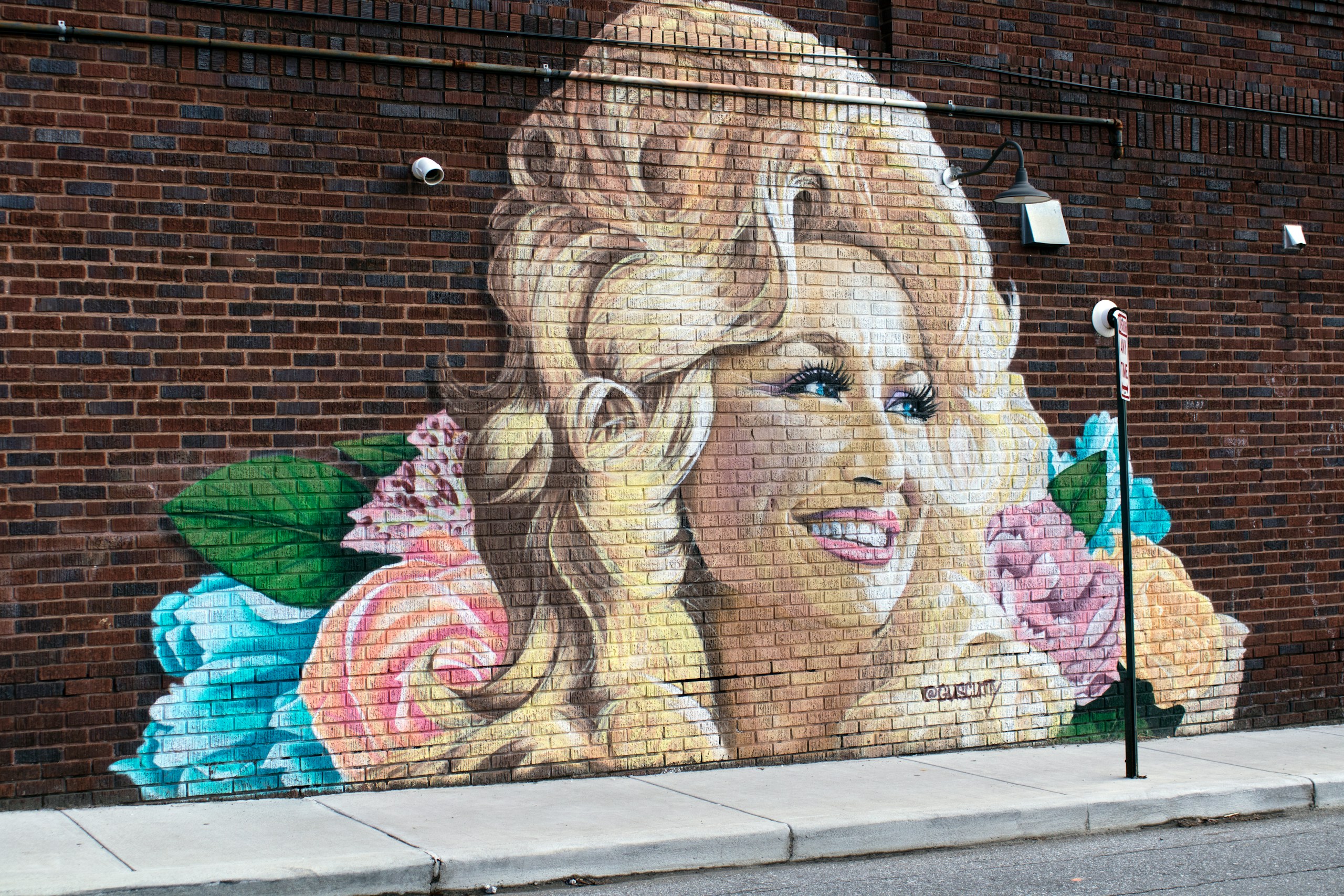
The world lost something special this week.
Dolly Parton died on August 25, 2026, at the age of 80, and for millions of people, the news feels surprisingly personal.
Maybe that is because Dolly Parton was never simply a celebrity.
She was certainly a remarkable singer and songwriter. She was an actress, entrepreneur and businesswoman who built an extraordinary career from beginnings in rural Tennessee. But somewhere along the way, Dolly became something more: a symbol of generosity, humor, humility and the idea that tremendous success carries with it an opportunity to help other people.
As an estate planning attorney, her death also makes me think about something else.
What does it really mean to leave a legacy?
We tend to think of estate planning in terms of who receives the house, the investment accounts and the family business. Dolly Parton’s life is a wonderful reminder that a legacy can be much bigger than the assets appearing on a balance sheet.
And now there is another fascinating question:
Who will inherit Dolly Parton’s estate—and how much of it might ultimately be devoted to continuing the charitable work that defined so much of her life?
At this point, we simply don’t know. Her estate planning documents have not been publicly disclosed, so predictions about her beneficiaries are speculation.
But considering how Dolly lived her life, there are some interesting possibilities.
A Life Defined by Giving
Long before celebrity philanthropy became fashionable, Dolly Parton was giving back.
She created the Dollywood Foundation in 1988, initially focusing its efforts on educational opportunities for children in her home community of Sevier County, Tennessee.
One early initiative was the Buddy Program. Dolly promised seventh- and eighth-grade students $500 if they successfully graduated from high school. According to the Dollywood Foundation, the dropout rate among the participating classes fell from approximately 35% to 6%.
But her most famous charitable project came several years later.
Dolly Parton’s Imagination Library
In 1995, Dolly established the Imagination Library.
The inspiration was deeply personal. Dolly’s father could not read or write, although she described him as one of the smartest people she knew. She wanted children to have opportunities he never had.
The concept was beautifully simple:
Give children books.
Every month, participating children from birth through age five receive an age-appropriate book at no cost to their families.
What started in one Tennessee county became an international literacy movement operating in the United States, Canada, the United Kingdom, Australia and Ireland.
By the time of Dolly’s death, reports indicated that the program had distributed more than 300 million books.
Think about that number for a moment.
Three hundred million books.
Millions of children have gone to their mailboxes and found a book addressed specifically to them because Dolly Parton decided that children should grow up surrounded by stories.
That may ultimately be as significant a legacy as any song she ever recorded.
Her Giving Went Far Beyond Books
Education was only part of Dolly’s philanthropy.
Following the devastating 2016 wildfires in Sevier County, the Dollywood Foundation established the My People Fund to assist families who lost their primary residences. More than $12 million was ultimately raised and distributed to affected families.
She helped raise $1 million for a local hospital birthing unit, which became the Dolly Parton Center for Women’s Services.
In 2020, she donated $1 million to Vanderbilt University Medical Center for COVID-19 research—funding associated with research that helped lead to Moderna’s COVID-19 vaccine.
After Hurricane Helene, Dolly and her businesses contributed more than $2 million toward relief and recovery efforts in Tennessee and North Carolina.
She supported scholarships, children’s hospitals, healthcare, education and disaster relief.
There is an important estate-planning lesson hidden in all of this:
Dolly didn’t wait until she died to create her legacy.
She built it while she was alive.
So Who Will Inherit Dolly Parton’s Fortune?
That is the question people will naturally ask.
Dolly had no children.
Her husband of nearly 60 years, Carl Dean, died in 2025, before her. Public reporting indicates that Dean’s estate plan left his estate to Dolly.
That means the most obvious beneficiaries people ordinarily expect—a surviving spouse and children—were not present at Dolly’s death.
Dolly did, however, come from an enormous family. She was one of twelve children.
So will her surviving siblings, nieces, nephews and other relatives inherit?
Quite possibly.
But I would be surprised if that were the entire story.
To be clear, there has been no public disclosure establishing exactly who will receive Dolly Parton’s estate, and until her documents become public—if they ever do—any prediction should be treated as exactly that: a prediction.
But her lifetime behavior gives us some clues about the possibilities.
Guess #1: Her Family Will Likely Be Included
Dolly frequently spoke about the importance of family and never seemed to forget where she came from.
It would therefore be unsurprising if siblings, nieces, nephews or other relatives were beneficiaries of trusts or other parts of her estate.
For someone with substantial wealth, however, “leaving money to family” does not necessarily mean writing enormous checks.
Trusts could provide family members with income, housing, healthcare, education or other support while protecting and preserving the underlying assets for future generations.
That is something ordinary families can do as well.
Guess #2: The Dollywood Foundation Could Play a Major Role
This is where things become particularly interesting.
Dolly spent nearly four decades building the Dollywood Foundation.
Organizations like this are designed to continue beyond the lifetime of their founders.
The Foundation’s current mission is specifically described as sharing Dolly Parton’s life and legacy to inspire children to “Dream More, Learn More, Care More and Be More.”
That sounds very much like an organization intended to survive Dolly herself.
Would anyone really be surprised if a significant portion of her estate were ultimately directed toward the Foundation or related charitable programs?
I wouldn’t.
Guess #3: The Imagination Library May Be One of Her Greatest Estate-Planning Legacies
The Imagination Library itself provides an interesting example of charitable legacy planning.
Its website already discusses ways supporters can incorporate charitable gifts into their own estate plans, including gifts of real estate and retirement assets.
It is therefore reasonable to wonder whether Dolly incorporated similar charitable planning into her own estate.
Perhaps there is a charitable trust.
Perhaps there are substantial bequests to the Foundation.
Perhaps intellectual-property revenue will help support charitable programs.
Perhaps there are arrangements we know absolutely nothing about.
That uncertainty itself illustrates another important point.
Good Estate Planning Can Be Private
People sometimes assume that when a wealthy celebrity dies, the public will eventually learn exactly who received every dollar.
Not necessarily.
Trust-based estate planning can keep significant portions of an estate outside the public probate process.
That matters for celebrities, but privacy isn’t exclusively a celebrity concern.
A properly structured revocable living trust can allow assets to pass according to private trust terms rather than through a probate proceeding in which certain documents may become public records.
For a person with substantial intellectual property, business interests, real estate and licensing rights, trusts may also provide a mechanism for long-term management rather than simply distributing everything immediately.
What Happens to the Songs?
Dolly’s estate is particularly fascinating because much of her wealth may not consist of traditional assets.
Consider her songwriting catalog.
Music copyrights and royalty rights can continue producing income long after a songwriter dies.
That creates estate-planning questions very different from deciding who receives a checking account.
Who controls the copyrights?
Who receives royalties?
Can songs be licensed for movies, television programs and advertising?
Who decides whether Dolly’s name or likeness can be commercially used?
Should those rights eventually benefit family members?
Should some of that revenue support charity?
These are exactly the kinds of issues that demonstrate why estate planning isn’t merely about preparing a will.
For creators and business owners, an estate plan also needs to address control.
Dollywood Creates Another Layer
Then there are Dolly’s business interests.
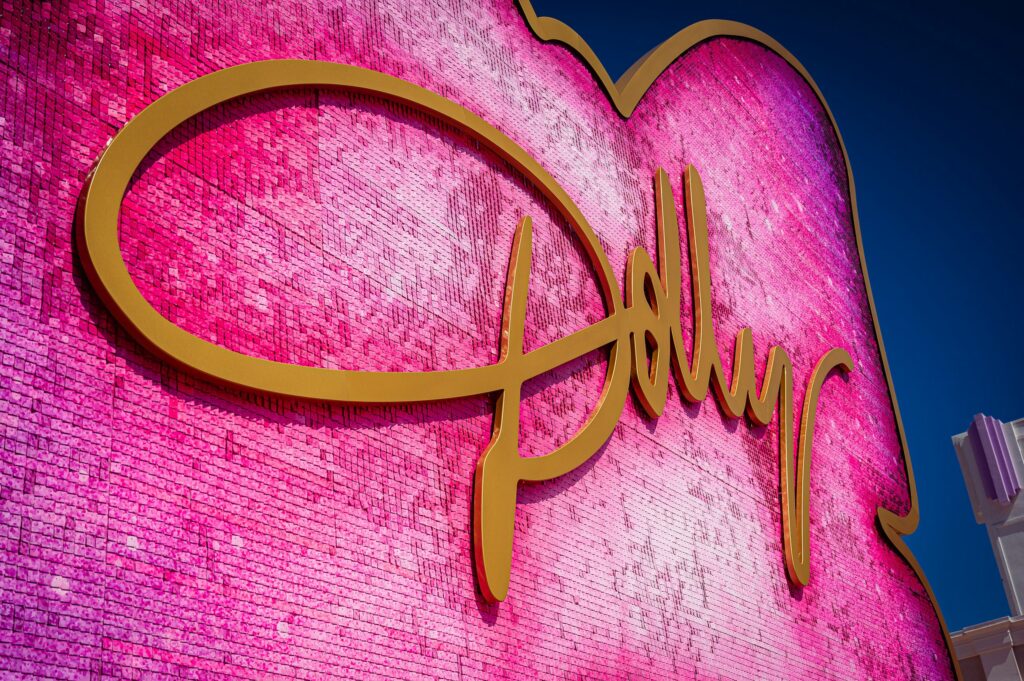
Dollywood isn’t simply a famous theme park bearing her name. It is part of a significant business enterprise and an important economic institution in East Tennessee.
Business succession planning asks a different question from inheritance:
Who should own something after you die, and who should actually control it?
Those aren’t necessarily the same people.
A beneficiary may receive the economic benefits of an asset without being the person qualified to manage the underlying business.
That distinction can be enormously important for family businesses as well.
Dolly Parton Demonstrated “Giving While Living”
One of my favorite lessons from Dolly’s life has almost nothing to do with what her will or trust says.
She didn’t save all of her generosity for her obituary.
She saw the results.
She watched children receive books.
She watched students graduate.
She watched families devastated by wildfires receive help.
She watched her hometown benefit from businesses and programs she helped create.
That is an estate-planning strategy worth considering.
People who intend to leave money to charity sometimes automatically assume the gift should occur at death.
It doesn’t have to.
Lifetime charitable giving can allow you to participate in the cause, see the impact of your money and teach children and grandchildren about philanthropy.
There may also be tax-planning opportunities involving charitable gifts, donor-advised funds, appreciated securities, charitable trusts and qualified charitable distributions, depending upon the donor’s circumstances.
Your Estate Plan Doesn’t Need Dolly Parton’s Millions
It is easy to look at a celebrity estate and conclude that none of this applies to ordinary families.
Actually, almost all of it does.
You may not own a songwriting catalog.
But perhaps you own a small business.
You may not have hundreds of millions of dollars.
But perhaps you have a house, retirement accounts and life insurance.
You may not operate an international charitable foundation.
But perhaps there is a church, school, animal rescue, scholarship program or nonprofit organization that has mattered deeply to you.
The dollar amounts are different.
The questions are remarkably similar.
Who do I want to help?
What do I want my money to accomplish?
Who should manage what I leave behind?
Do I want beneficiaries to receive everything immediately or through a trust?
Are there charities I want to remember?
What values do I want my estate plan to reflect?
Those questions are the heart of estate planning.
Perhaps Dolly Already Told Us Who Her Real Heirs Are
We will eventually learn more about Dolly Parton’s estate. Perhaps probate filings will provide answers. Perhaps trusts and other private planning will mean much of the story remains confidential.
We may discover that relatives inherited substantial wealth.
We may discover enormous charitable gifts.
Most likely, her planning will contain some combination of family, business continuity and philanthropy.
But in another sense, we already know who inherited something from Dolly Parton.
Millions of children did.
Every child who learned to love reading because a book arrived in the mailbox inherited a tiny piece of her legacy.
Every student helped by a scholarship inherited some of it.
Every family assisted after a disaster inherited some of it.
And every future child who receives an Imagination Library book will continue receiving it.
That’s the remarkable thing about a thoughtfully created legacy.
The best inheritance isn’t always something you can spend.
Sometimes it is an opportunity.
Sometimes it is an education.
Sometimes it is a book.
And sometimes the most meaningful estate plan isn’t simply about deciding where your property goes when you die.
It is about deciding what part of you will remain after you’re gone.
Dolly Parton spent decades answering that question.
Whatever her will and trusts ultimately reveal, she had already written the most important part of her estate plan through the way she lived.
And that may be her greatest legacy of all.
This article is for general educational purposes and is not intended as legal or tax advice. Details concerning Dolly Parton’s estate plan and beneficiaries have not been publicly established as of publication, and discussion of potential beneficiaries is expressly speculative.