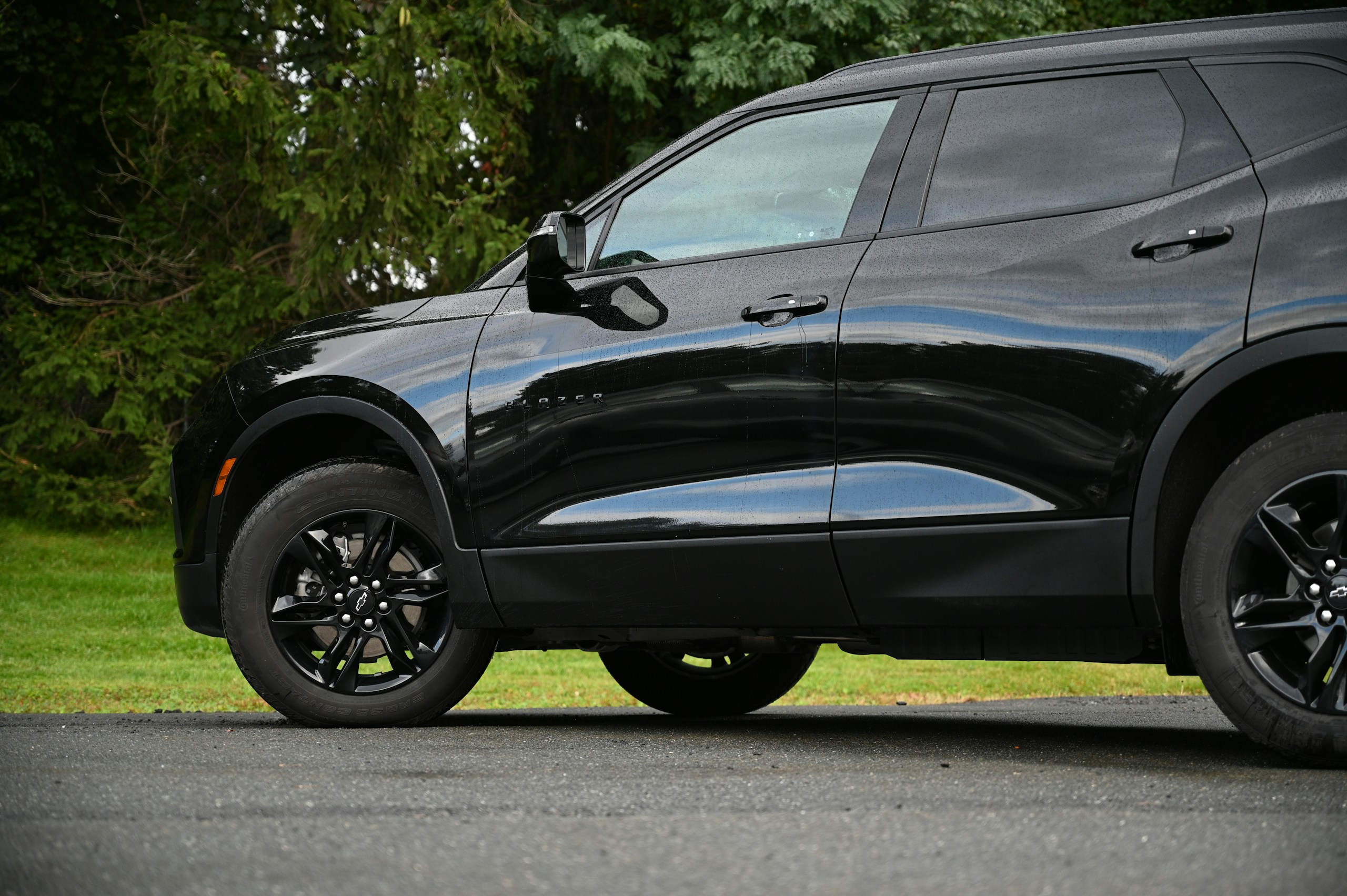
Does Your 2020 Chevrolet Traverse Say “Shift to Park” Even When It Is Already in Park?
You pull into your driveway, move the shifter into Park, and try to turn off your 2020 Chevrolet Traverse.
Instead of shutting down normally, the vehicle displays a message:
“Shift to Park.”
The problem?
The Traverse is already in Park.
For some owners, the warning may be intermittent. Others may find themselves moving the shifter back and forth, restarting the vehicle, or repeatedly trying to get the message to disappear before the vehicle will fully power down.
General Motors has issued technical guidance addressing an intermittent “Shift to Park” message on several GM vehicles, including the Chevrolet Traverse. GM Technical Service Bulletin 19-NA-206 addresses a condition in which the message may appear while the vehicle is already in Park and identifies the transmission-control/shifter system as an area for diagnosis and repair. (NHTSA)
A technical bulletin does not mean every 2020 Chevrolet Traverse has this defect.
It also does not mean every Traverse displaying the message automatically qualifies as a lemon.
But if your Traverse has repeatedly returned to an authorized Chevrolet dealer for a “Shift to Park” condition that keeps coming back, the repair history may be important under the Texas Lemon Law and state and federal warranty law.
What Does the “Shift to Park” Problem Look Like?
Owners may describe the problem differently.
Some may see the message only occasionally.
Others may report:
- “Shift to Park” appears even though the shifter is already in Park;
- The vehicle will not completely shut down;
- Accessories remain powered;
- The driver must wiggle or move the shifter;
- The warning disappears after several attempts;
- The condition returns after a repair;
- The battery may be drained if the vehicle does not power down normally; or
- The condition becomes progressively more frequent.
These symptoms should be documented accurately.
The consumer does not need to diagnose the exact failed component.
From a warranty perspective, what matters first is what the vehicle is doing and whether Chevrolet has been able to correct it.
GM Has Issued Technical Guidance About the Condition
GM’s Technical Service Bulletin 19-NA-206 concerns an intermittent “Shift to Park” message displayed while certain GM vehicles are in Park.
The bulletin includes the Chevrolet Traverse among the affected vehicle lines and provides dealership technicians with a diagnostic and repair procedure for the condition. (NHTSA)
That can be significant for a consumer experiencing the same symptom.
A Technical Service Bulletin, or TSB, is not the same thing as a recall.
A recall typically addresses a safety-related defect or federal safety-standard issue and generally requires a manufacturer-provided remedy.
A TSB is technical information distributed to dealership personnel to help diagnose or repair a known type of condition.
The existence of a TSB does not establish liability in an individual Lemon Law case.
But it may show that the manufacturer has developed a specific repair procedure for the symptom the owner is reporting.
What If the Dealer Says It Cannot Duplicate the Message?
This is one of the most common frustrations with intermittent electronic defects.
You see “Shift to Park” several times during the week.
You bring the Traverse to the dealership.
The technician moves the shifter into Park ten times and the warning never appears.
The repair order then states:
“Could not duplicate customer concern.”
Keep that repair order.
A “could not duplicate” notation does not prove the vehicle has a defect.
But it can still prove that you reported the condition to an authorized dealer at a particular date and mileage.
If the problem continues and appears on multiple repair orders, that documentation can become increasingly important.
Make Sure the Repair Order Actually Says “Shift to Park”
Do not settle for vague language such as:
“Customer states transmission issue.”
A more useful repair-order description might be:
“Customer states intermittent ‘Shift to Park’ message appears after transmission has been placed in Park. Vehicle may not fully power down until shifter is moved several times.”
Use only the facts that accurately describe your vehicle.
The more precise the complaint, the easier it becomes to establish whether later dealership visits involve the same recurring problem.
That can matter under Texas Lemon Law.
How Does the Texas Lemon Law Work?
The Texas Lemon Law is administered by the Texas Department of Motor Vehicles.
TxDMV explains that the law can assist consumers who buy or lease new motor vehicles and experience repeated problems getting defects properly repaired under the manufacturer’s original warranty. Depending upon the case, relief can include repurchase, replacement, or repair. (TXDMV)
Texas generally requires several things before a vehicle can qualify.
According to TxDMV, the vehicle must have:
- A substantial manufacturing defect;
- A defect covered by the manufacturer’s written warranty;
- A defect reported to the dealer or manufacturer during the warranty term;
- A reasonable number of repair attempts;
- Written notice to the manufacturer and at least one opportunity to cure; and
- A continuing condition that substantially impairs use or market value or creates a serious safety hazard. (TXDMV)
That last requirement is important.
Not every annoying warning message qualifies.
The specific effect of the “Shift to Park” condition on the individual vehicle matters.
Texas Uses Three Different Repair Tests
Texas is somewhat distinctive because it identifies three different tests that can establish a presumption that the manufacturer received a reasonable number of opportunities to repair a qualifying defect.
TxDMV describes them as:
The four-times test
The serious safety-hazard test
The 30-day test (TXDMV)
A Traverse owner may potentially fit one test and not another.
That is why simply counting repair orders is not enough.
The Texas Four-Times Test
Under TxDMV’s current guidance, a consumer may satisfy the four-times test if the vehicle is presented for repair for the same defect four times within the first 24 months or 24,000 miles, whichever occurs first, and the defect remains unrepaired. (TXDMV)
For example:
Visit 1 — 4,800 miles: “Shift to Park” message. Dealer cannot duplicate.
Visit 2 — 7,300 miles: Same message. Dealer adjusts or replaces shifter-related component.
Visit 3 — 9,100 miles: Message returns. Additional repair performed.
Visit 4 — 11,500 miles: “Shift to Park” warning returns again.
That type of history deserves careful review.
It does not automatically guarantee relief because the other statutory requirements must still be met.
But it may fit Texas’s four-times framework.
Texas Also Has a Serious Safety-Hazard Test
Texas treats certain severe defects differently.
TxDMV defines a serious safety hazard as a life-threatening malfunction that substantially impedes the ability to control or operate the vehicle normally or creates a substantial risk of fire or explosion. (TXDMV)
For a serious safety hazard, TxDMV states that the consumer may satisfy the repair presumption after two repair attempts during the first 24 months or 24,000 miles, if the defect remains unrepaired. (TXDMV)
A typical “Shift to Park” warning should not automatically be characterized as a serious safety hazard.
The actual symptoms matter.
A nuisance message requiring a driver to jiggle the shifter is not necessarily equivalent to a condition that makes the vehicle uncontrollable or creates a substantial fire risk.
The facts must support the legal classification.
Texas’s 30-Day Test
Texas also provides a days-out-of-service route.
According to TxDMV, a consumer may satisfy the 30-day test when a vehicle has been out of service for warranty repairs for a cumulative total of 30 or more days during the first 24 months or 24,000 miles, a substantial defect continues to exist, and the other requirements are met. (TXDMV)
There is an important wrinkle:
If the manufacturer provides a comparable loaner vehicle while the consumer’s vehicle is being repaired, that time generally does not count toward the 30-day test. (TXDMV)
That makes recordkeeping especially important.
Keep documentation showing:
- The dates the Traverse entered the dealership;
- The dates it was returned;
- Whether a loaner vehicle was provided;
- Whether the loaner was comparable; and
- What work was performed.
Written Notice to Chevrolet Matters in Texas
Texas does not simply require dealership visits.
TxDMV says the consumer must give the manufacturer written notice of the defect and at least one opportunity to cure it. TxDMV recommends sending the notice by certified mail. (TXDMV)
That means repeated complaints to a Chevrolet service adviser may not, by themselves, satisfy every procedural requirement.
If the “Shift to Park” condition continues after repeated repairs, written notice to General Motors can become an important step.
Keep:
- A copy of the letter;
- Certified-mail receipt;
- Delivery confirmation;
- GM’s response; and
- Documentation of the final repair opportunity.
Texas Has a Specific Filing Deadline
This is a major issue for owners of a 2020 Traverse.
Texas Lemon Law complaints must be filed within a specific period.
TxDMV states that a complaint generally must be filed within six months following the earlier of:
- Expiration of the express warranty term;
- 24 months after purchase; or
- 24,000 miles following delivery. (TXDMV)
Because the deadline is tied to the earliest of those events, consumers should act promptly.
For most 2020 Traverses, a new Texas Lemon Law administrative filing would now likely present substantial timing issues.
But that does not necessarily mean the owner has no possible warranty rights.
The next question becomes when the defect began, when it was reported, and whether other state or federal warranty claims may remain.
Why the Original Repair History Still Matters on a 2020 Traverse
Imagine a Traverse with 75,000 miles today.
At first glance, it may seem far too old for Texas’s new-vehicle Lemon Law process.
But suppose the records show:
8,000 miles: First “Shift to Park” complaint.
10,500 miles: Shifter component repaired.
13,000 miles: Warning returns.
17,000 miles: Additional repair.
19,500 miles: Same message returns again.
Those early repair records can still be extremely important when evaluating what happened during the original warranty period.
The vehicle’s current mileage is not the same thing as the mileage when the defect first appeared.
Does a “Shift to Park” Problem Substantially Impair Use or Market Value?
Texas requires more than the existence of a defect.
The condition must substantially impair the vehicle’s use or market value, unless it qualifies as a serious safety hazard. (TXDMV)
This analysis can be fact-specific.
A warning message that happened once and disappeared permanently after a minor repair may not substantially impair anything.
A recurring condition that prevents the vehicle from shutting down normally, requires repeated dealership visits, contributes to battery drain, or creates persistent reliability concerns may present a stronger argument.
The consumer’s repair history matters.
So does the actual effect of the condition.
What If the Traverse Will Not Shut Off?
This can make the problem more than a simple dashboard annoyance.
If the vehicle does not recognize that the shifter is in Park, the driver may encounter difficulty completing the normal shutdown process.
Depending on the particular manifestation, the owner may need to:
- Move the shifter repeatedly;
- Restart the vehicle;
- Press the shifter button;
- Cycle between gears;
- Wait for the warning to disappear; or
- Take other steps before the vehicle powers down.
That can create concerns about reliability and, in some cases, battery discharge if electronics remain energized.
Again, document what your particular Traverse actually does rather than assuming every “Shift to Park” condition behaves identically.
What If Chevrolet Repairs the Shifter but the Message Comes Back?
This is where repeated warranty repairs become important.
Suppose GM replaces or modifies the shifter-related components.
The problem disappears for a month.
Then the message returns.
The vehicle is repaired again.
Two months later, “Shift to Park” appears once more.
That history is different from a condition successfully corrected on the first visit.
A warranty obligation is generally about correcting the covered defect, not simply replacing a part temporarily.
If the same symptom keeps coming back, maintain a clear chronology.
GM’s Bulletin Can Help Clarify the Repair History
Because GM issued a technical bulletin addressing an intermittent “Shift to Park” condition on the Traverse and other vehicles, owners may want to ask whether the dealership followed the applicable GM procedure for their vehicle. (NHTSA)
The bulletin itself does not prove that the dealer performed an incorrect repair.
Nor does it establish that every Traverse warning is caused by the same underlying issue.
But technical guidance can help consumers understand what GM told authorized technicians about diagnosing and repairing the condition.
If your repair order references a bulletin number, retain that document.
What If the Dealer Calls the Problem “Normal”?
Ask for that conclusion in writing.
If Chevrolet says:
“Vehicle operating as designed,”
or
“No repair needed,”
the repair order should ideally reflect that conclusion.
That becomes particularly important if another dealership later diagnoses and repairs a component associated with the same complaint.
Consumer warranty disputes are much easier to evaluate when there is a paper trail.
Texas Lemon Law May Provide Repurchase, Replacement, or Repair
If a consumer proves an eligible Texas Lemon Law case, TxDMV states that available relief may include:
- Repurchase of the vehicle;
- Replacement with a comparable vehicle; or
- An order requiring the manufacturer to repair the defect. (TXDMV)
Refund calculations can include the purchase price and certain taxes and fees, reduced by an allowance for vehicle use. (TXDMV)
Only qualifying new vehicles are eligible for refund or replacement under the administrative Lemon Law process, although Texas warranty-performance law can provide some assistance concerning qualifying used vehicles in certain circumstances. (TXDMV)
What About Used Chevrolet Traverses?
Texas’s treatment of used vehicles is worth noting.
TxDMV explains that a used vehicle may have protection under Texas warranty-performance law when it is still covered by the manufacturer’s original warranty, or where the defect began and was reported while the vehicle was under that original warranty and the defect continues to exist. (TXDMV)
That can be relevant to consumers who purchased a late-model Traverse used.
It does not mean every used Traverse qualifies for Texas Lemon Law relief.
Extended service contracts are also different from the manufacturer’s original warranty.
The specific transaction and warranty history matter.
What If Texas Lemon Law No Longer Applies?
For many 2020 Traverse owners, this is likely the most important section.
A consumer may be outside Texas’s Lemon Law filing period but still have questions under other warranty laws.
Potential theories may include:
- Breach of Chevrolet’s written warranty;
- Applicable implied warranties;
- The federal Magnuson-Moss Warranty Act; or
- Other state-law claims depending upon the facts.
The expiration of a Lemon Law administrative filing period does not necessarily answer every possible warranty question.
Breach of Chevrolet’s Written Warranty
A manufacturer’s written warranty is a promise to repair covered defects according to its terms.
Suppose a Traverse owner repeatedly reported “Shift to Park” while the original warranty was active.
The dealer attempted repairs.
The message continued returning.
Those facts may warrant an evaluation of whether General Motors fulfilled its warranty obligations.
Relevant questions include:
When did the warning first occur?
Was the vehicle under warranty?
How many times was it presented for repair?
What components were replaced?
Did GM’s technical bulletin apply?
Did the condition continue after the warranty expired?
Did GM later refuse repair because the warranty had expired?
Those facts can be important in a breach-of-warranty analysis.
The Magnuson-Moss Warranty Act
The federal Magnuson-Moss Warranty Act can provide additional remedies when manufacturers fail to comply with applicable written or implied warranty obligations.
Magnuson-Moss is not a nationwide Lemon Law with a simple repair-count formula.
Instead, it generally works together with the written warranty and state warranty law.
An important feature of Magnuson-Moss is that a successful consumer may potentially recover reasonable attorneys’ fees and costs in qualifying cases.
That can be particularly important for an older vehicle whose problems began while the manufacturer’s warranty was still in force.
Do Not Throw Away Old Traverse Repair Orders
A 2020 vehicle has now been on the road for several years.
Owners may be tempted to discard old dealership paperwork.
Don’t.
A repair order from 2020 or 2021 showing the first “Shift to Park” complaint may be more legally significant than a current repair invoice.
Keep:
- Purchase or lease agreement;
- Original warranty booklet;
- All repair orders;
- GM customer-care communications;
- TSB references;
- Tow bills;
- Battery replacement records;
- Rental-car invoices;
- Videos or photographs of the message, when safely obtained;
- Emails and text messages with the dealer; and
- Certified letters sent to GM.
Video Can Be Particularly Useful for “Shift to Park”
Because the condition can be intermittent, safely documenting the dashboard message may help the dealer understand what is happening.
If the vehicle is stationary and safely parked, a photo or video showing:
- The gear selector in Park; and
- The dashboard simultaneously displaying “Shift to Park”
may provide useful context.
Do not attempt to take photographs while driving.
Build a Simple Repair Timeline
For example:
March 2020 — 5,600 miles: “Shift to Park” message first appears.
April 2020 — 6,200 miles: Dealer unable to duplicate.
June 2020 — 8,500 miles: Message returns; shifter-related repair performed.
August 2020 — 10,100 miles: Same warning returns.
October 2020 — 12,700 miles: Additional GM repair performed.
December 2020 — 14,000 miles: “Shift to Park” condition continues.
A timeline like this quickly shows whether the same defect was recurring during the Texas Lemon Law period.
Could Your 2020 Chevrolet Traverse Qualify Under Texas Lemon Law?
The key questions include:
Was the condition covered by Chevrolet’s written warranty?
Did you report it during the warranty term?
Did the same defect remain after four repair attempts within the applicable period? (TXDMV)
Did the defect constitute a qualifying serious safety hazard and remain after two repair attempts? (TXDMV)
Was the vehicle out of service for 30 qualifying cumulative days? (TXDMV)
Did you provide GM with written notice and a final opportunity to cure? (TXDMV)
Was a Lemon Law complaint filed within Texas’s statutory deadline? (TXDMV)
And if that deadline has passed:
Did GM nevertheless fail to fulfill its warranty obligations while the defect was covered?
Those are much more useful questions than simply asking whether “Shift to Park” is a known Chevrolet problem.
Contact Ginsburg Law Group About Chevrolet Traverse “Shift to Park” Problems
If your 2020 Chevrolet Traverse repeatedly displays a “Shift to Park” warning even though the transmission is already in Park, preserve the complete repair history.
General Motors has issued technical guidance addressing this type of condition on the Chevrolet Traverse, but the existence of a bulletin does not automatically establish a Lemon Law or warranty claim. (NHTSA)
What matters is your individual vehicle:
How early did the problem begin?
How often did it occur?
How many repair attempts did Chevrolet receive?
Did the repairs actually correct it?
Was the vehicle unavailable for extended periods?
And was the defect first reported while the manufacturer’s warranty was in effect?
Ginsburg Law Group represents consumers in Lemon Law and breach-of-warranty matters. If repeated dealership repairs have not corrected your Traverse’s “Shift to Park” condition, the repair orders, warranty history, and timing of the defect may warrant closer review under Texas warranty law and the federal Magnuson-Moss Warranty Act.
This article is for general informational purposes only and does not constitute legal advice. Texas Lemon Law and warranty claims are fact-specific, and eligibility depends upon the vehicle, transaction, repair history, warranty terms, notice, filing deadlines, and other circumstances.