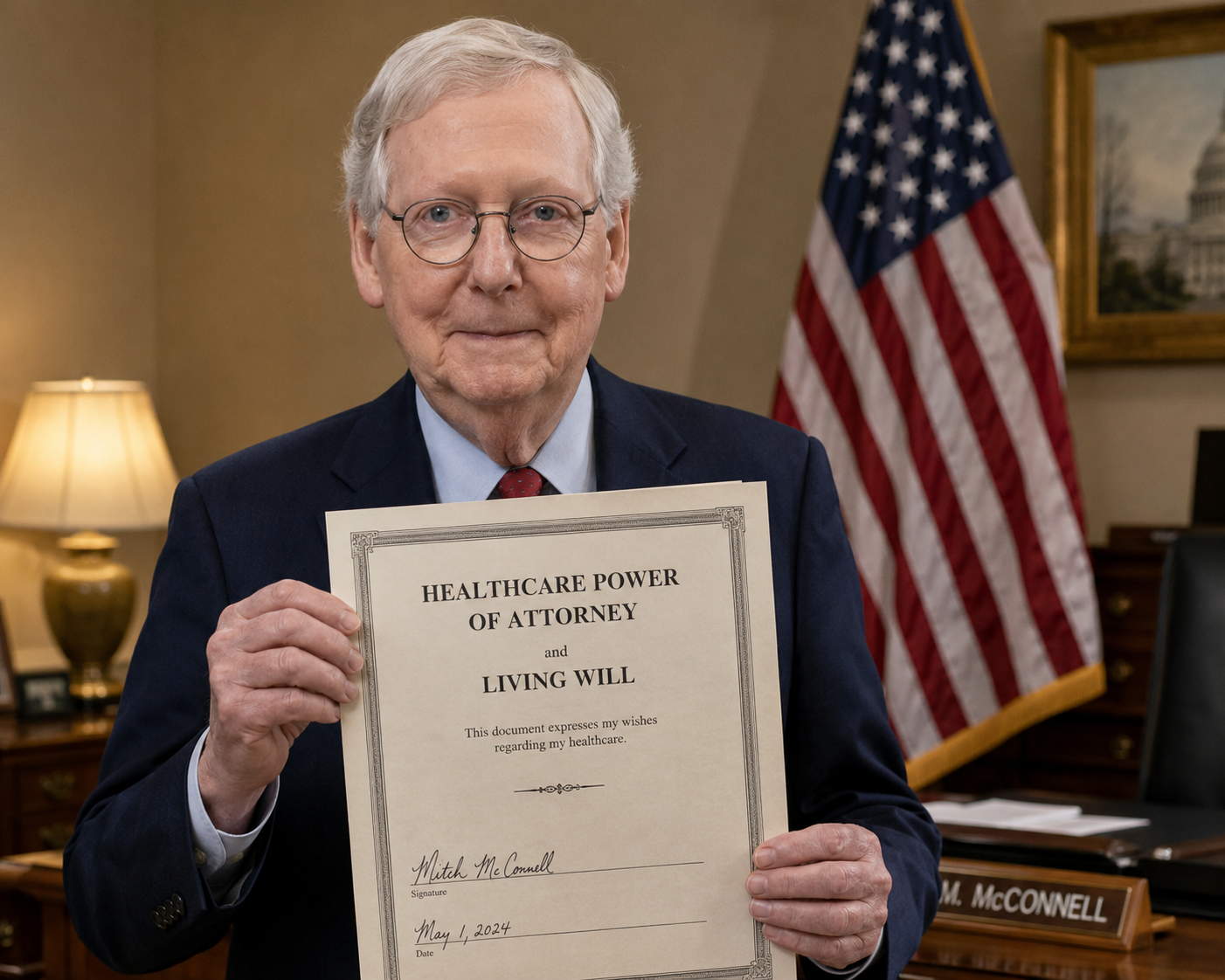
No one expects a medical emergency—but everyone should have a plan.
When public figures experience health issues, the news often sparks conversations about aging, healthcare, and what happens when someone is suddenly unable to make medical decisions.
In recent years, Senator Mitch McConnell has experienced several highly publicized health incidents, including falls and moments during press conferences where he appeared to briefly freeze while speaking. Regardless of the cause of any individual medical event, these moments serve as an important reminder that serious health issues can arise unexpectedly for anyone—regardless of age, profession, or financial success.
While the headlines often focus on the person’s condition, families facing similar situations usually have much more practical questions:
- Who can speak to the doctors?
- Who can make medical decisions?
- Can family members access medical records?
- What happens if there is disagreement about treatment?
- Does a spouse automatically have legal authority?
These are questions that every adult—not just seniors—should answer before an emergency happens.
Fortunately, three estate planning documents can make an enormous difference:
- A Healthcare Power of Attorney
- A Living Will (Advance Healthcare Directive)
- A HIPAA Authorization
Together, these documents help ensure your wishes are respected and reduce stress for the people you love.
Medical Emergencies Rarely Come With Advance Notice
Many people assume estate planning is something to think about after retirement.
In reality, accidents and medical emergencies can happen at any age.
Every day, people unexpectedly experience:
- Strokes
- Heart attacks
- Serious falls
- Automobile accidents
- Sudden illnesses
- Complications during surgery
When that happens, someone may need to make healthcare decisions immediately.
Without proper legal documents, even close family members may encounter unnecessary obstacles.
What Is a Healthcare Power of Attorney?
A Healthcare Power of Attorney (HCPOA) allows you to appoint someone you trust to make medical decisions on your behalf if you are unable to make them yourself.
This person is often called your:
- Healthcare agent
- Healthcare representative
- Healthcare proxy
Your healthcare agent generally has authority to communicate with doctors and make healthcare decisions only if you are unable to make those decisions yourself, depending on how the document is drafted.
Why Is It So Important?
Imagine you are unconscious after an accident.
Doctors need immediate decisions about:
- Surgery
- Medications
- Rehabilitation
- Long-term care
- Transfers between facilities
Without a Healthcare Power of Attorney, your loved ones may be left wondering who has legal authority to act.
Even when family members agree, healthcare providers often prefer written legal authority before discussing treatment or accepting major medical decisions.
Choosing the Right Healthcare Agent
Selecting your healthcare agent is one of the most important decisions you’ll make.
Choose someone who:
- Understands your values
- Can remain calm under pressure
- Will advocate for your wishes
- Can communicate with healthcare providers
- Is willing to make difficult decisions if necessary
Many people choose:
- A spouse
- An adult child
- A sibling
- A trusted friend
You should also name one or more alternate agents in case your first choice is unavailable.
What Is a Living Will?
A Living Will is different from your last will and testament.
A Living Will explains your wishes regarding certain end-of-life medical treatment if you have a terminal condition or are permanently unconscious and cannot communicate your preferences.
Depending on state law, a Living Will may address issues such as:
- Artificial nutrition and hydration
- Mechanical ventilation
- CPR
- Life-sustaining treatment
- Comfort care
- Organ donation
Rather than forcing loved ones to guess what you would want, a Living Will provides guidance during one of the most emotionally difficult times a family can face.
Why Families Need Guidance
Without written instructions, family members may struggle with questions like:
- “Would Mom have wanted this?”
- “Should we continue treatment?”
- “Are we doing the right thing?”
These decisions often create tremendous emotional stress.
A Living Will removes much of that uncertainty by allowing you to make those decisions in advance.
What Is a HIPAA Authorization?
One of the most overlooked estate planning documents is the HIPAA Authorization.
HIPAA is the federal law that protects the privacy of your medical information.
While these privacy protections are important, they can also create challenges during an emergency.
Without authorization, healthcare providers may be limited in what they can discuss with family members.
A HIPAA Authorization allows designated individuals to:
- Speak with your doctors
- Obtain medical records
- Discuss treatment
- Communicate with hospitals
- Coordinate your care
It does not give someone authority to make medical decisions by itself. Instead, it allows healthcare providers to share information with the people you choose.
Don’t Assume Your Spouse Automatically Has Authority
One of the biggest misconceptions in estate planning is that a spouse automatically has legal authority to make every healthcare decision.
While spouses are often involved in medical care, the law does not always grant automatic authority in every circumstance.
Similarly, adult children may discover they cannot access a parent’s medical information without proper authorization.
Executing these documents in advance can help avoid confusion and delays when time matters most.
These Documents Aren’t Just for Seniors
Health emergencies can happen to anyone.
Young adults heading to college should also consider signing:
- A Healthcare Power of Attorney
- A HIPAA Authorization
Once a child turns 18, parents generally lose the automatic legal authority to access their medical information or make healthcare decisions.
This often surprises families when a college student is hospitalized and healthcare providers cannot discuss treatment without proper documentation.
Review Your Documents Regularly
Creating these documents is not a one-time task.
Review them after major life events, including:
- Marriage
- Divorce
- Birth of children
- Death of a spouse
- Moving to another state
- Retirement
- Significant health changes
An outdated document may no longer reflect your wishes or your current relationships.
Common Mistakes to Avoid
Many people delay estate planning because they believe they have plenty of time.
Others assume generic online forms are enough.
Common mistakes include:
- Never signing a Healthcare Power of Attorney
- Forgetting to prepare a Living Will
- Not executing a HIPAA Authorization
- Naming someone who is no longer appropriate
- Failing to update documents after major life changes
- Not telling loved ones where the documents are stored
A comprehensive estate plan should be tailored to your family’s unique circumstances.
Peace of Mind for You—and Your Family
No legal document can prevent illness or injury.
What these documents can do is provide clarity during uncertain times.
They allow you—not a court or family disagreement—to determine:
- Who speaks for you
- Who receives medical information
- How important healthcare decisions should be made
- What medical treatment you want if you cannot communicate
That is one of the greatest gifts you can leave your loved ones.
The Bottom Line
Recent public discussions about Senator Mitch McConnell’s health serve as a reminder that medical emergencies can happen unexpectedly to anyone. While we cannot predict when a health crisis may occur, we can prepare for one.
Every adult should consider having three essential healthcare planning documents in place: a Healthcare Power of Attorney, a Living Will, and a HIPAA Authorization. Together, these documents help ensure your wishes are honored, allow trusted individuals to communicate with your healthcare providers, and reduce unnecessary stress and uncertainty for your family during difficult times.
At Ginsburg Law Group, P.C., we help individuals and families create comprehensive estate plans that include more than just a will. Our estate planning packages include Healthcare Powers of Attorney, Living Wills, HIPAA Authorizations, and other essential documents designed to protect you and your loved ones at every stage of life. If you have not reviewed your estate plan recently—or if you have never created one—now is the perfect time to start. Contact our office today to schedule a consultation and gain the peace of mind that comes from knowing your healthcare wishes will be respected when they matter most.