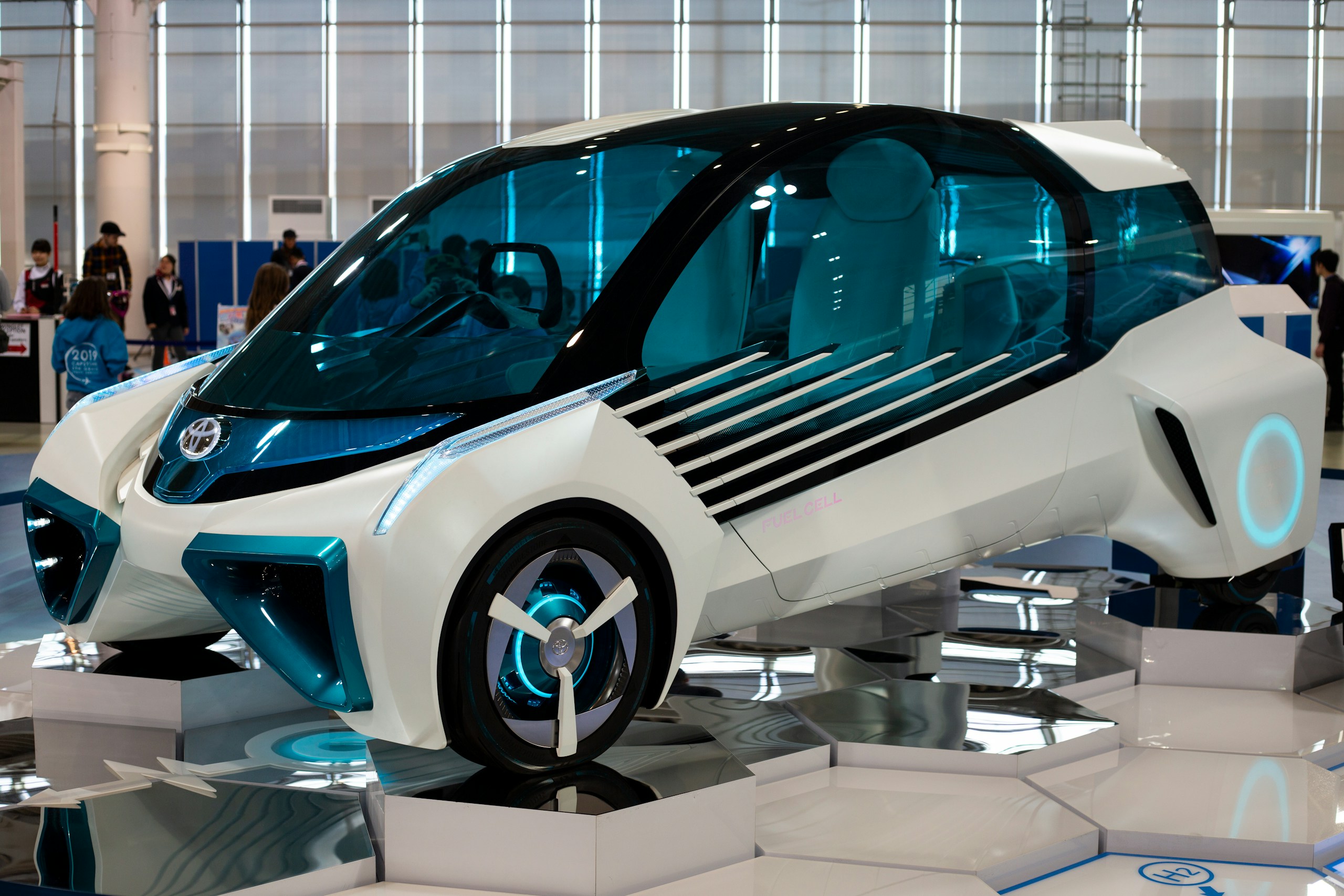
High-Tech Vehicles Promise More Reliability—But More Technology Can Also Mean More Problems
The automotive industry is changing faster than ever before.
Manufacturers are using artificial intelligence to optimize engine performance, sophisticated thermal management systems to extend engine life, predictive maintenance software to identify problems before they occur, and hundreds of sensors to improve everything from fuel economy to safety.
Recent reports have highlighted how engineers are using AI and advanced thermal technologies to increase engine durability and efficiency. These innovations are exciting, and many will make vehicles safer and more reliable over time.
But there’s another side to the story that consumers rarely hear.
Every new piece of technology adds another potential point of failure.
Today’s vehicles aren’t simply mechanical machines—they’re rolling computer networks. A modern vehicle may contain more than 100 electronic control modules, dozens of cameras and sensors, millions of lines of software code, and multiple communication networks that must all function together seamlessly.
When they do, the driving experience is remarkable.
When they don’t, consumers may find themselves making repeated trips to the dealership while technicians struggle to diagnose problems that didn’t even exist a decade ago.
The good news is that new technology doesn’t eliminate your legal rights. Whether your vehicle has a traditional gasoline engine, a hybrid powertrain, or the latest AI-assisted driving technology, manufacturers are still responsible for repairing warranty-covered defects. If they cannot, state Lemon Laws and the federal Magnuson-Moss Warranty Act may provide important protections.
Today’s Vehicles Are More Complex Than Ever
Many consumers assume modern vehicles should be nearly flawless because of technological advances.
In many respects, that’s true.
Vehicles today are:
- Safer
- More fuel efficient
- More powerful
- More connected
- More comfortable
Yet they’re also dramatically more complex.
A typical new vehicle may include:
- Engine control modules
- Transmission control modules
- Battery management systems
- Adaptive cruise control
- Blind-spot monitoring
- Lane-centering systems
- Automatic emergency braking
- Collision avoidance systems
- Digital instrument clusters
- Multiple touchscreens
- Voice recognition
- Wireless software updates
- Smartphone integration
- Remote vehicle monitoring
Each system depends on hardware, software, and communication between dozens of electronic components.
A failure in one module can trigger warning lights—or even disable entirely unrelated vehicle systems.
Artificial Intelligence Is Changing How Vehicles Operate
Artificial intelligence is no longer something reserved for self-driving cars.
Manufacturers increasingly use AI to improve:
- Engine efficiency
- Battery management
- Transmission operation
- Thermal control
- Predictive maintenance
- Driver assistance
- Energy consumption
- Charging strategies
For example, AI may learn your driving habits and adjust charging schedules or optimize battery performance based on weather conditions.
These advances can improve ownership.
But they also introduce another layer of software that can malfunction.
Unlike a worn-out mechanical component, AI-related issues can be difficult to reproduce and even harder to diagnose.
More Sensors Mean More Potential Failure Points
Nearly every major vehicle system now relies on sensors.
Examples include:
- Wheel speed sensors
- Oxygen sensors
- Radar sensors
- Cameras
- Ultrasonic sensors
- Temperature sensors
- Battery sensors
- Steering angle sensors
- Rain sensors
- Tire pressure sensors
If even one sensor provides inaccurate information, it may affect multiple vehicle functions.
Examples include:
- False collision warnings
- Adaptive cruise control shutting off
- Lane assist becoming unavailable
- Reduced engine performance
- Incorrect battery charging
- Transmission shifting problems
Consumers are often surprised to learn that replacing a relatively inexpensive sensor can require recalibrating numerous vehicle systems.
Software Has Become Just as Important as the Engine
Many modern vehicle problems are no longer mechanical.
Instead, they involve software.
Common complaints include:
- Frozen infotainment systems
- Black touchscreens
- Backup cameras not working
- Bluetooth failures
- Apple CarPlay disconnecting
- Android Auto problems
- Navigation freezing
- Driver assistance warnings
- Random system reboots
Software updates frequently resolve these issues.
Sometimes.
Other times, an update introduces entirely new problems.
Consumers may find themselves visiting the dealership repeatedly for software “reprogramming” without ever receiving a permanent solution.
Hybrid Systems Introduce Additional Complexity
Hybrid vehicles combine two completely different propulsion systems.
They include:
- Gasoline engines
- Electric motors
- High-voltage batteries
- Inverters
- Regenerative braking
- Electronic cooling systems
- Hybrid control modules
While hybrids have proven to be remarkably reliable overall, they also contain significantly more components than traditional vehicles.
That means more potential warranty issues.
Examples include:
- Hybrid warning lights
- Battery cooling failures
- Charging system problems
- Inverter failures
- Regenerative braking malfunctions
- Hybrid software errors
These repairs often require specially trained technicians and specialized diagnostic equipment.
Technology Doesn’t Eliminate Manufacturing Defects
Consumers sometimes believe sophisticated engineering means defects should be rare.
Unfortunately, complexity can actually increase opportunities for manufacturing errors.
A vehicle may contain:
- Millions of software commands
- Hundreds of wiring connectors
- Multiple communication networks
- Advanced electronic modules
A small programming error can produce:
- Warning lights
- Engine shutdowns
- No-start conditions
- Driver assistance failures
- Charging problems
- Transmission issues
These defects are no less real simply because they originate in software instead of metal.
When “No Problem Found” Becomes a Problem
One of the biggest frustrations consumers experience involves intermittent technology failures.
Examples include:
- Dashboard goes black—but only once every two weeks.
- Vehicle refuses to start randomly.
- Cameras stop working for five minutes.
- Navigation freezes only during long trips.
- Warning lights disappear before arriving at the dealership.
Technicians can only diagnose what they observe.
As a result, many repair orders include language like:
“Unable to duplicate concern.”
That does not mean the defect never occurred.
Intermittent software and electronic problems are among the most challenging warranty issues facing today’s consumers.
The key is to continue documenting every occurrence.
Can High-Tech Vehicles Still Qualify as Lemons?
Absolutely.
One of the biggest misconceptions about Lemon Laws is that they only apply to catastrophic mechanical failures like blown engines or broken transmissions.
In reality, most state Lemon Laws focus on how the defect affects the vehicle, not what caused it.
Generally speaking, a vehicle may qualify if a defect substantially impairs its:
- Use
- Value
- Safety
Whether that defect is caused by a failed fuel pump or faulty software often makes little difference.
Consider these examples:
- Your vehicle randomly shuts off because an electronic control module loses communication.
- A software glitch disables adaptive cruise control and lane-keeping assist every few days.
- The infotainment system repeatedly freezes, preventing the backup camera from functioning.
- The vehicle refuses to start because the electronic immobilizer cannot authenticate the key.
- The hybrid system repeatedly enters “limp mode” because of software conflicts.
These may all involve software rather than mechanical components, but they can significantly affect the vehicle’s safety, reliability, and value.
The Rise of “Electronic Lemons”
Twenty years ago, Lemon Law cases often centered around:
- Engine failures
- Transmission problems
- Brake defects
- Suspension failures
Today, attorneys increasingly see cases involving:
- Infotainment systems
- Driver-assistance technologies
- Camera systems
- Battery management software
- Electronic steering
- Wireless connectivity
- Smartphone integration
- Over-the-air (OTA) software updates
- Digital instrument clusters
As vehicles become more software-driven, electronic defects are becoming just as significant as mechanical ones.
Over-the-Air Updates Aren’t Always Permanent Fixes
One of the biggest changes in modern vehicles is the ability for manufacturers to update software remotely.
OTA updates can correct:
- Navigation bugs
- Charging issues
- Infotainment glitches
- Driver-assistance features
- Battery management software
In many cases, these updates work exactly as intended.
But not always.
Consumers occasionally experience situations where:
- One software update fixes one issue but creates another.
- The same update must be installed multiple times.
- Problems return weeks later.
- Multiple updates fail to resolve the original complaint.
Repeated software updates that fail to permanently correct a substantial defect may become important evidence in a warranty or Lemon Law claim.
Multiple Small Problems Can Become One Big Problem
Many consumers think they need one catastrophic defect to qualify under a Lemon Law.
That’s often not true.
Imagine a vehicle with:
- A frozen touchscreen
- Random warning lights
- Cameras that intermittently fail
- Adaptive cruise control that shuts off
- Bluetooth disconnecting
- A battery warning message
- Occasional no-start conditions
Individually, each problem might appear relatively minor.
Together, they can significantly interfere with ownership.
Many state Lemon Laws consider whether the overall repair history demonstrates that the manufacturer has been unable to provide a reliable vehicle.
The Importance of Repair Attempts
Every state’s Lemon Law is different, but most require manufacturers to receive a reasonable opportunity to repair warranty-covered defects.
That generally means continuing to take the vehicle to an authorized dealership whenever problems occur.
Do not assume:
“I’ve already been there twice—they’ll never fix it.”
Continue documenting each repair attempt.
Repeated repair visits often become some of the strongest evidence supporting a claim.
Keep Detailed Records
Technology-related defects are often intermittent.
Documentation is critical.
Keep copies of:
- Every repair order
- Warranty invoices
- Recall notices
- Software update records
- Photos of warning lights
- Videos showing the defect
- Tow bills
- Rental vehicle receipts
- Emails with the dealership
- Messages through the manufacturer’s mobile app
If your dashboard displays an error message, take a photograph before restarting the vehicle.
Many electronic warning messages disappear after the vehicle is turned off.
Review Every Repair Order Before You Leave
One simple habit can dramatically strengthen your claim.
Before leaving the dealership, read the repair order.
Make sure it accurately reflects your complaint.
Instead of:
Customer requests inspection.
It should say something like:
Customer states vehicle lost power while driving and multiple warning lights illuminated.
Or:
Customer states touchscreen froze and backup camera failed to activate.
Specific descriptions create a much stronger repair history.
Don’t Ignore “No Problem Found”
Electronic defects often disappear before technicians inspect the vehicle.
If your repair order states:
Unable to duplicate concern.
continue bringing the vehicle back whenever the issue returns.
Intermittent defects are still defects.
Many successful Lemon Law cases involve problems that technicians initially struggled to reproduce.
The Magnuson-Moss Warranty Act
Even if your state’s Lemon Law no longer applies, federal law may still protect you.
The Magnuson-Moss Warranty Act requires manufacturers to honor their written warranties.
Unlike many state Lemon Laws, Magnuson-Moss claims often:
- Extend beyond the initial Lemon Law period.
- Cover multiple different warranty defects.
- Apply to many used vehicles that remain under warranty.
- Allow prevailing consumers to recover attorney’s fees.
This federal law has become increasingly important as modern vehicles experience complex electronic and software-related failures.
Frequently Asked Questions
Can software alone make a vehicle a lemon?
Yes.
If software defects substantially impair the vehicle’s use, value, or safety—and the manufacturer cannot repair them—they may qualify under many state Lemon Laws.
What if the dealership keeps installing updates?
Manufacturers generally have the right to attempt warranty repairs.
However, repeated unsuccessful software updates may demonstrate that the defect has not actually been corrected.
My driver-assistance systems keep failing. Does that matter?
Potentially.
Features like adaptive cruise control, automatic emergency braking, lane-centering, blind-spot monitoring, and backup cameras are important safety systems.
Repeated failures should never be ignored.
Can multiple electronic problems count together?
Often, yes.
Many states evaluate the vehicle’s overall repair history rather than requiring one single catastrophic failure.
Do I need an engine failure to have a Lemon Law claim?
No.
Modern Lemon Law claims increasingly involve electronics, software, sensors, and vehicle communication systems rather than traditional mechanical failures.
Final Thoughts
Artificial intelligence, advanced sensors, sophisticated software, and connected vehicle technologies are transforming the automotive industry. These innovations promise greater safety, improved efficiency, enhanced convenience, and a better driving experience. For most owners, they deliver exactly that.
But innovation does not eliminate manufacturing defects.
Today’s vehicles are among the most technologically advanced consumer products ever built, and with that sophistication comes increased complexity. A faulty sensor, corrupted software update, malfunctioning electronic control module, or defective hybrid management system can leave a modern vehicle just as unreliable as a failed engine or transmission.
The law recognizes that consumers purchase reliable transportation—not endless repair appointments or experimental technology that doesn’t function as promised. Whether the problem involves artificial intelligence, advanced driver-assistance systems, battery management software, infotainment glitches, or repeated electronic failures, manufacturers remain responsible for honoring their warranties.
If your high-tech vehicle continues returning to the dealership for the same software or electronic problems, don’t assume those issues are simply “normal” because the vehicle is technologically advanced. State Lemon Laws and the federal Magnuson-Moss Warranty Act protect consumers regardless of whether a defect is mechanical, electrical, or digital.
As vehicles continue evolving, consumer protections evolve with them. Understanding your rights—and documenting every repair attempt—can help ensure that cutting-edge technology doesn’t become an expensive and frustrating ownership experience.