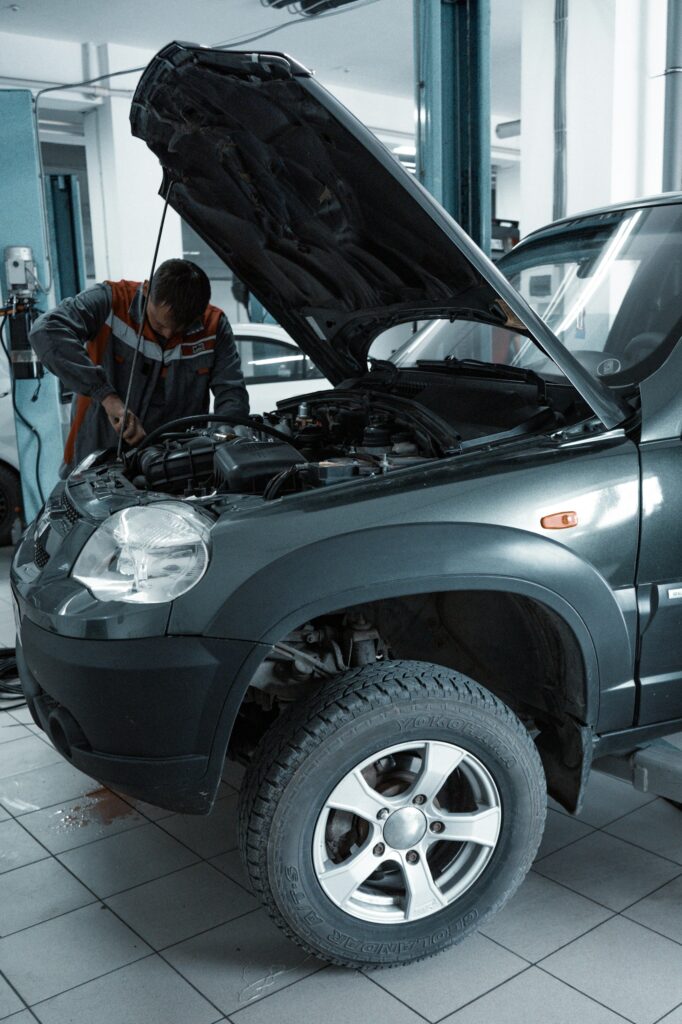
A Ford Expedition is supposed to be a large, capable SUV that can handle family transportation, long trips, towing, daily commuting, and everything in between.
What it should not become is a vehicle that constantly needs warranty repairs.
If your Expedition has recurring transmission problems, engine trouble, electrical failures, repeated warning lights, loss of power, steering issues, braking concerns, or another defect that Ford cannot seem to fix, you may be wondering whether Texas Lemon Law protections apply.
For some consumers, they may.
Texas has a Lemon Law process designed to help qualifying consumers who purchase or lease new motor vehicles with substantial warranty-covered defects that remain unresolved after a reasonable number of repair opportunities.
Whether your Ford Expedition qualifies depends on the specific facts.
That means the repair history, mileage, timing, warranty coverage, days out of service, seriousness of the defect, and communications with Ford can all matter.
If your Expedition keeps going back to the dealership, now is the time to organize your records and understand your rights.
Can a Ford Expedition Qualify Under the Texas Lemon Law?
Yes.
A Ford Expedition can potentially qualify under the Texas Lemon Law if the applicable requirements are met.
The Texas Department of Motor Vehicles, or TxDMV, administers the state’s Lemon Law program.
The law generally applies to qualifying new vehicles with substantial defects covered by the manufacturer’s written warranty when the manufacturer or authorized dealer has had a reasonable opportunity to repair the problem and the defect continues.
The vehicle’s model is not what determines whether it qualifies.
Instead, important questions can include:
- What is the defect?
- Is the defect substantial?
- Is it covered by Ford’s original warranty?
- When did the problem first appear?
- What was the mileage?
- How many times was the Expedition presented for repair?
- Was the same defect reported repeatedly?
- Does the problem still exist?
- How many days has the Expedition been out of service?
- Was a comparable loaner vehicle provided?
- Does the defect substantially impair use or market value?
- Does it create a serious safety hazard?
- Did Ford receive written notice and an opportunity to cure?
- Were applicable Texas filing deadlines met?
Those questions are much more important than simply asking whether other Expedition owners have had the same problem.
Common Ford Expedition Problems That May Matter
There is no automatic list of Ford Expedition defects that creates a Lemon Law claim.
A particular problem must be evaluated in context.
Potential warranty-related complaints can involve the engine, transmission, drivetrain, electrical system, steering, braking, electronics, climate-control systems, or other components.
The recurring nature and seriousness of the defect are key.
Ford Expedition Transmission Problems
Transmission problems can make a large SUV difficult or unpleasant to drive.
Potential symptoms may include:
- Harsh shifting
- Delayed shifting
- Jerking
- Shuddering
- Hesitation
- Slipping
- Unexpected gear changes
- Difficulty accelerating
- Transmission warning messages
- Repeated software updates
- Drivetrain vibration
- Transmission component replacement
If your Expedition experiences a transmission problem, describe the symptoms accurately each time.
For example:
“The vehicle jerks during upshifts.”
“The transmission hesitates before engaging.”
“The SUV shifts harshly when slowing down.”
Specific descriptions help create a clearer repair history.
Ford Expedition Engine Problems
Engine defects can substantially affect reliability.
Potential symptoms may include:
- Engine stalling
- Loss of power
- Rough running
- Misfires
- Check-engine lights
- Overheating
- Reduced-power warnings
- Failure to start
- Abnormal noises
- Unexpected shutdowns
- Recurring engine-related fault codes
- Repeated engine repairs
If your Expedition repeatedly stalls or loses power, that may be much more significant than a minor inconvenience.
The exact circumstances matter.
Expedition Electrical Problems
Modern Expeditions rely on a large number of electronic systems.
Electrical defects can be intermittent and difficult to diagnose.
Potential complaints may involve:
- Warning lights
- Battery failures
- Starting issues
- Instrument-cluster problems
- Screen blackouts
- Camera malfunctions
- Sensor failures
- Power accessory problems
- Module failures
- Electrical system warnings
- Software glitches
- Repeated electronic repairs
If a warning appears and later disappears, take a photograph when it is safe to do so.
That can help document what happened.
Steering and Braking Concerns
Steering and braking problems deserve particular attention because they can affect vehicle control.
If your Expedition has a problem involving steering or braking, describe exactly what occurred.
Avoid vague language like:
“The steering is bad.”
Instead, say something accurate and specific, such as:
“The steering became unusually difficult to turn while driving.”
Similarly:
“The brake pedal became unusually hard and the vehicle required more distance to stop.”
Accurate descriptions matter.
How Many Repair Attempts Does Ford Get?
There is not one universal repair-attempt number that applies to every Texas Lemon Law case.
TxDMV describes several tests that help determine whether a manufacturer or authorized dealer has had a reasonable opportunity to repair the vehicle.
Three important tests are:
The Four-Times Test
The Serious Safety-Hazard Test
The 30-Day Test
The Four-Times Test
Under TxDMV guidance, the four-times test may apply when the same defect has been presented for repair four times during the first 24 months or 24,000 miles, whichever occurs first, and the defect remains unrepaired.
For example:
Your Expedition develops a recurring transmission problem at 4,000 miles.
You take it to Ford.
Repair attempt one is performed.
The problem returns.
You return to the dealership.
Repair attempt two is completed.
The same symptoms come back.
A third repair is attempted.
Then the defect happens again.
You return for a fourth time.
If the same defect remains unresolved, that repair history may become important.
The Serious Safety-Hazard Test
Texas recognizes that some defects can be more serious than others.
TxDMV defines a serious safety hazard as a life-threatening malfunction that substantially impedes the consumer’s ability to control or operate the vehicle normally or creates a substantial risk of fire or explosion.
Under the serious safety-hazard test, a qualifying defect may satisfy the repair-opportunity standard after it has been presented for repair twice within the first 24 months or 24,000 miles, whichever comes first, and remains unrepaired.
Not every problem qualifies as a serious safety hazard.
But a genuine issue affecting safe operation should be documented carefully.
The 30-Day Test
Time out of service can also be relevant.
Under TxDMV’s 30-day test, the vehicle may potentially satisfy the reasonable-opportunity requirement when it has been out of service for repair because of a defect covered by the manufacturer’s original warranty for a total of 30 days or more during the first 24 months or 24,000 miles, and a substantial defect remains.
The days do not have to be consecutive.
For example:
First repair: 8 days
Second repair: 6 days
Third repair: 9 days
Fourth repair: 10 days
Total: 33 days
That cumulative time can be important.
However, TxDMV states that days during which the consumer had a comparable loaner vehicle generally do not count toward the 30-day test.
Keep your loaner agreements.
Keep Every Repair Order
Every dealership visit should be documented.
Keep repair orders even when:
- No problem was found
- No parts were replaced
- Ford installed only a software update
- The repair was entirely under warranty
- You paid nothing
- The dealer says the vehicle is operating normally
- The problem could not be duplicated
Each repair order can help establish what was reported and what Ford attempted to do.
What If the Dealer Says “Could Not Duplicate”?
Intermittent defects can be especially frustrating.
Your Expedition may lose power, display a warning, or malfunction one day and behave normally when a technician inspects it.
If the repair order says:
Could not duplicate customer concern
keep the document.
Also make sure the complaint section accurately reflects what you reported.
If your Expedition lost power while driving, the repair order should not simply say:
“Customer requests inspection.”
The details matter.
Track Mileage and Days Out of Service
Mileage and time are central to Texas Lemon Law analysis.
For every repair visit, record:
- Date in
- Mileage in
- Complaint
- Repair performed
- Date out
- Number of days unavailable
- Whether a comparable loaner was provided
- Whether the defect returned
A simple spreadsheet can be extremely helpful.
Save Photos and Videos
When safe, save visual evidence of intermittent defects.
Useful examples can include:
- Warning lights
- Dashboard messages
- Screen failures
- Visible leaks
- Water intrusion
- Electrical errors
- Malfunctioning cameras
- Other observable conditions
Never document a defect in a way that distracts you while driving.
Save Communications With Ford
Keep more than just repair orders.
Save:
- Emails
- Text messages
- Ford customer-service case numbers
- Appointment confirmations
- Towing records
- Loaner agreements
- Warranty correspondence
- Voicemails
If you speak with Ford by phone, note the date, representative’s name if available, and any case number.
Written Notice to Ford
Texas consumers should also pay attention to the manufacturer’s written-notice requirement.
TxDMV guidance states that the consumer must provide the manufacturer written notice of the defect and at least one opportunity to cure the problem.
TxDMV recommends certified mail, return receipt requested, using the manufacturer address in the warranty information.
Keep proof of delivery.
Texas Lemon Law Filing Deadlines
Waiting too long can create problems.
TxDMV states that a Lemon Law complaint generally must be filed within six months following the earlier of:
- Expiration of the express warranty term;
- 24 months after purchase; or
- 24,000 miles following delivery of the vehicle.
That means consumers should not assume the full duration of the Ford warranty determines the Lemon Law deadline.
Mileage can become especially important for high-mileage drivers.
What Remedies May Be Available?
Depending on the circumstances, Texas Lemon Law relief may include:
Repair
Replacement
Repurchase
The appropriate remedy depends on the individual case.
A repurchase may also involve an allowance for the consumer’s use of the vehicle.
That means a buyback does not necessarily equal every dollar ever spent on the Expedition.
What If the Expedition Is Financed?
Financing does not automatically prevent a Lemon Law claim.
Keep:
- Purchase agreement
- Retail installment contract
- Down-payment records
- Loan information
- Payment history
Do not stop making required payments merely because you believe your vehicle is a lemon unless you have received appropriate legal advice.
What If You Lease the Expedition?
A qualifying leased new vehicle can potentially be covered by Texas Lemon Law protections.
Keep your:
- Lease agreement
- Payment records
- Warranty documents
- Repair orders
- Ford correspondence
- Dealer communications
What About a Used Ford Expedition?
Used vehicles can involve different rules.
A used Expedition may have certain warranty-performance protections if it remains covered by the manufacturer’s original warranty.
Important questions can include:
- Original in-service date
- Current mileage
- Mileage when purchased
- Warranty status
- Date defect first appeared
- Date defect was first reported
- Whether the defect remains
Extended service contracts should not automatically be treated as equivalent to Ford’s original manufacturer warranty.
Do Recalls Automatically Make an Expedition a Lemon?
No.
A recall and a Lemon Law claim are separate things.
A recall does not automatically prove your individual Expedition qualifies as a lemon.
Likewise, the absence of a recall does not mean your vehicle cannot have a substantial warranty defect.
Should You Trade In a Problem Expedition?
Trading in a defective vehicle may seem like an easy solution.
But a trade-in can create financial consequences.
You may:
- Roll negative equity into another vehicle
- Lose access to the vehicle for inspection
- Change the factual circumstances of a potential claim
Before selling or trading an Expedition that may qualify for Lemon Law relief, consider understanding your options first.
Ford Expedition Lemon Law FAQ
Does my Expedition need four repairs?
Not necessarily. Texas uses several different tests, including the four-times test, serious safety-hazard test, and 30-day test.
Does the same problem have to happen four times?
The four-times test focuses on the same defect. Other tests may apply depending on the circumstances.
What if Ford cannot duplicate the problem?
Keep the repair order and make sure your complaint is accurately documented.
What if Ford only updates the software?
Keep the repair order. The important question is whether the substantial defect was actually corrected.
What if my Expedition has been in the shop for weeks?
Track the total days and whether you had a comparable loaner vehicle.
Can a vehicle still qualify if it runs?
Potentially. A vehicle does not necessarily have to be completely inoperable. The seriousness and impact of the defect and other legal requirements matter.
Build an Expedition Lemon Law File
Create one folder containing:
- Purchase or lease documents
- Financing documents
- Ford warranty
- Every repair order
- Loaner agreements
- Towing records
- Photos
- Videos
- Ford correspondence
- Dealer communications
- Certified-mail records
- Repair timeline
Then summarize each repair.
For example:
Visit 1: 3,800 miles — harsh shifting — 4 days
Visit 2: 6,100 miles — same defect — 6 days
Visit 3: 9,700 miles — same defect — 8 days
Visit 4: 13,200 miles — same defect — 7 days
A simple summary can make a complicated history much easier to understand.
Your Expedition Should Be Transportation, Not a Repair Project
You bought or leased a Ford Expedition because you needed a dependable SUV.
Repeated dealership visits for a substantial unresolved warranty defect are not something you should simply ignore.
Texas consumers may have legal options.
The sooner you organize the repair history and understand the applicable rules, the easier it may be to determine whether your Expedition potentially qualifies.
Contact Ginsburg Law Group About Your Texas Ford Expedition
If your Ford Expedition has repeatedly returned to the dealership for the same unresolved warranty problem, consider having the repair history evaluated.
Ginsburg Law Group represents consumers dealing with defective vehicles, warranty disputes, and Lemon Law claims.
Your Expedition may warrant further review if it has experienced repeated:
- Transmission problems
- Engine problems
- Stalling
- Loss of power
- Electrical failures
- Warning lights
- Steering issues
- Braking concerns
- Software problems
- Other substantial warranty-covered defects
Keep your records.
Track the mileage.
Count the days out of service.
Save communications with Ford.
And do not ignore Texas Lemon Law deadlines while the repair cycle continues.
Contact Ginsburg Law Group about your Texas Ford Expedition Lemon Law concerns.
Every matter depends on its individual facts and applicable law. Prior results do not guarantee a similar result. This article is provided for general informational purposes only and does not constitute legal advice.