If you’ve started exploring estate planning, you may have come across the term “A/B trust planning.”
It can sound technical, but the concept is actually straightforward—and for the right families, it can be a powerful tool.
So what is it, how does it work, and is it still relevant today?
What Is A/B Trust Planning?
A/B trust planning is a strategy used by married couples to:
- Preserve estate tax exemptions
- Provide for a surviving spouse
- Control how assets are ultimately distributed
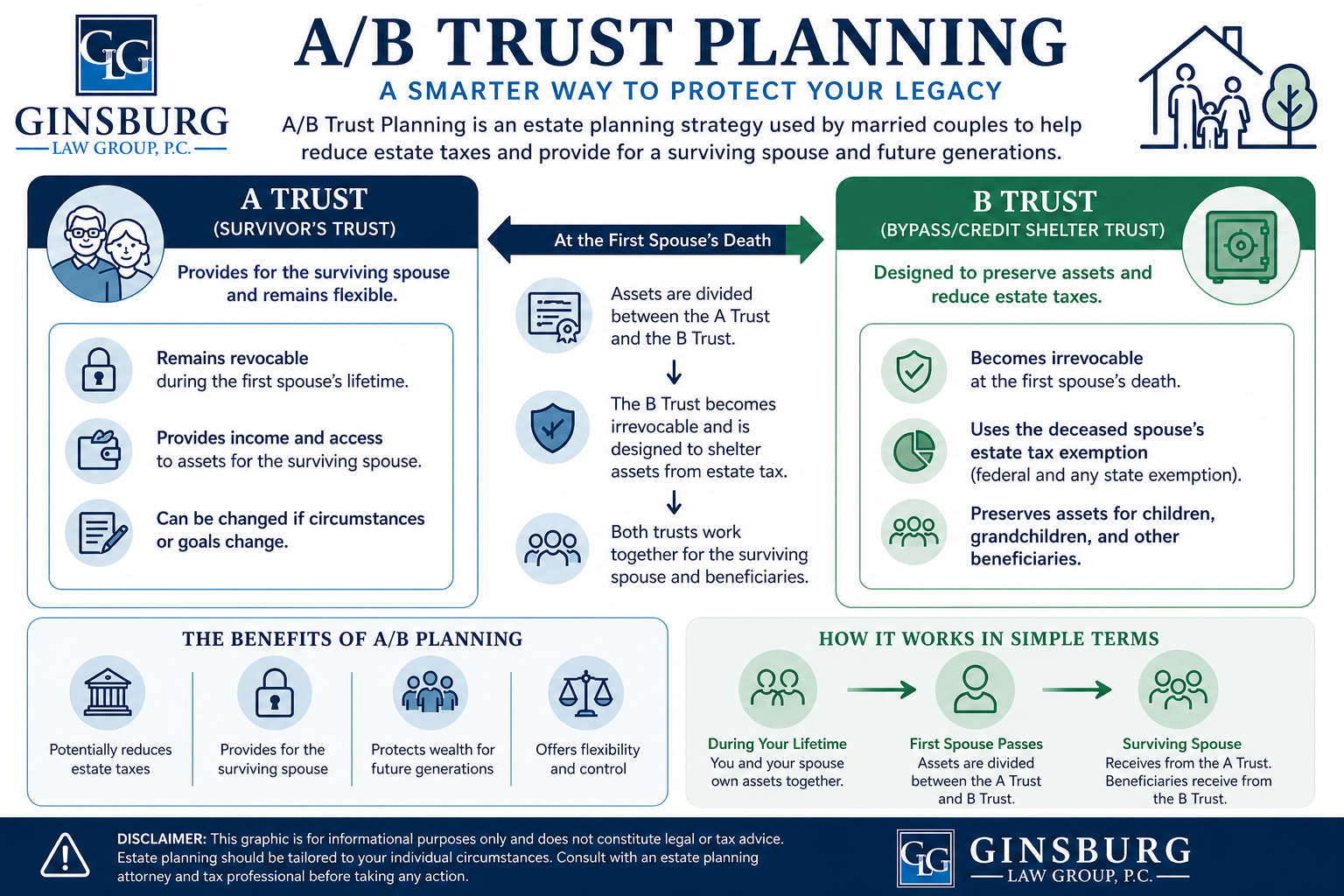
It typically involves a revocable living trust that splits into two separate trusts when the first spouse passes away:
🔹 “A Trust” (Survivor’s Trust)
- Controlled by the surviving spouse
- Remains revocable (can be changed)
- Used for the survivor’s ongoing needs
🔹 “B Trust” (Bypass or Credit Shelter Trust)
- Becomes irrevocable at the first spouse’s death
- Holds a portion of the assets
- Designed to “bypass” estate taxes when the second spouse dies
How It Works (Simple Example)
Let’s say a married couple has a combined estate.
When the first spouse dies:
- The trust divides into two parts:
- A Trust → for the surviving spouse
- B Trust → locked in for tax and protection purposes
The B Trust:
- Uses the deceased spouse’s estate tax exemption
- Is not included in the surviving spouse’s taxable estate later
👉 This can significantly reduce estate taxes for larger estates.
Why A/B Trust Planning Was So Popular
Before changes in tax law, A/B trusts were almost standard for married couples.
Why?
Because:
- Each spouse had a separate estate tax exemption
- If not used, the first spouse’s exemption could be lost
A/B planning ensured:
Both exemptions were preserved—potentially saving significant taxes.
What Changed?
Today, estate tax laws are different:
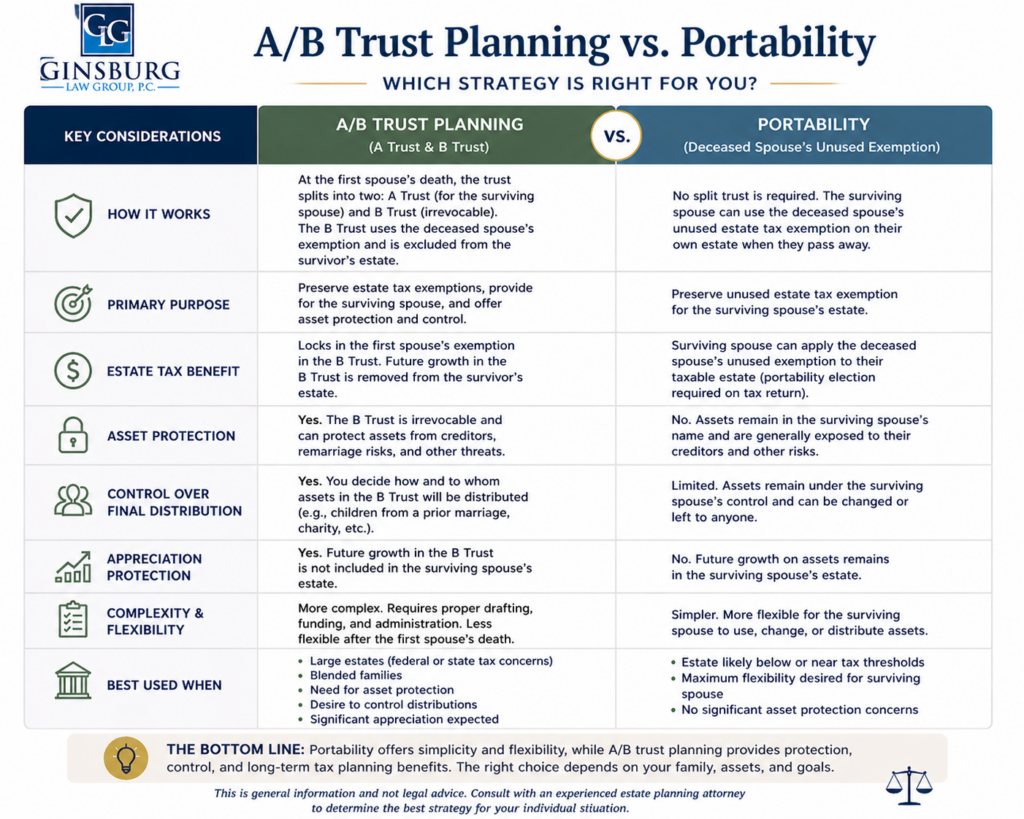
- There is now “portability”
- A surviving spouse can often use the deceased spouse’s unused exemption
This means:
👉 A/B trusts are no longer automatically necessary for tax reasons alone.
So Do You Still Need an A/B Trust?
Sometimes yes—and sometimes no.
It depends on your goals.
When A/B Trust Planning Still Makes Sense
Even with portability, A/B trusts are still valuable in many situations.
🔹 1. Asset Protection
The B Trust can:
- Protect assets from creditors
- Shield assets from remarriage risks
- Prevent misuse or mismanagement
🔹 2. Control Over Final Distribution
An A/B structure allows you to:
- Ensure assets ultimately go to your chosen beneficiaries
- Protect children from a prior marriage
- Prevent unintended inheritance outcomes
👉 This is especially important in blended families.
🔹 3. Appreciation Protection
Assets in the B Trust:
- Are removed from the surviving spouse’s estate
- Future growth is also excluded from estate tax
This can be significant for:
- Real estate
- Investments
- Business interests
🔹 4. State Estate Tax Planning
Some states have their own estate taxes with lower thresholds.
An A/B trust can help:
- Preserve state-level exemptions
- Reduce state estate taxes
When You Might Not Need It
A simpler plan may be appropriate if:
- Your estate is well below tax thresholds
- You want maximum flexibility for the surviving spouse
- You don’t have asset protection or control concerns
In these cases, portability plus a well-drafted revocable trust may be enough.
Pros and Cons of A/B Trust Planning
✅ Pros
- Preserves estate tax benefits
- Protects assets
- Controls final distribution
- Helps in blended family situations
⚠️ Cons
- More complex administration
- Requires proper funding and tracking
- Less flexibility after the first spouse’s death
A Common Misunderstanding
Many people assume:
“A/B trusts are outdated.”
That’s not entirely true.
👉 They are less necessary for taxes alone, but still extremely useful for:
- Protection
- Control
- Strategic planning
The Bottom Line
A/B trust planning is not a one-size-fits-all solution—but it remains a valuable tool.
At its core, it’s about:
- Protecting your spouse
- Preserving assets
- Ensuring your wishes are carried out
Should You Include A/B Planning in Your Estate Plan?
The right answer depends on:
- Your asset level
- Your family structure
- Your long-term goals
An experienced estate planning attorney can help you decide:
- Whether A/B planning makes sense
- Or whether a simpler structure will achieve your goals
Need Guidance?
If you’re considering a trust—or reviewing an existing plan—it’s worth understanding whether A/B planning is right for you.
Because the best estate plan isn’t just about avoiding taxes—it’s about making sure your plan works exactly the way you intend.