Most people assume their spouse or children will automatically inherit everything when they pass away. But what happens if you die without a will in PA might surprise you. Pennsylvania’s intestacy laws, not your personal wishes, determine who inherits your assets and how much they receive.
Without a valid will, the state follows a strict formula for asset distribution. Your surviving spouse may not get everything, even if that was your intention. Children, parents, or even distant relatives could receive portions of your estate, while people you actually wanted to provide for, like a long-term partner or close friend, might receive nothing at all.
At Ginsburg Law Group, our estate planning services help Pennsylvania residents avoid these outcomes by creating clear, legally binding documents. This guide explains how intestate succession works in Pennsylvania, walks you through the probate process, and shows why having a will matters more than most people realize.
Why dying intestate matters in Pennsylvania
When you die without a will, Pennsylvania’s intestate succession laws take control of your estate. The state treats your assets like a mathematical formula, dividing them among relatives based on rigid rules rather than your relationships or needs. Your actual wishes become irrelevant, and the people you care most about might receive far less than you intended, or nothing at all.
Understanding what happens if you die without a will in PA becomes critical when you realize the state’s priorities rarely align with modern family structures. The law was designed decades ago and doesn’t account for blended families, unmarried partners, stepchildren you helped raise, or close friends who matter more than distant blood relatives. Your estate becomes subject to default rules that might contradict everything you would have chosen.
Your spouse doesn’t automatically inherit everything
Many Pennsylvania residents believe their surviving spouse will receive the entire estate. This assumption proves wrong in most cases. If you have children from your current marriage, your spouse receives the first $30,000 plus half the remaining estate, while your children split the other half. The situation becomes more complicated if you have children from a previous relationship, where your spouse might receive only half of everything, regardless of the estate’s value.
Pennsylvania law prioritizes bloodlines over spousal relationships when distributing intestate estates, often leaving surviving spouses with far less than expected.
Your spouse could face immediate financial hardship while waiting for probate to resolve. They might need court permission to access joint assets or face challenges paying bills that were solely in your name. This creates unnecessary stress during an already difficult time.
Unintended beneficiaries could receive your assets
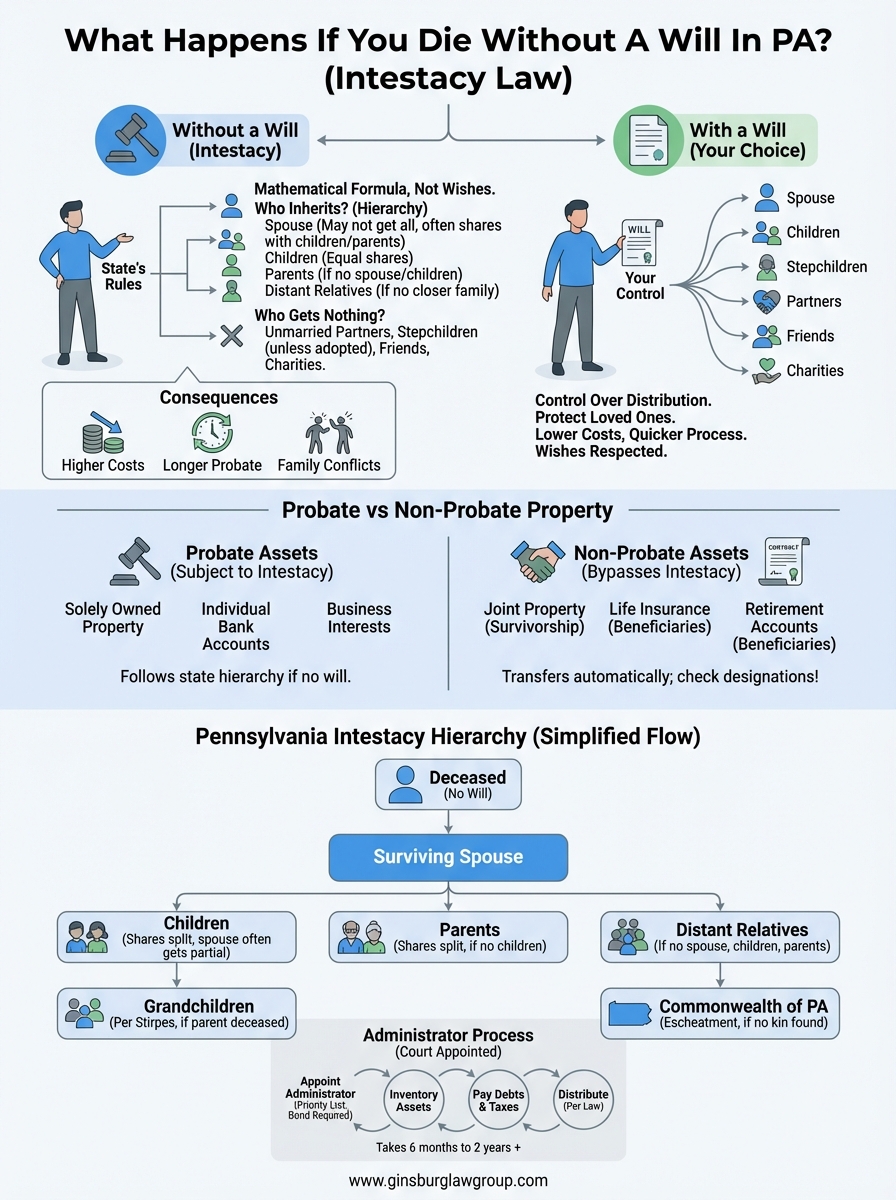
Pennsylvania’s intestacy laws follow a strict hierarchy. If you die without a will or surviving spouse, your entire estate goes to your children in equal shares. No children? Your parents inherit everything, even if you haven’t spoken to them in years. If your parents are deceased, siblings become beneficiaries, followed by more distant relatives like nieces, nephews, and cousins.
Unmarried partners receive nothing under intestate succession, regardless of how long you lived together. Stepchildren you helped raise have no legal claim unless you formally adopted them. Charities, close friends, or organizations you supported your entire life get excluded completely.
The probate process becomes more complex and expensive
Dying intestate adds months or years to probate and increases costs significantly. The court must appoint an administrator rather than following your designated executor. Your estate pays higher bond fees, additional court appearances, and potentially more attorney time for disputed distributions. Family members might challenge the administrator’s decisions, creating conflicts that drain both emotional energy and financial resources.
How Pennsylvania intestate succession works
Pennsylvania follows a specific hierarchy to distribute your estate when you die without a will. The law starts with your closest relatives and moves outward only if those closer family members don’t exist. This system determines what happens if you die without a will in PA, regardless of your actual relationships with these people or their financial needs.
The distribution hierarchy when you die intestate
Your surviving spouse receives priority, but their share depends on whether you have children or parents still living. If you have children together, your spouse gets the first $30,000 plus half of the remaining balance, while your children split the other half equally. When you have children from a previous relationship, your spouse receives only half of everything, with your children dividing the rest.
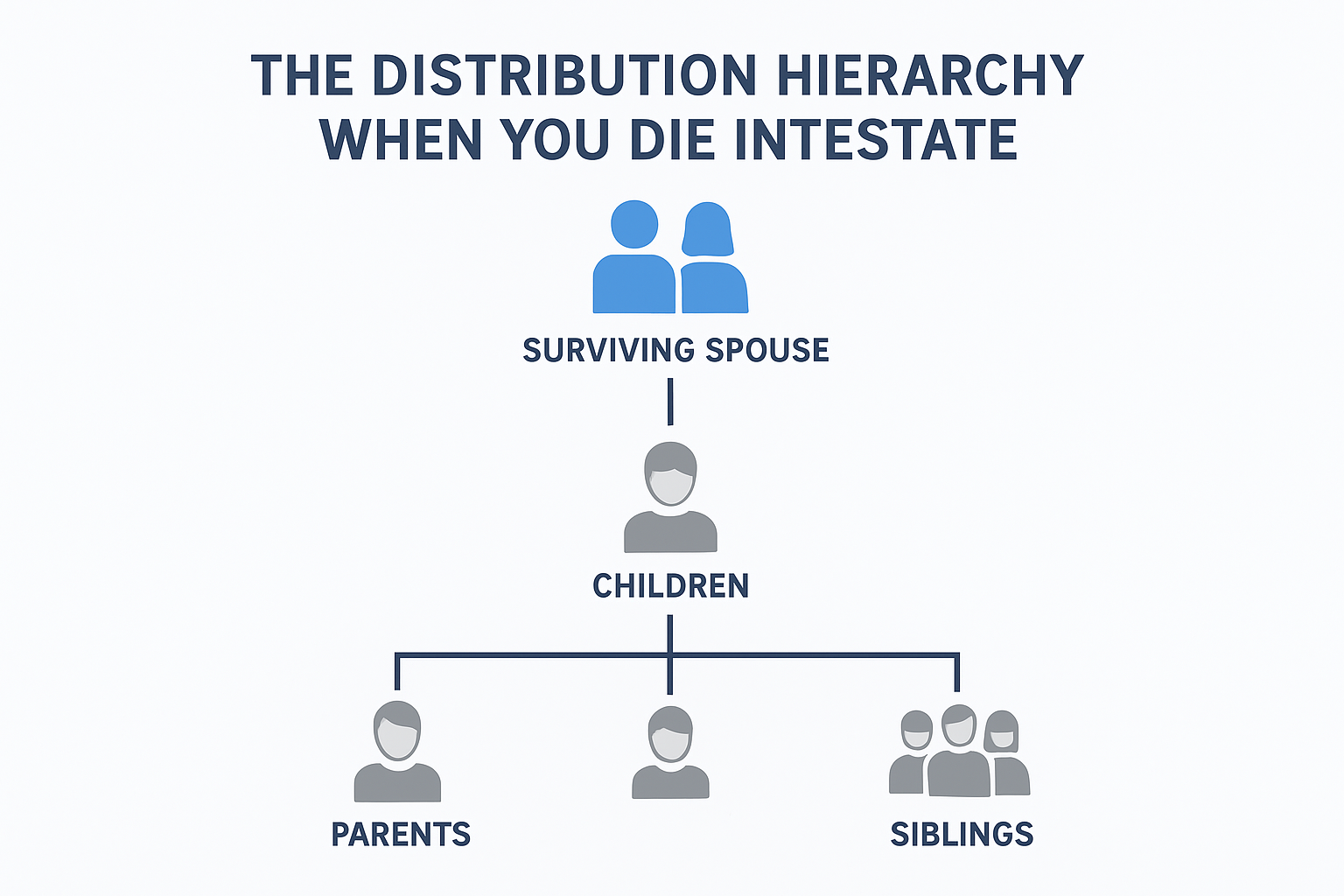
Pennsylvania’s intestacy laws create a mathematical formula for inheritance that ignores the actual financial needs of your survivors or your intentions.
No surviving spouse or children? Your parents inherit everything in equal shares. If both parents are deceased, your siblings become the beneficiaries. The law continues down the line to nieces, nephews, grandparents, aunts, uncles, and cousins if necessary. Only when no relatives can be located does your estate go to the Commonwealth of Pennsylvania through escheatment.
Specific distribution scenarios
Children always receive equal shares under intestacy rules. If one of your children died before you, their children (your grandchildren) split their parent’s portion equally. This per stirpes distribution continues down generational lines, ensuring bloodline descendants receive something even if their direct parent predeceased you.
Adopted children receive the same rights as biological children under Pennsylvania law. Half-siblings inherit equally with full siblings. However, stepchildren you never legally adopted have no inheritance rights, regardless of how long you raised them or how close your relationship was. Foster children similarly receive nothing unless you completed a formal adoption.
What counts as probate vs non-probate property
Not all your assets follow intestate succession rules. Understanding what happens if you die without a will in PA requires knowing which property goes through probate and which transfers automatically to other people. This distinction determines whether Pennsylvania’s intestacy laws control an asset’s distribution or whether pre-existing ownership structures take precedence.
Property that passes through probate
Assets titled solely in your name go through probate and follow intestacy rules when you die without a will. Your individually owned bank accounts, investment portfolios, real estate, vehicles, and personal belongings all enter your probate estate. The court must identify these assets, value them, and distribute them according to Pennsylvania’s succession hierarchy.
Business interests you own outright also require probate distribution. Your sole proprietorship, ownership stake in partnerships, or shares in closely held corporations become estate assets unless you created business succession agreements. These assets often create complications during probate because their value can be difficult to establish and they might generate ongoing income that needs management before distribution.
Non-probate property that bypasses intestacy laws
Assets with designated beneficiaries transfer directly to those people without court involvement. Your life insurance policies, retirement accounts, IRAs, 401(k)s, and annuities all pass to the beneficiaries you named on the account forms. Pennsylvania’s intestacy laws don’t touch these assets, even if your designated beneficiaries differ from who would inherit under the state’s default rules.
Non-probate transfers happen automatically through beneficiary designations or ownership structures, completely bypassing intestacy laws and probate court.
Jointly owned property with survivorship rights goes directly to the surviving owner. When you hold real estate, bank accounts, or other assets as joint tenants with right of survivorship, the other owner receives full ownership immediately upon your death. Payable-on-death (POD) and transfer-on-death (TOD) designations work similarly, allowing named individuals to claim assets without probate involvement.
How probate works without a will in PA
The probate process becomes more complicated when you die without a will. Pennsylvania courts must appoint someone to manage your estate, locate all your assets, pay your debts, and distribute what remains to your heirs. This process typically takes six months to two years, depending on your estate’s complexity and whether family members dispute the distribution.
The administrator appointment process
Without a named executor, the court must appoint an administrator to handle your estate. Pennsylvania law establishes a priority list for who can serve. Your surviving spouse has first priority, followed by your children, grandchildren, parents, siblings, and other next of kin. The person seeking appointment must post a bond to protect the estate from mismanagement, which increases the overall cost.
Multiple family members might petition for the administrator role, creating disputes that delay the entire process. The court holds hearings to determine who is best suited to serve. Anyone with equal priority can object to another family member’s appointment, forcing the court to evaluate each candidate’s qualifications and potential conflicts of interest.
What the administrator must do
Your administrator must identify and inventory all probate assets, including bank accounts, real estate, investments, and personal property. They file this inventory with the court within a specific timeframe. Every asset requires proper valuation, which might mean hiring appraisers for real estate, businesses, or valuable personal items.
Understanding what happens if you die without a will in PA means recognizing that administrators follow the same basic probate steps as executors, but with more court oversight and higher costs.
The administrator pays your final bills, taxes, and creditor claims from estate assets before distributing anything to heirs. They must publish notice to creditors, giving them time to file claims. Pennsylvania requires administrators to file detailed accountings with the court, showing every dollar received and spent. Only after the court approves these accountings can your administrator distribute assets according to intestacy laws.
Common pitfalls and exceptions to know
Pennsylvania’s intestacy laws contain several traps that catch families off guard. Understanding what happens if you die without a will in PA means recognizing both the common mistakes that complicate estate administration and the specific exceptions that change how assets distribute. These issues often surface months into probate, creating unexpected costs and family conflicts that proper planning would have prevented.
Mistakes that complicate intestate estates
Outdated beneficiary designations create major problems when they conflict with intestacy expectations. Your ex-spouse might still be listed on your life insurance policy from before your divorce, meaning they receive those proceeds instead of your current family. Pennsylvania law doesn’t automatically revoke beneficiary designations after divorce for most accounts, leaving your intentions unfulfilled.
Families often discover missing documentation for jointly owned property during probate. If you added someone to your bank account for convenience rather than ownership, the court might treat this as a joint account with survivorship rights. Your intended heirs lose that asset entirely, even though you never meant to gift it to the account co-owner.
Special exceptions under Pennsylvania law
Pennsylvania recognizes certain inheritance rights that override standard intestacy rules in specific situations. Children born after your death still inherit their full share under intestacy laws. Similarly, children conceived before your death but born afterward receive equal treatment with your other descendants, protecting their inheritance rights despite the timing.
Pennsylvania’s intestacy exceptions protect specific vulnerable groups, but these protections only apply when someone knows to assert them during probate.
Incapacity determinations affect inheritance distribution when an heir cannot manage their own finances. The court appoints a guardian to receive and manage that person’s inheritance rather than denying them their share. Creditor claims against your estate follow specific priority rules, with funeral expenses, administration costs, and certain taxes paid before other debts, which can reduce what your heirs ultimately receive.
Next steps for your family
You now understand what happens if you die without a will in PA and the complications your family faces when intestacy laws take control. Pennsylvania’s rigid distribution formulas ignore your relationships, your family’s needs, and your actual intentions. Your estate faces higher costs, longer delays, and potential family conflicts that proper planning prevents entirely.
Creating a will gives you control over who receives your assets and how much they inherit. You protect your spouse from receiving less than you intended, ensure children from previous relationships receive fair treatment, and include people who matter to you but have no legal standing under intestacy rules. Professional estate planning costs far less than the probate complications your family faces without one.
Ginsburg Law Group provides comprehensive estate planning services to Pennsylvania residents who want to protect their families from intestacy outcomes. Schedule your free consultation to create legally binding documents that ensure your wishes determine your estate’s distribution.
Leave your feedback
Are you happy with the article?