
In vitro fertilization has made it possible for a child to be conceived months or even years after a parent has died. Embryos, eggs and sperm can be stored for a long time, and many families who have gone through IVF still have frozen embryos at a clinic. Most wills and trusts were never written with that possibility in mind.
This raises practical questions an estate plan should answer. If a child is born from a frozen embryo three years after Dad dies, is that child one of Dad’s “children” under his will? Does the child share in a family trust set up for “my descendants”? Who decides what happens to the embryos? The answers depend heavily on which state’s law applies and on what your documents say.
The core problem: estates have to close, but embryos can wait
Inheritance law has long protected a child who was already conceived when a parent died and is born afterward. IVF stretches that rule. If any child conceived after death could inherit, an estate or trust could never be distributed with confidence, because another heir might still be born. Legislatures have tried to balance that against fairness to the child. They have done it in different ways, and some states have not addressed the issue at all.
Texas: the general rule
Texas draws a fairly firm line. Under Texas Estates Code § 201.056, a person has no right to inherit from someone who dies without a will unless the person was born before, or was in gestation at, the time of death and survives by at least 120 hours. A person counts as in gestation at death only if insemination or implantation occurred at or before death. A child born before the 301st day after death is presumed to have been in gestation.
For an IVF family, the key point is that an embryo still frozen at the clinic when a parent dies is not “in gestation” under this statute. A child born from that embryo after the parent’s death generally cannot inherit from that parent through Texas intestacy.
Texas wills: class gifts and the “contrary provision” escape hatch
Wills follow a parallel rule. Texas Estates Code § 255.401 provides that a person can take as a member of a class gift, such as “to my children” or “to my grandchildren,” only if born before or in gestation at the death of the person by whom the class is measured, and only if that person survives by 120 hours. The same rule applies that implantation or insemination must occur by the date of death.
The important difference is subsection (b): “A provision in the testator’s will that is contrary to this section prevails over this section.” In other words, Texas lets you choose. If you want a child born from your frozen embryos after your death to share in your estate, your will can say so. If you say nothing, the default rule will likely exclude that child.
Texas parentage law: the physician-kept consent record
Inheritance rights depend on being a legal parent. The Texas Uniform Parentage Act addresses this directly. Under Texas Family Code § 160.707, if a spouse dies before the placement of eggs, sperm or embryos, the deceased spouse is not a parent of the resulting child unless the deceased spouse consented, in a record kept by a licensed physician, that if assisted reproduction occurred after death he or she would be a parent of the child.
Divorce works similarly. Under § 160.706, a former spouse is not a parent of a child from eggs, sperm or embryos placed after the divorce unless he or she consented in a physician-kept record. That consent can be withdrawn in a physician-kept record at any time before placement.
In practice, the clinic paperwork you sign during IVF can matter as much as your will. A will provision leaving property to posthumously conceived children may not accomplish much if the clinic consent forms do not establish parentage. The reverse is also true.
Texas: who controls the embryos?
Texas courts have been willing to enforce the embryo disposition agreements couples sign with their fertility clinics. In Roman v. Roman, 193 S.W.3d 40 (Tex. App.—Houston [1st Dist.] 2006), the court held that a couple’s agreement providing that frozen embryos would be discarded on divorce was valid and enforceable. The trial court had erred by awarding the embryos to the wife instead. The court observed that Texas public policy permits spouses to agree before implantation on what happens to embryos if there is a divorce, a death or another change in circumstances.
Those clinic forms often contain a “death of one or both spouses” election, for example discard, donate to research, donate to another couple, or transfer to the surviving spouse. Many people check a box quickly during a stressful time. Those elections should be reviewed alongside the estate plan, because your will generally cannot override a contract you signed with the clinic.
How other states handle it
There is no national rule. Here is how some of the states where Ginsburg Law Group practices compare.
- California. Probate Code § 249.5 lets a posthumously conceived child be treated as born during the parent’s lifetime, but only if it is proven by clear and convincing evidence that (1) the parent signed and dated a written specification that his or her genetic material may be used for posthumous conception and designated a person to control it, (2) that person gave written notice by certified mail, within four months of the death certificate, to whoever controls the estate or death benefits, and (3) the child was in utero within two years. Missing any step can defeat the child’s claim.
- Florida. Florida Statutes § 742.17 requires couples and their physician to sign a written agreement on the disposition of eggs, sperm and preembryos on divorce, death or other unforeseen circumstances. Without an agreement, the surviving spouse controls them after a death. A child conceived after the death of the person whose eggs or sperm were used cannot make a claim against the estate unless the will provides for the child. The will is essential.
- Maryland. Maryland’s Estates and Trusts Article § 1-205 treats a posthumously conceived child as the person’s child if the person consented in a written record to posthumous use of the genetic material and to being the child’s parent, and the child is born within two years of death. For trusts, the statute applies only where the person created the trust and the trust became irrevocable on or after October 1, 2012.
- New Jersey. No statute squarely addresses the issue, but in In re Estate of Kolacy, 753 A.2d 1257 (N.J. Super. Ct. 2000), a court held that twins conceived by IVF with a deceased husband’s banked sperm and born about 18 months after his death were his intestate heirs. The court emphasized that the father had intentionally created the possibility of posthumous children and that recognizing them did not disrupt estate administration.
- Pennsylvania and Tennessee. Their intestacy statutes protect after-born heirs who were conceived before death (20 Pa.C.S. § 2104(4); Tenn. Code Ann. § 31-2-108). They do not expressly cover children conceived after death, so planning documents carry the load. Tennessee is also home to Davis v. Davis, 842 S.W.2d 588 (Tenn. 1992), a leading case on frozen-embryo disputes, which looks first to the couple’s own agreement.
- Arizona. Arizona Revised Statutes § 25-318.03 directs divorce courts to award in vitro embryos to the spouse who intends to allow them to develop to birth, even if the couple previously agreed otherwise. The spouse who does not receive the embryos has no parental rights or responsibilities for a resulting child unless that spouse provided gametes and consents in writing, during the proceeding, to be a parent. If you have embryos in storage and a connection to Arizona, this rule should factor into both divorce and estate planning.
- States following the Uniform Probate Code. UPC § 2-120, adopted in some form by states such as Colorado, treats a posthumously conceived child as in gestation at the parent’s death if the child is in utero within 36 months or born within 45 months after death and the parent’s intent is established. These are much longer windows than Texas allows.
Federal benefits can also turn on state law. In Astrue v. Capato, 566 U.S. 541 (2012), the U.S. Supreme Court upheld the Social Security Administration’s position that twins conceived through IVF after their father’s death qualified for survivors benefits only if they could inherit from him under the intestacy law of the state where he was domiciled, which was Florida. Under Florida law they could not.
What about trusts?
Trusts raise the same issues, and often bigger ones, because a family trust can last for generations. Gifts “to my descendants,” “to my grandchildren” or “per stirpes” are class gifts, and whether a posthumously conceived child belongs to the class can change how the trust is divided. Some state statutes, like Maryland’s, speak directly to trusts. Others, like the Texas rule in § 255.401, are written for wills, which leaves a trust’s treatment of these children to its own language and to court interpretation. A well-drafted trust should not leave this question open.
IVF can also come up with trust beneficiaries other than the person who created the trust. If your adult child has embryos in storage, your trust’s definition of “grandchildren” will decide whether a grandchild born years after your child’s death takes a share.
What to put in your will or trust
If you have frozen embryos, eggs or sperm in storage, or you expect to, your estate plan should address them expressly. Common provisions include:
- A clear definition of “child” and “descendant.” State whether posthumously conceived children are included or excluded, and whether that applies only to your own children or also to grandchildren and later generations.
- A deadline. If posthumously conceived children are included, set an outside date for conception or birth, such as in utero within two or three years of death, so your executor and trustee know when the class closes and they can distribute.
- A holdback or separate share. Authorize the executor or trustee to reserve part of the estate, or keep a trust open, until the deadline passes, and say what happens to the reserve if no child is born.
- Coordination with the clinic consent forms. Make sure your fertility clinic records match your plan. In Texas, that means the physician-kept consent under Family Code § 160.707 if you intend to be the legal parent of a child conceived after your death.
- A written designation of who controls your genetic material. This is required in California, and it is good practice everywhere. Name the person and state whether you consent to posthumous use.
- Directions on the embryos themselves. Embryos are not ordinary property, and courts look first to the progenitors’ agreements. Your will can still state your wishes and name who should carry them out, consistent with your clinic contract.
- Guardianship and support. If a child may be born after your death, the plan should cover guardianship and funding for that child, for example through a separate trust share.
Moving or owning property in more than one state
Because these rules vary so much, a plan written in one state may work very differently after a move. Texas permits a contrary will provision. Florida requires the child to be provided for in the will. California requires specific written notices on a short deadline. Maryland applies a two-year birth window. If you relocate, own property in another state or have a trust administered elsewhere, your IVF provisions should be reviewed under the law that will actually govern. A choice-of-law clause in the trust can help.
Review the plan when your fertility situation changes
Revisit your estate plan when you begin IVF, when embryos are created or stored, after a successful pregnancy, if you divorce or separate, and when you decide to donate or discard remaining embryos. Each of these events can change what the right answer is and which documents need to be updated.
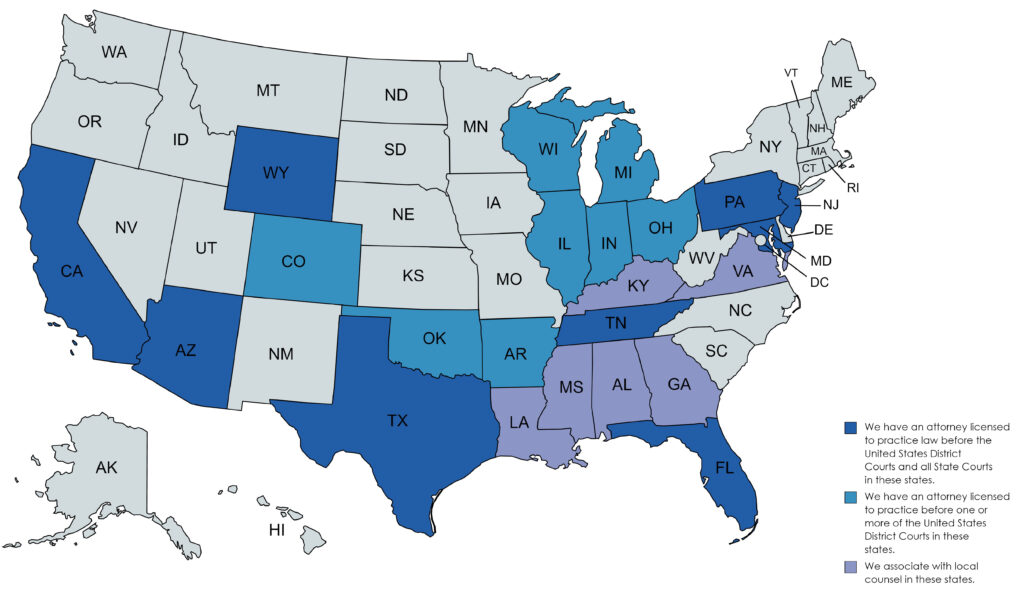
Ginsburg Law Group helps families in Texas, Pennsylvania, New Jersey, Maryland, California, Tennessee, Arizona, Florida and Wyoming build estate plans that account for IVF, frozen embryos and children who may be born after a parent’s death. Contact us to review your will, trust and fertility clinic paperwork together.
This article provides general information and is not legal advice. Laws on assisted reproduction, parentage and inheritance vary by state and change frequently. Consult an attorney about your specific situation.
Authoritative Sources
- Texas Estates Code § 201.056 (Persons Not in Being)
- Texas Estates Code § 255.401 (Posthumous Class Gift Membership)
- Texas Family Code § 160.707 (Parental Status of Deceased Spouse)
- Texas Family Code § 160.706 (Effect of Dissolution of Marriage)
- Roman v. Roman, 193 S.W.3d 40 (Tex. App. 2006)
- California Probate Code § 249.5
- Florida Statutes § 742.17
- Maryland Estates & Trusts § 1-205
- In re Estate of Kolacy (N.J. Super. 2000)
- Arizona Revised Statutes § 25-318.03
- Astrue v. Capato, 566 U.S. 541 (2012)
- ABA: Posthumous Pregnancy and Uniform Law