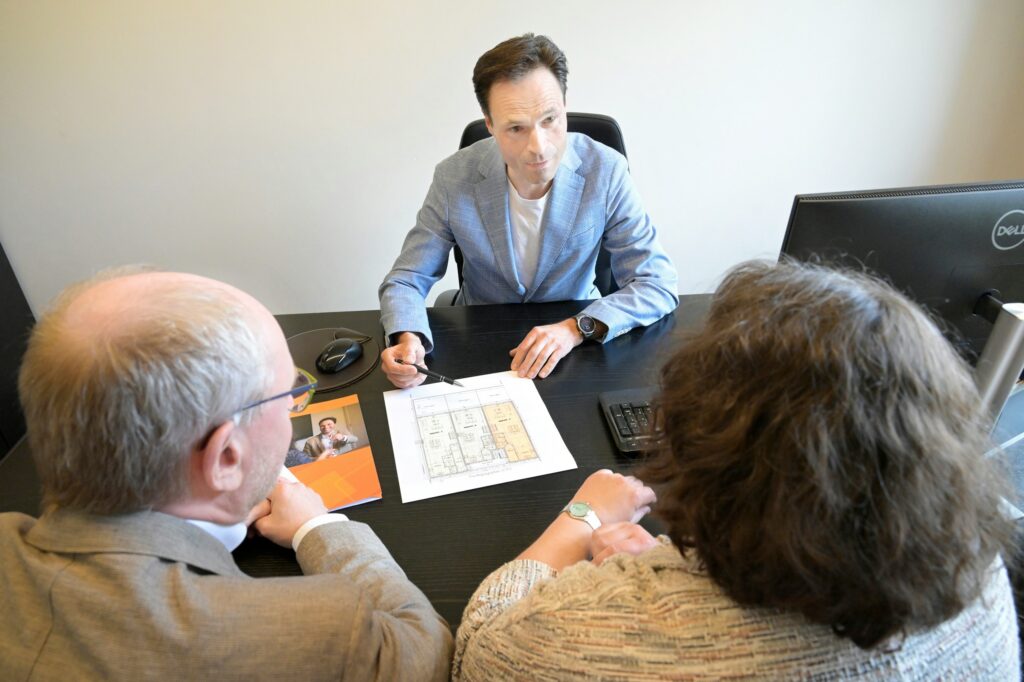
You scheduled an estate-planning meeting.
Now you’re wondering:
What exactly are we going to talk about for an hour?
Do I need to know how much every account is worth?
Do I need to bring deeds?
Are you going to ask me how much money I have?
Do I need to decide who gets everything before I arrive?
What if I have absolutely no idea whom I want to name as trustee?
And are we really going to talk about what happens if I die?
Yes—but probably not in the way you’re imagining.
A good estate-planning meeting isn’t an interrogation, and you don’t need to arrive with your entire estate plan already figured out.
That’s what the meeting is for.
We’re going to talk about your family, your assets, the people you trust, the things you’re worried about, and what you want to happen if someday you can’t make decisions for yourself or you’re no longer here.
Here is what you should expect.
1. Tell Me About Your Family
We usually start with the people.
Are you married?
Do you have children?
How old are they?
Are they from your current marriage or a prior relationship?
Do you have stepchildren?
Grandchildren?
Are your parents living?
Is there anyone else who depends upon you financially?
Then come the questions that may not appear on a standard family tree.
Is everyone getting along?
Is there a child you don’t trust with money?
Is someone going through a divorce?
Does one child have significantly more money than another?
Is someone estranged from the family?
Is there a family member with special needs?
Do you financially support an adult child?
Are there children you intentionally do not want to inherit?
Does one child believe the family vacation home is “theirs” even though nobody has actually said that?
Estate planning is about relationships as much as assets.
Two families with identical $2 million estates can need completely different estate plans.
2. What Do You Own?
Yes, eventually we have to talk about money.
But you generally don’t need to know that your brokerage account contained exactly $417,823.16 as of yesterday’s market close.
We’re trying to understand the overall picture.
That may include:
- your home;
- other real estate;
- bank accounts;
- investment accounts;
- retirement accounts;
- life insurance;
- businesses;
- LLC interests;
- stock options;
- vehicles;
- valuable personal property;
- cryptocurrency or other digital assets;
- inheritances you have received;
- property in other states; and
- anything unusual or particularly valuable.
Approximate values are often enough for the initial conversation.
The reason we’re asking isn’t curiosity.
Different assets pass differently at death, and different assets can create very different tax and planning issues.
3. How Is Everything Titled?
This question surprises people.
They’ll say:
“I have a house.”
We may respond:
“How is it titled?”
“I don’t know. It’s our house.”
That’s perfectly normal.
But legally, title matters.
Is the property solely in your name?
Jointly owned with your spouse?
Joint tenants with right of survivorship?
Tenants in common?
Community property?
Community property with right of survivorship?
Already owned by a trust?
The same applies to financial accounts.
Estate planning isn’t simply deciding who should inherit something. We also need to determine how that asset will legally get there.
4. Who Gets Everything When You Die?
Eventually we arrive at the question everyone expects.
Who should inherit?
For some people, the answer is simple:
“My spouse, and then equally to my children.”
Great.
But then we’ll start asking more questions.
What happens if one of your children dies before you?
Does that child’s share go to that child’s children?
To your surviving children?
What if you and your spouse die together?
What if a beneficiary is still a minor?
What if your child is 18?
Or 25?
Or 40 but terrible with money?
What if a child is going through a divorce when you die?
What if a beneficiary has creditor problems?
Estate planning turns “everything equally to my kids” into an actual plan capable of dealing with real life.
5. Should Your Children Receive Their Inheritance Outright?
This can become one of the most interesting parts of the meeting.
You can leave your adult child $500,000 outright.
But should you?
Maybe.
Or perhaps you’d rather leave it in a trust that your child can eventually control.
A properly designed trust may provide protection from creditors, lawsuits, divorce, poor financial decisions or other risks, depending upon applicable law and how the trust is structured and administered.
And sometimes the concern isn’t your child.
It’s your child’s spouse.
Clients occasionally become much more interested in trust planning when we ask:
“If your child dies after inheriting your money, are you comfortable with that money potentially ending up with your son-in-law or daughter-in-law?”
There isn’t a universally correct answer.
But it’s worth discussing.
6. Who Do You Trust to Be in Charge?
Now we need names.
If you become incapacitated, who should handle your finances?
Who should make medical decisions?
Who should serve as trustee?
Who should administer your estate after your death?
If you have minor children, whom would you want to serve as guardian?
And importantly:
Who is the backup?
Naming your spouse for everything may be easy.
But what happens if your spouse cannot serve?
Choosing fiduciaries can be harder than deciding who inherits.
We can talk through what each job actually involves before you decide who should have it.
7. What Happens If You Don’t Die—but Can’t Make Decisions?
Estate planning isn’t only death planning.
Incapacity planning may be just as important.
Suppose you’re seriously injured in an accident.
Or unconscious after surgery.
Or develop dementia later in life.
Who can access your accounts?
Pay the mortgage?
Deal with an insurance company?
Sign documents?
Handle your business?
Talk to financial institutions?
Make medical decisions?
Access important digital information?
This is where powers of attorney, health-care directives and revocable trusts can become critically important.
8. What Medical Decisions Do You Want Made?
This part of estate planning can feel uncomfortable, but it is incredibly valuable.
We may discuss:
- life-sustaining treatment;
- artificial nutrition and hydration;
- mechanical ventilation;
- CPR;
- pain management;
- hospice and comfort care;
- organ and tissue donation;
- anatomical gifts;
- disposition of remains;
- burial versus cremation;
- religious preferences;
- who should speak for you; and
- how much discretion that person should have.
You don’t necessarily need to walk into the meeting knowing every answer.
The purpose of the conversation is to help you understand the choices.
9. Do You Have Minor Children?
If you do, expect a significant discussion about them.
Who should raise them if both parents die?
Who should manage their inheritance?
Those do not necessarily have to be the same person.
Then we’ll talk about money.
Should the children receive everything at 18?
Probably not for many families.
Should they receive portions at 25, 30 and 35?
Should the assets remain in trust longer?
Should money be available for education, health care, housing or starting a business?
Should the trustee have discretion to help with a first home?
Every family has different priorities.
10. Are There Any Special Circumstances?
This is where you should tell us the things you might think aren’t “estate planning.”
They probably are.
For example:
“My daughter is getting divorced.”
“My son has a gambling problem.”
“My child receives government benefits.”
“My husband has children from his first marriage.”
“I own a business with my brother.”
“I have a timeshare.”
“I own property in three states.”
“My parents may leave me a substantial inheritance.”
“I loaned my daughter $200,000 for her house.”
“One child works in the family business and the others don’t.”
“I don’t want my son’s spouse getting my money.”
“My sister is terrible with money.”
“My child has significant debt.”
“I have cryptocurrency nobody knows about.”
“My spouse and I signed a prenup.”
“I don’t speak to one of my children.”
Those facts may dramatically change the recommended plan.
11. What About Taxes?
Taxes aren’t the only reason to estate plan, but they are part of the conversation.
Depending upon your circumstances and where you live or own property, we may discuss:
- federal estate tax;
- state estate or inheritance taxes;
- capital-gains taxes;
- basis adjustment at death;
- community-property basis rules;
- retirement-account taxation;
- required minimum distributions;
- beneficiary designations;
- charitable planning;
- gifting strategies; and
- whether more advanced trust planning makes sense.
For many families, income-tax planning can be more relevant than estate-tax planning.
For example, preserving the opportunity for a basis adjustment at death can sometimes be extremely valuable when a family owns highly appreciated real estate or investments.
12. We’ll Talk About Your Retirement Accounts
Your IRA and 401(k) deserve special attention because they usually pass by beneficiary designation rather than simply following your will.
We’ll want to know:
Who is the primary beneficiary?
Who is the contingent beneficiary?
Should a trust ever be named?
How does the SECURE Act affect the beneficiary?
Are there minor beneficiaries?
Is there a beneficiary with special needs?
Is your spouse properly designated?
Retirement accounts are one area where a perfectly drafted trust cannot fix a bad beneficiary designation after you’re gone.
13. We’ll Talk About Life Insurance
Life insurance creates another beneficiary-designation issue.
Who gets the proceeds?
Is that person capable of managing the money?
Are the beneficiaries minors?
Is the estate large enough that ownership of the policy creates tax-planning concerns?
Does the policy need to coordinate with a trust?
A beneficiary designation shouldn’t be an isolated decision made 15 years ago and forgotten.
It should coordinate with the rest of the estate plan.
14. We’ll Ask What You’re Worried About
This may be the most useful question in the entire meeting:
“What are you worried about?”
Sometimes the answer reveals the actual estate-planning objective.
“I’m worried my husband won’t know how to handle the finances.”
“I’m worried my kids will fight.”
“I’m worried my daughter will lose her inheritance in a divorce.”
“I’m worried about estate taxes.”
“I’m worried nobody will know where my accounts are.”
“I’m worried my child isn’t responsible enough to inherit.”
“I’m worried about who will take care of my disabled son.”
“I’m worried my family won’t follow my medical wishes.”
“I’m worried my second spouse and children from my first marriage won’t get along.”
That concern is often where the real planning begins.
15. You Don’t Need to Have All the Answers
This is worth emphasizing.
You do not need to arrive at your estate-planning meeting knowing:
- exactly which trust you need;
- every beneficiary percentage;
- every successor trustee;
- every account balance;
- every tax rule;
- whether you need a revocable or irrevocable trust;
- whether your children’s inheritance should stay in trust; or
- exactly what every document should say.
If you already knew all of that, you wouldn’t need much of a planning meeting.
Our job is to ask the questions.
Your job is to tell us about your life, your family, your property and what you want to accomplish.
Then we build the legal structure around those goals.
What Should You Bring?
If available, it can be helpful to bring or provide:
- your existing will or trust;
- deeds to real estate;
- recent financial statements;
- retirement-account information;
- life-insurance information;
- business ownership documents;
- prenuptial or postnuptial agreements;
- beneficiary designations;
- information about significant debts; and
- any prior powers of attorney or health-care directives.
But don’t postpone estate planning for six months because you haven’t assembled the perfect binder.
We can identify what additional documents we need after the initial conversation.
What You Should Be Thinking About Before the Meeting
You don’t need to prepare your own estate plan.
But spend a little time thinking about four things:
Who do I trust?
Who should make financial and medical decisions if I can’t?
Who do I want to benefit?
Who should receive my property when I’m gone?
Who or what am I worried about?
Divorce? Creditors? Taxes? Family conflict? An irresponsible beneficiary? Incapacity?
What would make things easier for my family?
That last question is often overlooked.
Estate planning isn’t only about transferring wealth.
It is about making an extraordinarily difficult time a little easier for the people you leave behind.
The Bottom Line
Your estate-planning meeting isn’t a test.
There are no points deducted because you don’t know your account balances.
You don’t need to understand tax law.
You don’t need to know the difference between a revocable trust, marital trust, bypass trust or beneficiary-controlled trust.
And you certainly don’t need to have every decision made before you arrive.
Expect us to talk about your family, your property, your beneficiaries, your decision-makers, your health-care wishes, taxes, incapacity, beneficiary designations and the things that keep you up at night.
Some questions will be easy.
Some may make you think.
And a few may cause you to go home and have a conversation with your spouse that you’ve been putting off for years.
That’s okay.
Because the goal of the estate-planning meeting isn’t simply to produce a stack of legal documents.