


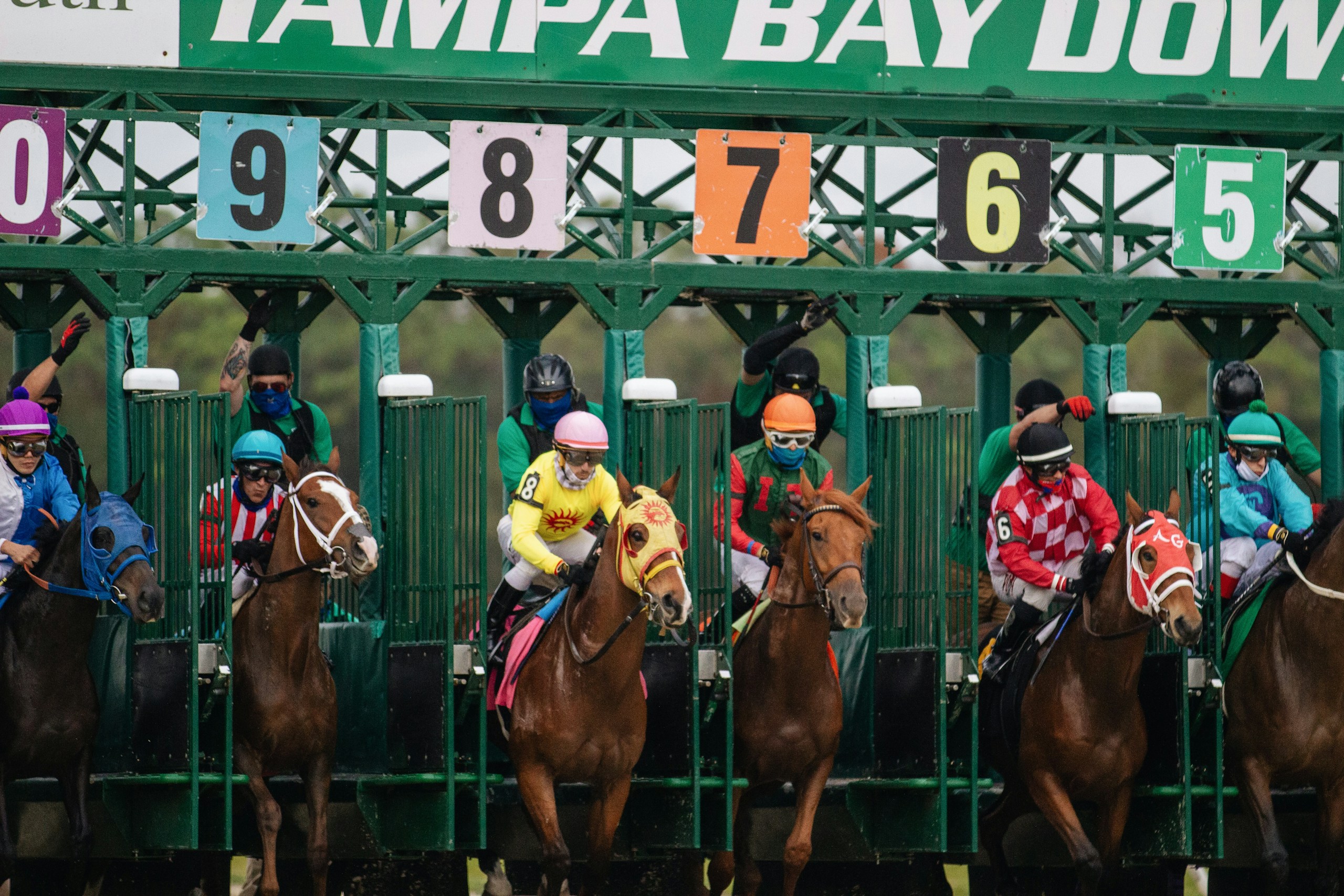
You don’t own a racehorse.
Technically, you own 5% of a racehorse.
Or perhaps 10%, 25%, or a fractional share purchased through a racing syndicate.
That may sound like a relatively minor asset for estate-planning purposes. But fractional racehorse ownership raises an important question:
What happens to your share when you die?
Can you simply put a transfer-on-death (TOD) beneficiary on it?
Should you transfer the interest into your revocable living trust?
Does it have to go through probate?
Or does the racing syndicate decide what happens?
The answer begins with something many fractional owners don’t realize:
Before You Can Decide How to Transfer Your “Horse Share,” You Have to Determine What You Actually Own
Fractional racehorse ownership can be structured in several ways.
For example, you might own:
- a direct percentage interest in the horse;
- an interest in an LLC that owns the horse;
- a partnership interest;
- a syndicate interest;
- shares in an entity that owns multiple horses; or
- contractual participation rights rather than direct ownership of the horse.
Those distinctions matter enormously.
If Fast Finish Racing LLC owns the horse and you own 10% of Fast Finish Racing LLC, you generally aren’t trying to estate-plan the horse itself.
You’re planning for what happens to your LLC interest.
If you directly own a 10% interest in the horse with four other people, the analysis is different.
And if you bought into a syndicate, the syndicate agreement may control whether your interest can be transferred at all.
That’s why the first rule of estate planning for fractional racehorse owners is:
Find the Agreement.
Don’t rely upon the website showing:
Your Ownership: 5%
That tells you the economics of your investment. It doesn’t necessarily tell you its legal structure.
Can You Put a TOD Beneficiary on a Racehorse Share?
Maybe—but don’t assume you can.
TOD designations are creatures of statute and contract. We are accustomed to seeing them on assets such as brokerage accounts and, in some states, motor vehicles or real estate.
That does not mean every privately owned asset automatically comes with a TOD option.
There is no universal rule allowing you to write:
“My 5% interest in Racehorse Thunderbolt — TOD to my daughter.”
on a piece of paper and thereby create an effective nonprobate transfer.
Whether a TOD or beneficiary designation is available depends on:
- what you legally own;
- the law governing that ownership;
- the governing agreement; and
- whether the issuer, LLC, partnership or syndicate recognizes beneficiary designations.
This is particularly important with privately held LLC and partnership interests.
The operating or partnership agreement may have its own rules concerning death and transfer.
Don’t Confuse a Beneficiary Form With a Valid TOD Transfer
Suppose your racing syndicate allows you to list an “heir,” “beneficiary” or “emergency contact” on its website.
Does that automatically mean your interest passes outside probate?
Not necessarily.
The language matters.
A form identifying the person the syndicate should contact after your death isn’t necessarily a legally effective transfer-on-death designation.
Before relying upon it, ask:
Does this designation legally transfer my ownership interest at death without probate?
Get the answer in writing.
If the company offers an actual TOD or beneficiary arrangement, have your estate-planning attorney review it and determine whether it is recognized under applicable law and the governing documents.
The Revocable Trust May Be the More Flexible Solution
For many fractional racehorse owners, a revocable living trust deserves serious consideration.
Instead of you individually owning:
10% interest in Fast Finish Racing LLC
you might transfer the interest, if permitted, to:
Jane Smith, Trustee of the Jane Smith Revocable Trust dated ________.
Now the trust owns the interest during your lifetime.
You generally remain in control as trustee while you’re alive and competent.
If you become incapacitated, your successor trustee can potentially manage the interest.
When you die, the successor trustee administers the interest according to your trust without requiring that particular asset to pass through your probate estate—assuming, critically, that the interest was properly transferred to the trust.
That last part is essential.
Putting the Horse Share on Your Trust’s Asset Schedule May Not Be Enough
This is one of the most common trust-funding mistakes.
Someone signs a beautiful revocable trust.
The attorney prepares an asset schedule stating:
“All interests in racehorses and racing syndicates.”
The client assumes everything is finished.
Maybe not.
If your 10% interest is actually an LLC membership interest, the LLC records may need to be changed.
If it’s a partnership interest, an assignment may be necessary.
If it’s a syndicate interest, the syndicate may need to consent.
If you directly own part of the horse, ownership and racing records may need to be updated.
The governing agreement may also restrict transfers to trusts.
Creating a trust and funding a trust are two different things.
For this type of asset, funding is critical.
The Syndicate or LLC Agreement May Override Your Plan
This may be the most important issue of all.
Suppose you own 10% of a racehorse through an LLC.
Your trust says:
“At my death, my interest in Fast Finish Racing LLC shall be distributed to my son.”
Sounds straightforward.
But the LLC operating agreement says:
Upon the death of a member, the company or remaining members have the option to purchase the deceased member’s interest.
Now your son may not inherit the 10% interest itself.
Instead, your trust or estate may receive the proceeds from the contractual buyout.
Or perhaps the agreement allows your son to receive the economic rights but not automatically become a voting member.
Private-company law frequently distinguishes between the right to receive economic distributions and the right to participate in management.
So your estate plan can’t be reviewed in isolation.
You need to compare:
Your Will + Your Trust + The LLC/Syndicate Agreement.
They need to work together.
Why a Trust Can Be Better Than a TOD for a Racing Interest
A TOD can be wonderfully simple.
Owner dies.
Beneficiary receives asset.
Done.
But racehorse ownership isn’t always an asset where “done” is the desired result.
Imagine your daughter is the TOD beneficiary of your 15% interest.
You die.
She receives the interest.
But:
- she knows nothing about racing;
- the horse is currently training;
- another capital contribution is due;
- the horse is scheduled to race;
- the syndicate is considering a sale;
- there are veterinary bills;
- purse money is outstanding; and
- your daughter doesn’t even want the investment.
A trust can provide more instructions.
For example, your trust could authorize the trustee to continue holding the racing interest temporarily and then decide whether to:
- retain it;
- sell it;
- accept a buyout;
- distribute it to a beneficiary;
- pay assessments;
- exercise voting rights; or
- wait until an appropriate sale opportunity.
That’s much more flexible than simply saying:
TOD: Daughter.
A Trust Also Plans for Incapacity
This is an important advantage that’s often overlooked.
TOD only addresses death.
What happens if you suffer a stroke tomorrow and can’t manage your financial affairs?
You still own the racing interest.
The horse is still racing.
Bills may still be due.
Voting decisions may still need to be made.
A properly funded revocable trust can provide continuity during incapacity because your successor trustee can potentially assume responsibility for trust assets.
That makes a trust useful during life—not merely at death.
When Might a TOD Designation Make Sense?
If the racing entity provides a legally valid beneficiary or TOD designation, it can potentially be an elegant solution for a relatively simple ownership interest.
For example:
You own a small fractional interest.
Your adult son is also involved in racing.
He unquestionably wants your interest.
The syndicate allows the transfer.
There are no complicated family issues.
The beneficiary designation is legally effective.
In that situation, TOD treatment might accomplish exactly what you want without involving your trust.
But don’t choose TOD simply because it sounds easier.
First determine what happens if your beneficiary:
- dies before you;
- doesn’t want the interest;
- is a minor;
- is incapacitated;
- is receiving means-tested government benefits;
- has creditor problems;
- is going through a divorce; or
- isn’t permitted to become an owner under the governing agreement.
A trust can often provide substantially more contingency planning.
What If You Own Shares in Several Horses?
Now the trust approach can become even more attractive.
Suppose your racing portfolio includes:
| Racing Asset | Your Interest |
|---|---|
| Horse A | 5% |
| Horse B | 10% |
| Horse C | 2.5% |
| Racing LLC | 20% |
| Broodmare Partnership | 10% |
| Stallion Syndicate | 1 share |
Do you really want six different succession arrangements?
Perhaps Horse A has a beneficiary form.
Horse B doesn’t.
The LLC permits trust ownership.
The broodmare partnership requires approval.
The stallion syndicate has a right of first refusal.
Now your executor has an administrative puzzle.
An appropriately structured and funded revocable trust can potentially create a central estate-planning structure for your racing portfolio, to the extent each governing agreement permits the transfer.
Could You Put All Your Racing Interests in an LLC and Put the LLC in Your Trust?
For someone with significant racing investments, this may be worth discussing with legal and tax advisers.
For example:
Jane Smith Revocable Trust
owns
100% of Smith Racing Holdings LLC
which owns various permitted racing and investment interests.
At Jane’s death, her successor trustee controls the LLC.
The LLC continues to hold its underlying assets.
That can provide centralized accounting, management and succession.
But don’t simply transfer everything into a new LLC without reviewing the underlying agreements. A syndicate agreement may prohibit or condition assignments. There can also be tax, liability, racing-registration and insurance consequences.
The structure needs to be designed around the actual assets.
What If the Horse Wins the Kentucky Derby After You Die?
Here’s where things get interesting.
Suppose you own 5% of a promising Thoroughbred.
At your death, your interest is worth $30,000.
Six months later, the horse wins a major race.
Suddenly the racing and breeding economics look very different.
If your will requires your executor to sell the interest immediately, your estate may have exited before that upside materialized.
If your trust gives the trustee appropriate discretion, the trustee may potentially have greater flexibility to determine whether retaining the interest temporarily is prudent.
Of course, the opposite can happen.
A $100,000 fractional interest can decline dramatically after injury or poor performance.
That’s why racing assets can benefit from fiduciary provisions specifically recognizing their unusual and speculative nature.
Should the Trustee Be Allowed to Keep a Speculative Racehorse Investment?
This is an important drafting issue.
Trustees generally have fiduciary duties governing how they manage trust assets.
Racehorses aren’t exactly diversified index funds.
If you specifically want your trustee to have the discretion to continue holding racing interests despite their speculative nature, your trust should address that issue.
Depending upon applicable law and the circumstances, the document might expressly authorize the trustee to retain racing interests, make additional contributions, employ racing professionals and continue participation for a reasonable period.
Your estate-planning attorney should tailor those provisions to the governing state’s trust law.
Don’t Leave the Interest Equally to Three Children Without Thinking About It
Suppose you own 15% of a horse and have three children.
Your will says:
“Everything equally to my children.”
Does that mean each child should receive 5%?
Maybe.
But should they?
Child #1 loves racing.
Child #2 doesn’t care.
Child #3 thinks owning racehorses is ridiculous.
Instead, your trust might give Child #1 the option to receive or purchase the racing interest, with the other children receiving equivalent value from other assets.
Or the trustee might be authorized to sell the interest and divide the proceeds.
Or the racing interests could remain together temporarily.
The goal should be economic fairness, not necessarily slicing every asset into equal pieces.
What Happens If You Do Nothing?
This is the default plan many fractional owners accidentally choose.
You buy a 10% interest.
You never transfer it to your trust.
There is no valid TOD designation.
You die.
Now your executor has to determine:
- what you owned;
- where the governing agreement is;
- whether probate is required;
- whether the interest can be transferred;
- whether the other owners have purchase rights;
- what the interest is worth;
- who inherits it;
- whether the beneficiary qualifies as an owner; and
- who pays expenses while everything gets sorted out.
Meanwhile, the horse isn’t waiting for probate to finish.
A Better Checklist for Fractional Racehorse Owners
If you own shares or fractional interests in racehorses, pull out your estate plan and answer these questions:
1. What exactly do I own?
Direct horse ownership, LLC interest, partnership, syndicate interest or contractual right?
2. Who is the legal owner of the horse?
You or an entity?
3. What does the governing agreement say happens at death?
4. Are transfers restricted?
5. Does the entity recognize TOD or beneficiary designations?
6. If so, is the designation actually legally effective to avoid probate?
7. Can my revocable trust own my interest?
8. Does transferring it require consent?
9. Have I actually completed the transfer into my trust?
10. Who should ultimately receive the interest?
11. Does that beneficiary actually want it?
12. What happens if that beneficiary dies before me?
13. Who manages the interest if I become incapacitated?
14. Are there ongoing assessments or capital calls?
15. Does someone know where all of these documents are?
TOD or Trust: Which Is Better?
There isn’t one answer for every racehorse owner.
A TOD or beneficiary designation may make sense when:
- the governing entity expressly permits it;
- applicable law recognizes it;
- the interest is relatively simple;
- one adult beneficiary clearly wants the asset; and
- you don’t need ongoing management or complicated beneficiary protections.
A revocable trust may be preferable when:
- you own several racing interests;
- you want to avoid probate where possible;
- incapacity planning matters;
- the interest requires ongoing management;
- you want the trustee to decide whether to hold or sell;
- you have multiple beneficiaries;
- beneficiaries need protection;
- you want contingencies if the intended beneficiary doesn’t want the interest; or
- the racing investment is a meaningful part of your estate.
And sometimes the answer isn’t either one.
The governing agreement may require a buyout at death, give other owners a purchase option or otherwise dictate what happens.
The Most Important Document May Not Be Your Trust
For fractional racehorse owners, your estate-planning attorney needs something besides your will and trust.
Bring the syndicate agreement.
Bring the LLC operating agreement.
Bring the partnership agreement.
Bring the purchase documents.
Bring whatever paperwork explains what that “5% ownership” actually means.
Only then can you determine whether TOD, trust ownership, an LLC structure or another succession strategy makes sense.
Your Horse Share Deserves More Than a Line on Your Asset List
Fractional racehorse ownership is increasingly accessible.
You don’t need to be a billionaire with a private stable to own part of a racehorse. A relatively modest investment can give someone a genuine economic interest in a racing operation.
But a small percentage interest can still create a surprisingly complicated probate asset.
Don’t assume the syndicate will “just give it to your spouse.”
Don’t assume writing your daughter’s name on a beneficiary form avoids probate.
Don’t assume your trust owns the interest simply because you listed it on Schedule A.
And don’t assume your will overrides the racing agreement.
Instead, determine what you own, what the contract permits, and how you want the interest managed after incapacity and death.
For a simple interest, a valid TOD arrangement may be enough.
For a larger racing portfolio—or when management, incapacity, multiple beneficiaries and long-term planning matter—a properly funded revocable trust may provide considerably greater flexibility.
Either way, make the decision while you’re here.
Because a 5% racehorse interest may look like a fun little investment today.
If that horse becomes the next champion, your “little share” could become one of the most interesting assets in your entire estate.
This article is for general informational purposes only and does not constitute legal, tax, investment or racing-regulatory advice. Whether a fractional racing interest can be transferred on death, assigned to a trust or transferred without probate depends upon the ownership structure, governing agreement, applicable state law and racing organization requirements. Owners should have their specific syndicate, LLC, partnership and ownership documents reviewed as part of their estate planning.


