Tesla Cybercab Is Moving Closer to Production
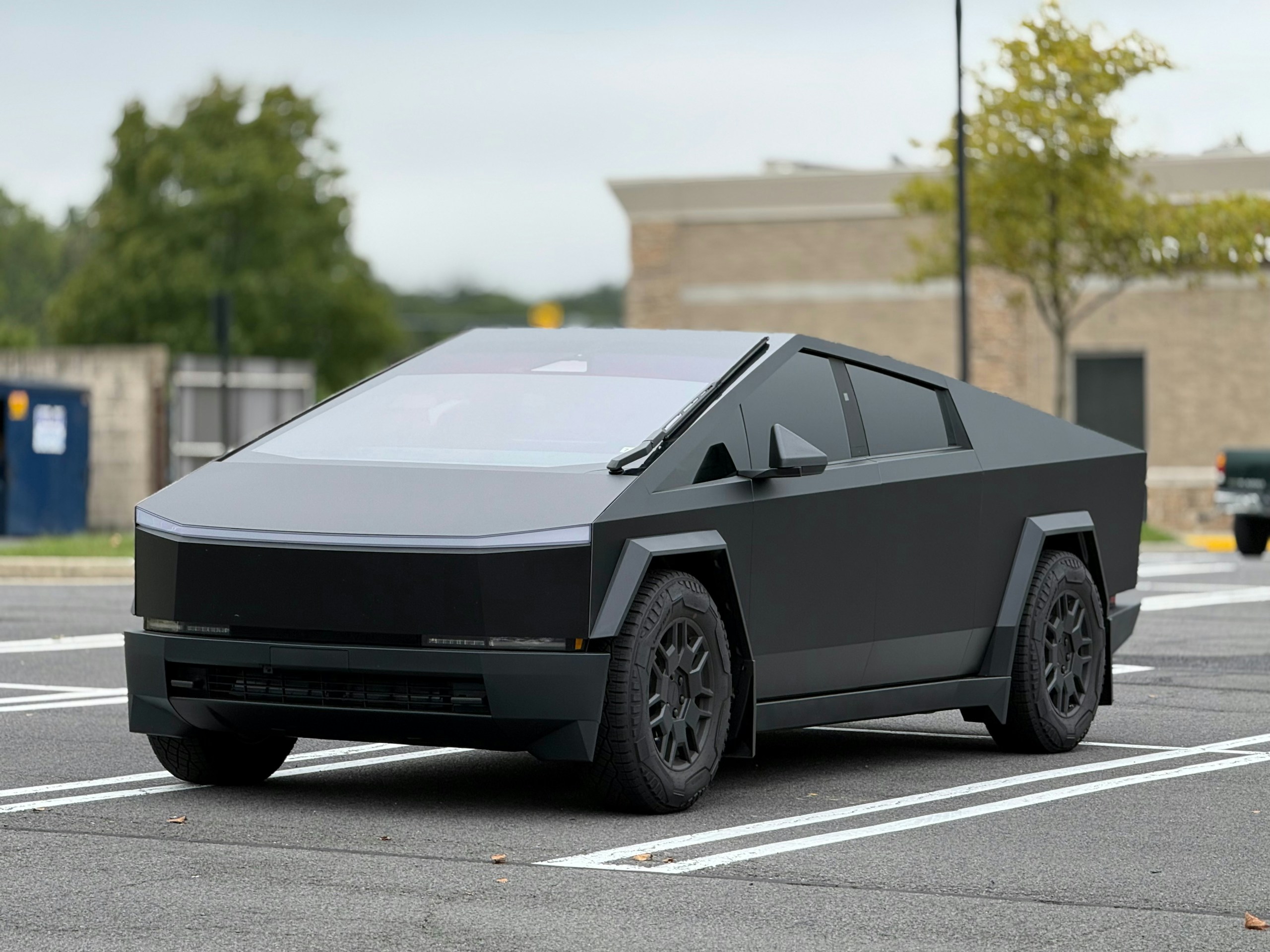
Tesla’s Cybercab is one of the company’s most unusual vehicles yet.
Unlike a conventional Model 3 or Model Y, the Cybercab is being designed specifically around autonomous transportation. Tesla describes it as a purpose-built fully autonomous vehicle that will eventually be used in its Robotaxi network. Tesla’s public Robotaxi page currently says its paid autonomous rides are using Model Y vehicles in several U.S. cities and that Cybercab rides will come in the future. (Tesla)
The project has also moved beyond the concept stage. In its first-quarter 2026 SEC filing, Tesla reported that it had begun pilot production of Cybercab. The company has said that once production scales, it expects Cybercab eventually to replace Model Y vehicles in portions of its Robotaxi fleet. (Tesla Investor Relations)
For Maryland consumers, that creates a fascinating legal question:
What happens when a vehicle depends on autonomous-driving software for essentially its entire purpose—and that software or another major system repeatedly fails?
The answer may eventually involve Maryland’s Lemon Law, Tesla’s written warranties, state warranty law, and the federal Magnuson-Moss Warranty Act.
But there is an important caveat.
As of August 2026, Tesla is presenting Cybercab primarily as a Robotaxi vehicle, not as a conventional Maryland retail vehicle that consumers can simply buy at a Tesla store. Whether Maryland Lemon Law would apply to a particular Cybercab will depend heavily on how the vehicle is sold, leased, titled, registered, and used.
Cybercab Is Different From a Traditional Tesla
Cybercab is not simply a smaller Model Y.
Tesla is developing it as a vehicle specifically intended for autonomous ride service.
That changes the warranty discussion substantially.
A conventional vehicle can still perform its basic transportation function if a navigation feature or driver-assistance function temporarily fails.
A purpose-built autonomous vehicle is different.
If its autonomous-driving system cannot reliably operate, the defect could potentially affect the central purpose of the vehicle itself.
Future problems could theoretically involve:
- Autonomous-driving software;
- Cameras or other sensing equipment;
- Vehicle computers;
- Steering or braking control;
- Electric propulsion;
- High-voltage batteries;
- Charging systems;
- Low-voltage electrical systems;
- Door or passenger-access systems;
- Connectivity;
- Remote vehicle-management systems; or
- Software required to place the vehicle into service.
There is currently no basis to claim Cybercab suffers from any of these defects. Pilot production has only recently begun, and there is not yet a meaningful consumer repair history.
These are examples of the types of issues that could eventually raise warranty questions.
Maryland Lemon Law Was Written for Consumer Motor Vehicles
Maryland’s Lemon Law applies to qualifying new or leased cars, light trucks, and motorcycles registered in Maryland.
The Maryland Attorney General states that qualifying vehicles generally must be less than 24 months old and have fewer than 18,000 miles. (Maryland Attorney General)
That creates an immediate issue for Cybercab.
If Tesla owns a Cybercab and uses it solely as part of a commercial autonomous taxi fleet, that is not necessarily the same legal situation as a Maryland resident purchasing or leasing a vehicle for consumer use.
If Tesla eventually offers Cybercab to private individuals, however, a vehicle purchased or leased and registered in Maryland could potentially require a much closer Lemon Law analysis.
The details of the transaction will matter enormously.
Could a Privately Owned Cybercab Be Covered?
Potentially, depending on how Tesla ultimately markets and sells it.
Suppose Tesla eventually permits a Maryland resident to purchase a Cybercab, register it personally, and use it for personal transportation.
If the vehicle otherwise falls within Maryland’s statutory definitions, its autonomous nature would not necessarily eliminate consumer warranty protections.
The more difficult scenario would involve someone purchasing a Cybercab primarily to place it into a commercial Robotaxi fleet.
Maryland Lemon Law protections are not simply determined by the badge on the vehicle. Ownership, registration, use, and the statutory definition of a covered consumer all matter.
Anyone purchasing a purpose-built autonomous vehicle for business use should therefore not assume that ordinary new-car Lemon Law protections automatically apply.
Maryland’s 24-Month and 18,000-Mile Limits Matter
Maryland’s Attorney General says the Lemon Law generally covers qualifying vehicles that are:
- Registered in Maryland;
- Less than 24 months old; and
- Driven fewer than 18,000 miles. (Maryland Attorney General)
Those limits could become particularly important for an autonomous vehicle.
A Cybercab operating for many hours each day could accumulate 18,000 miles very quickly.
A conventional owner might take a year or more to reach that mileage.
A heavily used autonomous vehicle could potentially reach it in a matter of months.
That makes early reporting and documentation especially important if the statute applies.
Maryland’s Four-Repair Rule
Maryland provides several ways a qualifying vehicle may potentially meet its Lemon Law criteria.
One involves repeated repairs.
The Maryland Attorney General explains that a consumer may potentially qualify when one problem that substantially impairs the vehicle’s use and market value remains uncorrected after four repair attempts. (Maryland Attorney General)
Imagine a future privately owned Cybercab experiencing the following hypothetical history:
Repair 1: Autonomous-driving computer repeatedly shuts down.
Repair 2: Tesla installs new software, but the fault returns.
Repair 3: Vehicle computer is replaced.
Repair 4: Cybercab again becomes unable to operate autonomously.
If the condition substantially impairs the vehicle’s use and market value and the other statutory requirements are satisfied, that history could warrant Lemon Law review.
The fact that some repairs involve software rather than mechanical components does not necessarily make them irrelevant.
Does an Over-the-Air Update Count as a Repair Attempt?
That question will become increasingly important as vehicles become more software-defined.
Tesla can correct many conditions through over-the-air software updates rather than having the vehicle physically brought to a service center.
Suppose Tesla tells an owner:
The autonomous-driving problem will be corrected through the next software release.
The update is installed.
The same failure occurs.
Tesla then installs another software update.
The problem continues.
Whether each update constitutes a statutory repair attempt may depend on the specific circumstances and future legal interpretation.
But from a consumer’s perspective, the practical rule should be simple:
Document every attempted fix.
Save Tesla app messages, software-version information, remote diagnostic records, and any statements identifying an update as a repair for the reported condition.
Maryland Has a Special Rule for Brakes and Steering
Maryland’s Lemon Law is distinctive because it provides special treatment for certain serious brake or steering failures.
The Attorney General states that qualifying Lemon Law relief may be available when a vehicle has a brake or steering failure that remains uncorrected after the first repair attempt and causes the vehicle to fail Maryland’s safety inspection. (Maryland Attorney General)
That could become particularly interesting with a vehicle whose steering and braking are controlled extensively through autonomous systems.
However, not every software warning involving steering or braking necessarily satisfies this provision.
The condition must meet Maryland’s statutory criteria.
Autonomous Vehicles Blur the Line Between Software and Safety Hardware
Cybercab highlights a problem that traditional Lemon Laws were not specifically written to address.
In a conventional vehicle, people often think of defects in categories:
Mechanical defect: transmission or engine.
Electronic defect: computer or sensor.
Software defect: infotainment or programming.
An autonomous vehicle makes those categories much harder to separate.
Software may determine:
- When the vehicle accelerates;
- When it brakes;
- How it steers;
- How it recognizes roadway conditions;
- Whether it considers itself safe to operate; and
- Whether it can provide transportation at all.
A recurring software fault could therefore have consequences similar to a conventional mechanical failure.
The legal issue should focus on what the defect actually does to the vehicle—not simply whether the defective component consists of metal or code.
Maryland’s 30-Day Out-of-Service Rule
Maryland also provides Lemon Law protection based on the amount of time a vehicle is unavailable.
The Attorney General explains that a qualifying consumer may potentially receive relief when problems substantially impair use and market value and the vehicle has been out of service for repairs for 30 or more cumulative days. (Maryland Attorney General)
“Cumulative” matters.
Consider this hypothetical Cybercab:
First repair: 8 days while Tesla diagnoses the autonomous computer.
Second repair: 10 days awaiting a replacement component.
Third repair: 7 days during additional testing.
Fourth repair: 6 more days after the defect returns.
That is 31 cumulative days.
Keep records showing precisely when the vehicle became unavailable and when Tesla returned it.
Remote Repair Creates a New Out-of-Service Question
Autonomous vehicles may create difficult questions about what it means to be “out of service.”
Suppose a Cybercab sits in the owner’s garage for two weeks waiting for a Tesla software fix.
Tesla never physically takes possession of the vehicle.
But the vehicle cannot provide transportation.
Is it out of service?
That could become a fact-specific legal issue.
Consumers should document:
- When the vehicle stopped operating;
- What Tesla instructed them to do;
- Whether Tesla said it was safe to use;
- Whether the vehicle could provide normal transportation;
- When the repair was released; and
- When the vehicle became usable again.
Do not assume that the absence of a traditional dealership invoice makes the downtime irrelevant.
Maryland Requires Written Notice
Maryland consumers should pay particular attention to the state’s notice requirements.
The Maryland Attorney General advises consumers who believe a vehicle may be a lemon to write to the manufacturer promptly, even before four repair attempts or 30 days out of service have accumulated. (Maryland Attorney General)
The state’s guidance discusses providing notice by certified mail and giving the manufacturer an opportunity to correct the defect. (Maryland Attorney General)
That can become especially important with Tesla because most routine communication occurs through an app.
An app conversation should not automatically be assumed to replace a statutory written-notice procedure.
What Should a Cybercab Owner Document?
If Cybercab eventually reaches private Maryland buyers, owners should create a detailed warranty file immediately.
Useful records could include:
- Purchase or lease agreement;
- Vehicle registration;
- Tesla warranty documents;
- High-voltage battery warranty;
- Tesla app service messages;
- Software versions;
- Remote diagnostic reports;
- Service-center repair orders;
- Tow records;
- Charging records;
- Autonomous-system warnings;
- Screenshots of vehicle-unavailable notices;
- Emails with Tesla;
- Certified letters;
- Proof of delivery; and
- A chronology of every instance in which the vehicle could not operate normally.
For a software-dependent vehicle, digital evidence may be just as important as traditional paper invoices.
What If Cybercab Refuses to Enter Autonomous Service?
That could potentially be much more significant than an infotainment problem.
A purpose-built Robotaxi that repeatedly cannot perform autonomous driving may be unable to perform its basic intended function.
Depending on the circumstances, an owner could argue that such a condition affects:
Use: The vehicle cannot provide transportation as intended.
Market value: A buyer may pay substantially less for a vehicle unable to perform the defining function for which it was sold.
Whether that satisfies Maryland’s substantial-impairment standard would require a fact-specific analysis.
What If Tesla Fixes the Problem With One Update?
Then the repair history is very different.
Lemon Laws are not designed to punish manufacturers because a new vehicle experiences any defect at all.
Manufacturers receive an opportunity to repair qualifying problems.
If Tesla identifies a software issue, installs one update, and permanently resolves it, the circumstances are different from repeated unsuccessful interventions.
The recurring nature of the defect matters.
Battery and Charging Problems Could Also Matter
Cybercab will still be an electric vehicle.
Traditional EV warranty issues could therefore arise independently of autonomy, including:
- High-voltage battery failure;
- Unexpected battery degradation;
- Failure to accept a charge;
- DC fast-charging problems;
- Thermal-management faults;
- Power-electronics failures;
- Vehicle shutdowns; or
- Repeated low-voltage electrical failures.
There is currently no evidence Cybercab suffers from these conditions.
But if an individual vehicle experiences them after delivery, the fact that Cybercab is autonomous does not necessarily make ordinary warranty law irrelevant.
Tesla’s Written Warranty Will Be Critical
Because Cybercab is not yet broadly available to customers, its final consumer warranty structure is not something buyers should assume in advance.
If Tesla eventually sells Cybercab directly to private owners, consumers should save the exact warranty documents provided with the vehicle.
Pay particular attention to separate coverage for:
- Basic vehicle systems;
- High-voltage battery;
- Drive unit;
- Autonomous-driving hardware;
- Vehicle computer;
- Cameras and sensors;
- Charging equipment; and
- Software-related functions.
Different systems may have different warranty terms or exclusions.
What If Cybercab Does Not Qualify Under Maryland Lemon Law?
That does not necessarily mean the consumer has no warranty protection.
Maryland Lemon Law is only one possible avenue.
Other potential rights may arise from:
- Tesla’s written warranty;
- Applicable implied warranties;
- Maryland warranty law;
- The federal Magnuson-Moss Warranty Act; or
- Other consumer-protection statutes depending on the circumstances.
This distinction could be especially important for a Cybercab used commercially or one that accumulates more than 18,000 miles very quickly.
Breach of Tesla’s Written Warranty
A breach-of-warranty analysis asks a different question from Lemon Law eligibility:
Did Tesla fulfill the repair promises contained in its warranty?
Suppose a vehicle develops an autonomous-system failure while the warranty applies.
Tesla attempts multiple software fixes.
The system continues malfunctioning.
Tesla replaces hardware.
The problem still returns.
Even if Maryland’s Lemon Law does not ultimately apply, those facts could warrant analysis under express-warranty law.
The Magnuson-Moss Warranty Act
The federal Magnuson-Moss Warranty Act can provide additional remedies when a manufacturer fails to comply with applicable written or implied warranties.
Magnuson-Moss is not a nationwide Lemon Law and does not impose a simple universal repair-count rule.
Instead, it generally operates alongside state warranty law.
An important feature is that a successful consumer may potentially recover reasonable attorneys’ fees and costs in a qualifying case.
For expensive and technologically complex vehicles, that fee-shifting provision can be particularly significant.
Is Tesla Cybercab Already a “Lemon Law Vehicle”?
No.
Cybercab is currently moving through pilot production and Tesla’s autonomous-ride rollout. Tesla reported beginning pilot Cybercab production in the first quarter of 2026, while its public Robotaxi materials still describe future Cybercab rides rather than general consumer availability. (Tesla Investor Relations)
There is therefore no responsible basis today to characterize Cybercab as a vehicle with an established consumer defect history.
The useful consumer-law question is prospective:
If Tesla eventually sells or leases Cybercab to Maryland consumers and an individual vehicle develops serious unresolved defects, what rights might the owner have?
Could a Future Tesla Cybercab Qualify Under Maryland Lemon Law?
The key questions would include:
Was the Cybercab sold or leased in a transaction covered by Maryland’s Lemon Law?
Is it registered in Maryland?
Is it less than 24 months old and under 18,000 miles? (Maryland Attorney General)
Does the defect substantially impair the vehicle’s use and market value? (Maryland Attorney General)
Has the same substantial defect remained after four repair attempts? (Maryland Attorney General)
Has a qualifying brake or steering failure remained after the first repair attempt and caused a Maryland safety-inspection failure? (Maryland Attorney General)
Has the vehicle accumulated at least 30 days out of service? (Maryland Attorney General)
Did Tesla receive proper written notice and an opportunity to repair?
And if Maryland Lemon Law does not apply:
Did Tesla nevertheless breach an applicable written or implied warranty?
Contact Ginsburg Law Group About Maryland EV and Autonomous-Vehicle Warranty Problems
Tesla’s Cybercab represents a very different approach to personal and commercial transportation. Tesla says it began pilot production during the first quarter of 2026 and expects the purpose-built autonomous vehicle eventually to become an important part of its Robotaxi fleet. (Tesla Investor Relations)
Its legal treatment under Maryland Lemon Law may depend heavily on whether Cybercab is ultimately sold or leased to individual consumers, registered in Maryland, or retained primarily as a commercially operated fleet vehicle.
If a privately owned autonomous vehicle repeatedly experiences failures involving propulsion, braking, steering, charging, battery systems, autonomous-driving hardware, or software essential to the vehicle’s operation, owners should preserve every service record from the beginning.
Ginsburg Law Group represents consumers in Lemon Law and breach-of-warranty matters. With increasingly software-defined vehicles, owners should retain not only traditional repair orders but also app messages, software-update records, remote diagnostic communications, tow records, and written manufacturer notices.
Those records may ultimately determine whether Maryland Lemon Law, breach-of-warranty law, the Magnuson-Moss Warranty Act, or another consumer remedy applies.
This article is for general informational purposes only and does not constitute legal advice. Cybercab is not yet broadly offered as a conventional consumer vehicle, and this article does not allege that Cybercab has any known defect. Maryland Lemon Law coverage will depend upon the individual vehicle, transaction, registration, use, warranty, mileage, repair history, notice, and other circumstances.