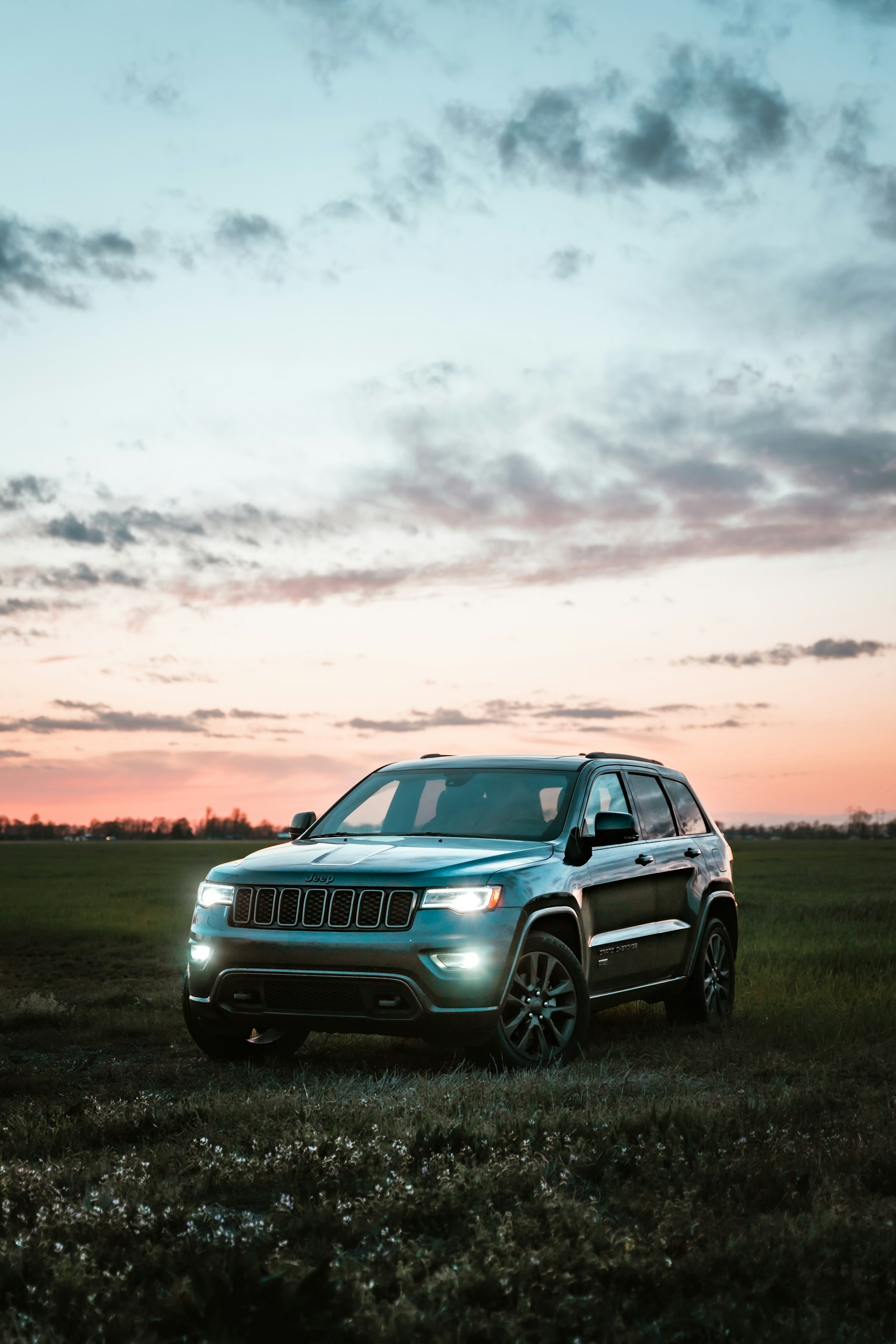
The Jeep Grand Cherokee SRT Could Be Coming Back
The Jeep Grand Cherokee SRT has long occupied an unusual place in the SUV market.
It combines the utility of a Grand Cherokee with the kind of power and road-focused performance more commonly associated with muscle cars.
The previous-generation Grand Cherokee SRT used a 6.4-liter HEMI V8, while the even more extreme Trackhawk paired the Grand Cherokee with a supercharged V8.
Those models disappeared as Jeep moved into the current Grand Cherokee generation.
Now, however, the SRT performance brand is back inside Stellantis, and a new high-performance Grand Cherokee appears increasingly likely.
MotorTrend noted that Stellantis formally revived its Street and Racing Technology division, with Tim Kuniskis overseeing SRT, and specifically identified the Grand Cherokee as one of the obvious vehicles enthusiasts want to see return to the performance lineup. (MotorTrend)
More recently, reports surrounding Stellantis’ performance plans have pointed toward a future Grand Cherokee SRT or Trackhawk-type model. Car and Driver currently lists an expected 2028 Jeep Grand Cherokee SRT, although Jeep has not yet released complete production specifications. (Car and Driver)
That distinction is important.
There is not yet a production Grand Cherokee SRT in customers’ hands from which anyone can identify an established defect history.
Instead, Tennessee buyers considering one when it arrives should understand what legal protections may apply if an individual vehicle develops serious and repeated warranty problems.
Those protections can include the Tennessee Lemon Law, Jeep’s written warranty, and the federal Magnuson-Moss Warranty Act.
SRT Is Officially Back at Stellantis
The return of the SRT organization makes a performance Grand Cherokee much more plausible than it appeared only a few years ago.
Stellantis effectively dissolved SRT as a standalone performance organization in 2021.
In 2025, the company brought the division back under the leadership of Tim Kuniskis.
MotorTrend observed that the Grand Cherokee has historically been one of Jeep’s strongest candidates for SRT treatment and specifically discussed the possibility of a high-output version using Stellantis’ newer powertrain technology. (MotorTrend)
Jeep executives have also indicated that high-performance gasoline-powered models remain under consideration. In February 2026, a Jeep executive told ANSA that when it came to a high-end performance Grand Cherokee, “everything is on the table.” (ANSA.it)
What Jeep ultimately installs under the hood remains uncertain.
Consumers should therefore be skeptical of articles presenting an exact horsepower figure, engine, price, or launch date as settled unless Jeep has officially confirmed it.
What Could the Next Grand Cherokee SRT Look Like?
Several possibilities have been discussed publicly.
The previous Grand Cherokee SRT used a naturally aspirated 6.4-liter HEMI V8 producing 475 horsepower.
A revived model could potentially use a V8 again, but Stellantis also has high-output turbocharged engines and other technologies available.
Car and Driver’s current future-model coverage anticipates that the next SRT will retain the performance-SUV formula, with aggressive styling, upgraded suspension, braking hardware, and substantial power, while noting that Jeep has not yet released full specifications. (Car and Driver)
From a consumer-law standpoint, the exact engine ultimately matters less than this question:
What happens if a Tennessee buyer pays a premium price for a new Grand Cherokee SRT and the vehicle repeatedly cannot be repaired?
Performance Vehicles Are Still Covered by Lemon Laws
A vehicle does not lose consumer protection because it is fast, expensive, or performance oriented.
Tennessee’s Lemon Law applies to qualifying new motor vehicles that develop defects or conditions that substantially impair the vehicle and that the manufacturer, its agent, or authorized dealer cannot successfully repair within the statutory framework.
The Tennessee Attorney General describes a qualifying lemon as a new vehicle with a defect or condition that substantially impairs it and cannot be repaired after three attempts, or that remains out of service for repairs for 30 or more cumulative days during the applicable protection period. (Tennessee Government)
That means a future Grand Cherokee SRT could potentially qualify just like another new vehicle.
The badge on the liftgate does not change the legal standard.
What Does “Substantially Impair” Mean in Tennessee?
Tennessee’s consumer guidance defines substantial impairment in terms of a motor vehicle being unreliable or unsafe for normal operation, or having its resale market value reduced below that of comparable vehicles. (Tennessee Government)
That standard can be especially important with an expensive performance SUV.
Consider a future Grand Cherokee SRT that repeatedly experiences:
- Engine shutdowns;
- Major transmission failures;
- Loss of acceleration;
- Overheating;
- Steering problems;
- Brake failures;
- All-wheel-drive faults;
- Electrical shutdowns;
- Persistent suspension faults; or
- Serious software problems affecting vehicle operation.
There is no allegation that the upcoming SRT has any of these problems.
These are examples of the types of defects that could potentially substantially impair a new vehicle.
Not Every Performance-Car Characteristic Is a Defect
Owners also need to distinguish between a genuine malfunction and the normal characteristics of a high-performance vehicle.
A performance SUV may intentionally have:
- Firmer suspension;
- Louder exhaust;
- More aggressive transmission shifts;
- Performance-oriented tires;
- More brake noise;
- Greater fuel consumption; or
- Different low-speed behavior than a mainstream Grand Cherokee.
Those characteristics do not automatically indicate a defect.
But there is an important difference between:
Firm suspension and a failed adaptive damper.
Aggressive shifting and a transmission that loses drive.
Performance brake noise and a braking system that does not function properly.
A loud engine and repeated misfires or internal engine failure.
The repair history should accurately describe the malfunction rather than simply saying the vehicle “doesn’t feel right.”
Tennessee Uses a Three-Repair Standard
One of the most important aspects of Tennessee Lemon Law is its repair-attempt threshold.
The Tennessee Attorney General’s current consumer guidance states that when a manufacturer or dealer cannot repair the qualifying defect after three attempts, the vehicle may potentially qualify for Lemon Law relief. (Kid Central TN)
That does not mean:
Three dealership visits automatically equal a lemon.
The visits generally need to concern the qualifying problem.
Consider this hypothetical future Grand Cherokee SRT history:
Repair 1 — 2,300 miles: Vehicle unexpectedly loses engine power under normal highway acceleration.
Repair 2 — 3,900 miles: Same problem returns. Jeep performs software and fuel-system repairs.
Repair 3 — 5,200 miles: Vehicle again loses power and enters reduced-power mode.
If the substantial condition remains unresolved, the history may warrant Tennessee Lemon Law review.
Compare that with three visits for:
- An oil change;
- A tire issue; and
- An infotainment concern.
Those do not necessarily constitute three attempts to repair the same substantial defect.
Tennessee Also Has a 30-Day Rule
Repair attempts aren’t the only potentially important measurement.
Tennessee also recognizes vehicles that remain out of service for repairs for 30 or more cumulative days during the applicable protection period. (Kid Central TN)
The word cumulative matters.
The vehicle does not need to spend 30 consecutive days in one service department.
Imagine:
First repair: 7 days.
Second repair: 8 days waiting for a drivetrain component.
Third repair: 10 days.
Fourth repair: 6 days after the condition returns.
Total:
31 days.
Keep every invoice showing the date the vehicle entered the dealership and the date it was actually returned.
Parts Delays Can Matter on a New Performance Model
This can become especially important with a newly launched SRT product.
Specialized components may not initially be stocked in large quantities.
A performance vehicle could use unique:
- Engine components;
- Turbochargers or supercharger equipment;
- Cooling hardware;
- Brake assemblies;
- Adaptive suspension parts;
- Differentials;
- Transmission components; or
- Electronic modules.
Suppose Jeep knows exactly what failed but tells the owner:
“The replacement part is backordered for six weeks.”
That delay does not automatically establish a Lemon Law case.
But if the vehicle remains unavailable, those days may become legally important.
Get the delay documented.
Tennessee Requires Written Notice to the Manufacturer
This is one of the most important Tennessee Lemon Law requirements.
The Tennessee Attorney General states that before receiving a Lemon Law refund, a consumer must notify the manufacturer in writing by certified mail. (Kid Central TN)
Do not assume repeated conversations with a local Jeep dealership satisfy every legal notice requirement.
If a serious problem remains unresolved, direct written notice to the manufacturer may be necessary.
Keep:
- The original letter;
- Certified-mail receipt;
- Tracking information;
- Proof of delivery;
- Stellantis’ response; and
- The paperwork from any resulting final repair attempt.
Make Sure the Repair Order Describes the Actual Problem
This is particularly important with intermittent performance defects.
Do not settle for:
“Customer states engine issue.”
A better description might be:
“Customer states vehicle unexpectedly loses acceleration during normal highway driving and displays reduced-power warning. Condition has occurred three times.”
Or:
“Customer states transmission intermittently disengages under normal acceleration and engine RPM rises without corresponding vehicle speed.”
Use only the facts that actually occurred.
The consumer does not need to diagnose whether the problem is caused by a turbocharger, transmission, computer, or another system.
Describe the symptom.
Let Jeep diagnose the cause.
“Could Not Duplicate” Can Still Matter
Performance problems can sometimes appear only under very specific conditions.
For example:
- After an hour of highway driving;
- During hot weather;
- During cold starts;
- While climbing a hill;
- During moderate acceleration;
- After the engine reaches operating temperature; or
- Only after certain warning lights appear.
A technician may test the vehicle for five miles and report:
“Could not duplicate customer concern.”
Keep that repair order.
It does not prove the defect exists.
But it may establish that Jeep received notice at a certain mileage.
If the same complaint appears repeatedly, that history can become important.
What If the Grand Cherokee SRT Overheats?
High-performance vehicles produce substantial heat.
Manufacturers design their cooling systems accordingly.
A vehicle being driven on a racetrack in extreme conditions raises different warranty questions from one overheating during ordinary Tennessee highway driving.
If an SRT overheats during normal use, document:
- Outside temperature;
- Mileage;
- Driving conditions;
- Warning messages;
- Coolant temperature;
- Whether power was reduced;
- Whether coolant was lost;
- Whether the vehicle required towing; and
- Whether the problem returned after repair.
Avoid guessing at the cause.
Track Use Can Create Warranty Disputes
A future Grand Cherokee SRT may be marketed as a performance-oriented SUV.
That does not necessarily mean its warranty will cover every type of competitive use.
When the final vehicle and warranty arrive, Tennessee buyers should carefully review provisions concerning:
- Racing;
- Competitive driving;
- Track events;
- Launch-control use;
- Abuse;
- Aftermarket tuning;
- Engine modifications;
- Exhaust modifications; and
- Suspension modifications.
If Jeep claims track use caused a failure, ask that conclusion and its factual basis be documented.
Modifications Can Complicate a Lemon Law Case
Performance-vehicle owners frequently modify their vehicles.
That may include:
- Engine tuning;
- Increased boost;
- Intake modifications;
- Exhaust systems;
- Suspension changes;
- Aftermarket wheels;
- Brake modifications; or
- Electrical accessories.
A modification does not necessarily erase every warranty protection on the entire vehicle.
But if the manufacturer argues that the modification caused the particular failure, the dispute can become much more complicated.
For a consumer already experiencing serious warranty problems, keeping the vehicle factory stock can avoid unnecessary factual disputes.
What If the Dealer Says “That’s Normal for an SRT”?
Ask for the statement in writing.
A dealer may say:
“They all shift like that.”
“SRT brakes make noise.”
“That’s just turbo lag.”
“It’s a performance suspension.”
Some of those statements may be accurate in certain circumstances.
Others may not be.
The point is to document the conclusion.
If Jeep later issues a repair procedure for the same condition, those earlier records may become relevant.
Tennessee’s Lawsuit Deadline Is Important
Consumers should also pay close attention to Tennessee’s timing requirements.
The Tennessee Attorney General states that Lemon Law lawsuits generally must be brought within six months of the later of one year after original delivery or expiration of the express warranty. (Kid Central TN)
That is not a deadline consumers should try to calculate casually when a substantial claim may exist.
Original delivery date, warranty terms, and other facts can matter.
A consumer experiencing repeated serious problems should consider the issue before the vehicle has been out of warranty for years.
What Remedy Can Tennessee Lemon Law Provide?
Tennessee’s Attorney General explains that if a qualifying new vehicle is a lemon, the manufacturer generally must replace the vehicle or refund the purchase price, less a reasonable allowance for use. (Tennessee Government)
That can become particularly significant with an expensive SRT model.
A repeated repair problem in a high-priced performance SUV can create substantial financial consequences for the owner.
What If Jeep Eventually Fixes the Problem?
That matters.
There is a major difference between:
One defect, one successful repair, and
A recurring defect that remains after multiple repair attempts.
Lemon Laws generally provide manufacturers an opportunity to correct covered defects.
If Jeep identifies a failed component during the first visit, repairs it, and the problem never returns, the history is different from a vehicle that continues experiencing the same malfunction after three attempts.
Consumers should focus on the complete chronology.
What If Tennessee Lemon Law Does Not Apply?
The legal analysis does not necessarily end with the state Lemon Law.
Other possible protections may include:
- Jeep’s written new-vehicle warranty;
- A separate powertrain warranty;
- Applicable implied warranties;
- Tennessee warranty law;
- The federal Magnuson-Moss Warranty Act; or
- Other consumer remedies depending upon the circumstances.
This distinction matters if a defect first appears outside the Tennessee Lemon Law framework but remains covered by a longer manufacturer warranty.
Breach of Jeep’s Written Warranty
A breach-of-warranty claim asks a different question:
Did Jeep fulfill the promises contained in its warranty?
Suppose the SRT experiences a covered transmission failure.
Jeep repairs it.
The problem returns.
Jeep repairs it again.
The same failure continues.
Even if the facts do not ultimately satisfy Tennessee Lemon Law, the owner may still have reason to investigate whether Jeep failed to provide the warranty performance it promised.
Important evidence includes:
- Date the defect began;
- Mileage;
- Warranty status;
- Repair attempts;
- Components replaced;
- Days out of service;
- Whether the same problem returned; and
- Whether Jeep later denied coverage.
The Magnuson-Moss Warranty Act
The federal Magnuson-Moss Warranty Act can provide remedies in qualifying cases involving breaches of applicable written or implied warranties.
Magnuson-Moss is not a nationwide Lemon Law.
It does not create a universal rule that three unsuccessful repairs automatically require a manufacturer to repurchase a vehicle.
Instead, it generally works together with the written warranty and state warranty law.
A successful consumer may potentially recover reasonable attorneys’ fees and costs in an appropriate case.
That fee-shifting protection can be particularly important when the vehicle itself is expensive and the dispute requires significant litigation.
Keep Every Document From Day One
A future Tennessee Grand Cherokee SRT buyer should maintain a complete file containing:
- Purchase or lease agreement;
- Window sticker;
- Jeep warranty booklet;
- Powertrain warranty;
- Every repair order;
- Maintenance receipts;
- Diagnostic trouble codes;
- Tow records;
- Rental or loaner agreements;
- Stellantis customer-care communications;
- Software-update documentation;
- Photographs or video of warning messages when safely obtained; and
- Written manufacturer notices.
Maintenance records may be especially important on a high-performance vehicle.
Build a Repair Timeline
For example:
February 3 — 2,100 miles: Engine unexpectedly loses power.
February 5 — 2,140 miles: Dealer cannot duplicate.
March 18 — 3,700 miles: Same condition; engine-control software updated.
April 24 — 5,100 miles: Reduced-power warning returns; vehicle towed.
May 8 — 5,150 miles: Component replaced.
June 4 — 6,300 miles: Same condition returns.
That chronology tells the story much more effectively than:
“My Jeep is always in the shop.”
Is There Already a Defect Problem With the New Grand Cherokee SRT?
No responsible conclusion like that can presently be made.
As of August 2026, the next Grand Cherokee SRT is still a future product, and Jeep has not released complete final production specifications. Current automotive reporting describes a comeback that is expected or under development rather than a vehicle with an established owner repair history. (Car and Driver)
The appropriate consumer-law discussion is therefore prospective.
If Jeep ultimately brings the Grand Cherokee SRT back and a Tennessee buyer’s individual vehicle develops serious unresolved problems, the state’s Lemon Law and warranty protections may become important.
Could a Future Jeep Grand Cherokee SRT Qualify Under Tennessee Lemon Law?
The central questions would include:
Was the vehicle purchased new?
Does the defect make it unreliable or unsafe for normal operation or significantly reduce its resale value? (Tennessee Government)
Has Jeep been unable to correct the condition after three repair attempts? (Kid Central TN)
Has the vehicle accumulated 30 or more days out of service for repairs? (Kid Central TN)
Did the consumer provide the manufacturer with written notice by certified mail? (Kid Central TN)
Is any legal action being pursued within Tennessee’s applicable deadline? (Kid Central TN)
And if Tennessee Lemon Law does not apply:
Did Jeep nevertheless breach an applicable written or implied warranty?
Contact Ginsburg Law Group About Jeep Grand Cherokee Warranty Problems
The return of the Jeep Grand Cherokee SRT would give performance-SUV buyers another option combining Grand Cherokee practicality with SRT performance.
But buyers should approach rumors about specifications carefully until Jeep formally announces the production model. What is clear is that Stellantis has revived SRT and has publicly signaled renewed interest in high-performance vehicles across its American brands. (MotorTrend)
If a new Grand Cherokee SRT ultimately develops repeated engine, transmission, cooling, braking, suspension, steering, electrical, or other substantial warranty problems, Tennessee owners should begin documenting those issues immediately.
Ginsburg Law Group represents consumers in Lemon Law and breach-of-warranty matters.
Tennessee’s Lemon Law places particular importance on three unsuccessful repair attempts, 30 cumulative days out of service, written notice to the manufacturer, and applicable filing deadlines. (Kid Central TN)
Keep every repair order—even those stating “could not duplicate,” “operating as designed,” “no problem found,” “software updated,” or “parts backordered.”
Those records may help establish when a defect began, how many opportunities Jeep received to repair it, how long the vehicle was unavailable, and whether Tennessee Lemon Law, breach of warranty, or the Magnuson-Moss Warranty Act may provide a remedy.
This article is for general informational purposes only and does not constitute legal advice. The next-generation Jeep Grand Cherokee SRT has not yet established a consumer repair history, and this article does not allege that the future vehicle has a known defect. Tennessee Lemon Law and warranty eligibility depend on the individual vehicle, transaction, repair history, warranty, use, modifications, notice, timing, and other circumstances.