Dodge Is Giving the 2027 Durango a Much Bigger Personality
The Dodge Durango has never exactly been a subtle SUV, especially in HEMI-powered R/T 392 and SRT Hellcat form.
For 2027, Dodge is leaning even harder into customization.
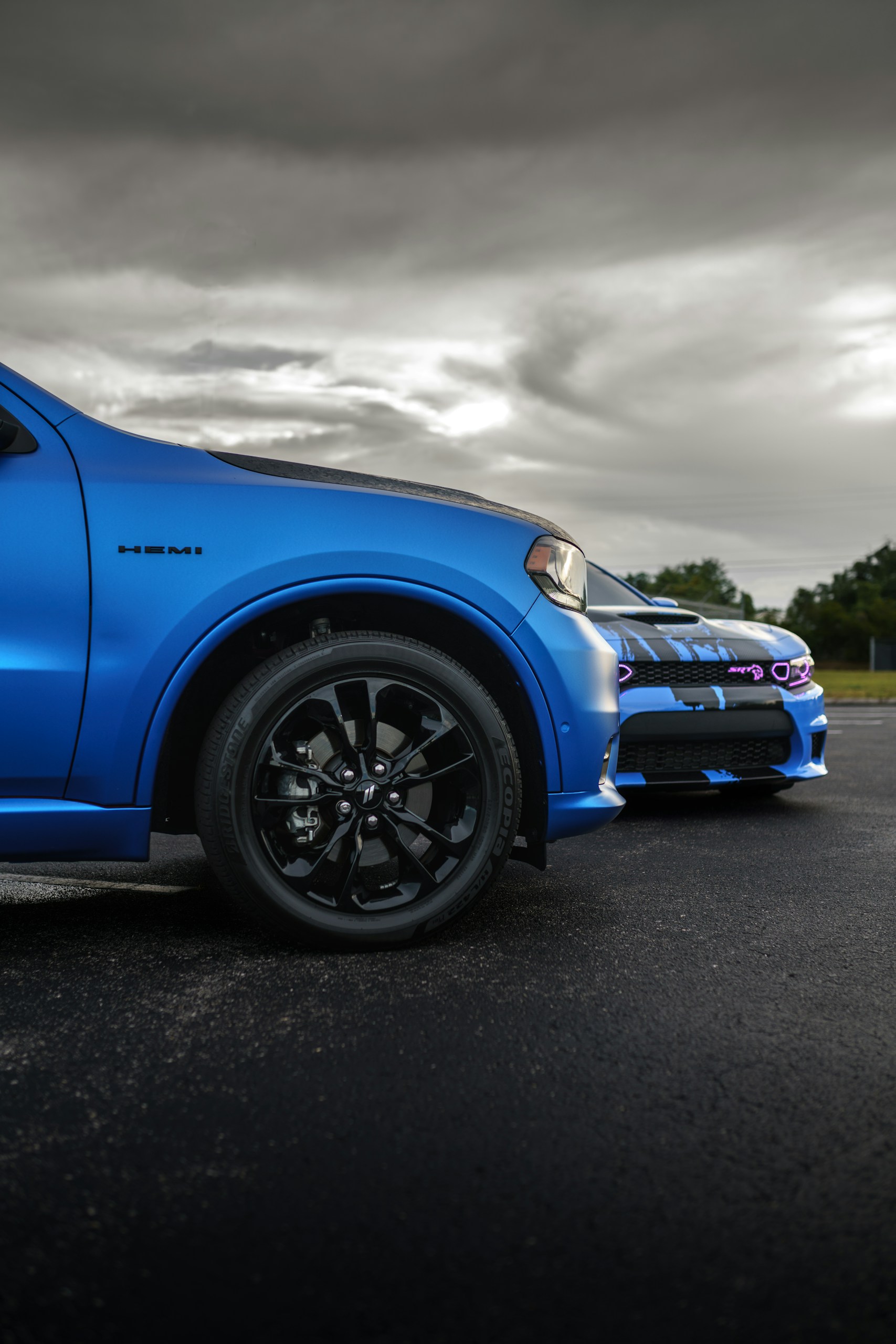
At its 2026 Roadkill Nights event, Dodge showed off several new appearance ideas for the Durango, including the dramatic Durango R/T 392 Smokescreen concept, a Color Jailbreak customization program, translucent Tinted Dual Stripes, and a Brass Monkey appearance package. Dodge also displayed striking colors such as Toxic Orange as it gauges consumer interest in an expanded palette. (Car and Driver)
The production 2027 Durango lineup already gives buyers significant customization choices. MotorTrend reports that the R/T 392 can be configured with seven wheel designs, seven exterior colors, multiple badging finishes, interior color combinations, and optional colors for brake calipers and seatbelts. (MotorTrend)
Appearance may be the reason some buyers fall in love with a particular Durango.
But what happens when that expensive factory finish is defective?
What if the paint begins peeling, bubbling, delaminating, or developing unusual discoloration shortly after purchase?
And what if an Arizona Durango develops a completely unrelated engine, transmission, electrical, or braking problem that Dodge repeatedly cannot fix?
That is where the Arizona Lemon Law, Dodge’s written warranty, implied warranties, and the federal Magnuson-Moss Warranty Act can become important.
What New Appearance Options Is Dodge Showing?
Dodge used Roadkill Nights to show several possible directions for the Durango.
The most eye-catching was the Durango R/T 392 Smokescreen concept.
Most of the SUV was painted in a white color Dodge calls Smokescreen, while the front received a Cryo Blue treatment that gradually broke apart into a pixelated design. The concept also featured Cryo Blue forged wheels with orange accents and a Petrol Blue interior. (Car and Driver)
Dodge also showed a Durango SRT Hellcat Jailbreak finished in Toxic Orange as part of its planned Color Jailbreak customization concept.
The company says the idea is to provide buyers with unusual custom-color choices at prices aimed at a broader group of customers rather than only extraordinarily expensive bespoke commissions. Full details are expected later. (Car and Driver)
Meanwhile, Dodge says its Tinted Dual Stripes and Brass Monkey package are headed for production. The tinted stripes use a translucent effect that allows the underlying body color to remain visible. (Car and Driver)
The Smokescreen design and exact Color Jailbreak choices remain less certain, and Dodge has been using consumer reaction to help determine which ideas move forward. (Car and Driver)
Factory Customization Makes Paint Quality More Important, Not Less
A special paint color may add hundreds or even thousands of dollars to a vehicle’s price.
For some buyers, the exterior color is one of the primary reasons they chose that particular Durango.
That means a significant paint defect can potentially be more than a minor cosmetic annoyance.
Imagine ordering a Durango in a premium factory color and discovering several months later that:
- Clear coat is peeling;
- Paint is bubbling;
- Different body panels are visibly different shades;
- Paint is flaking around doors or the hood;
- The finish develops widespread cloudiness;
- The factory stripe begins lifting;
- A custom color fades unevenly; or
- Repaired paint repeatedly fails.
There is currently no allegation that Dodge’s new colors suffer from these problems.
These are examples of the kinds of factory-finish disputes that can arise with vehicles generally.
Whether such a condition amounts to a warranty breach—or something substantial enough for Lemon Law consideration—depends heavily on its severity and repair history.
Is a Paint Problem Covered by Arizona Lemon Law?
Potentially, but not every cosmetic imperfection is a lemon.
Arizona’s Lemon Law applies to significant warranty nonconformities in qualifying new vehicles.
The Arizona Attorney General explains that the state’s new-car Lemon Law covers a vehicle during the manufacturer’s warranty or two years or 24,000 miles after delivery, whichever period ends first. (Azag)
The owner must report a problem during that period that substantially limits the vehicle’s use and value and does not conform to the manufacturer’s warranty. (Azag)
That “substantially” requirement is important.
A tiny paint chip may not substantially affect a new Durango’s use or value.
A widespread paint failure on an expensive custom-finished SRT Hellcat could present a very different question.
The effect on the vehicle and its market value would need to be proven.
Arizona Uses a Four-Repair Rule
Arizona provides a statutory framework for repeated unsuccessful repairs.
The Arizona Attorney General states that if the manufacturer cannot successfully repair the qualifying defect after four attempts, it may be required to accept return of the vehicle or replace it, assuming the other Lemon Law requirements are met. (Azag)
Consider a hypothetical paint history:
Repair 1 — 3,500 miles: Clear coat begins peeling from hood. Hood refinished.
Repair 2 — 5,100 miles: Peeling reappears and spreads to roof.
Repair 3 — 7,000 miles: Additional refinishing performed.
Repair 4 — 8,800 miles: Same finish failure appears again.
That history is very different from one isolated paint correction.
Whether it satisfies Arizona’s substantial-impairment standard would depend on the actual condition and evidence, but repeated unsuccessful warranty work can become important.
Four Dealership Visits Do Not Automatically Make a Durango a Lemon
This distinction is essential.
Suppose a Durango goes to the dealer four times:
One visit for a paint scratch.
One for an oil change.
One for a radio update.
One for a tire issue.
That is not the same as four unsuccessful attempts to correct a single significant warranty nonconformity.
Lemon Law analysis requires looking at what was actually repaired.
Consumers should organize repair orders chronologically and identify which visits concern the same underlying condition.
Arizona Also Has a 30-Day Rule
Arizona provides another potential route when a vehicle spends substantial time unavailable for repairs.
The Attorney General explains that the manufacturer may be required to provide Lemon Law relief when a qualifying vehicle is out of service for repairs for 30 or more calendar days during the statutory period. (Azag)
The days can accumulate across separate visits.
For example:
First repair: 8 days.
Second repair: 9 days.
Third repair: 7 days.
Fourth repair: 8 days.
Total:
32 calendar days.
Keep every repair order showing exactly when the vehicle entered and left the dealership.
Paint Repairs Can Take Longer Than Owners Expect
A major paint correction is not always a one-day repair.
A dealer or manufacturer may need to:
- Inspect the finish;
- Obtain warranty authorization;
- Send the vehicle to a body facility;
- Order trim or graphics;
- Strip defective material;
- Refinish multiple panels;
- Cure the new paint;
- Replace stripes or emblems; and
- Reassemble the vehicle.
If the problem involves a rare custom color, matching the factory finish can create additional complications.
Again, this does not mean a delay automatically establishes a Lemon Law claim.
But if your Durango remains out of service, document the time.
What If Dodge Cannot Match a Special Color?
This could become particularly relevant as Dodge expands factory customization.
Suppose an Arizona customer orders an unusually distinctive Jailbreak color.
A factory paint defect requires one rear quarter panel to be refinished.
After the repair, the panel clearly does not match the rest of the vehicle.
The owner returns.
The dealer refinishes it again.
The mismatch continues.
That could potentially affect the market value of the vehicle more significantly than the same issue on a conventional fleet-white SUV.
Photographic evidence can be useful in this kind of dispute.
Take clear photographs under different normal lighting conditions, while avoiding image filters that change the actual appearance.
What If the Problem Is With Factory Stripes Rather Than Paint?
The same documentation principles apply.
Dodge says its new Tinted Dual Stripes will be a factory-installed option for the Durango and Charger. (Car and Driver)
If a factory stripe develops a warranty-covered problem, document:
- Peeling;
- Bubbling;
- Cracking;
- Discoloration;
- Misalignment;
- Adhesion failure; or
- Damage resulting from an attempted warranty repair.
The legal analysis may differ depending on whether the graphic is paint, vinyl, another surface treatment, or a dealer-installed accessory.
Check the vehicle’s actual window sticker and warranty documentation.
Dealer-Installed Customization Is Different From Factory Equipment
This distinction can become very important.
Suppose you order a Durango and the dealer adds aftermarket stripes or wraps before delivery.
That may not be the same as a factory-installed Dodge option.
If something fails, the responsible warrantor could differ.
Before purchasing a customized vehicle, ask whether each item is:
Factory installed
Port installed
Dealer installed
or
Aftermarket
Get the answer in writing.
The window sticker, buyer’s order, and accessory paperwork can become important later.
What If Your Durango Has a Mechanical Problem Instead?
The Arizona Lemon Law is certainly not limited to paint.
A 2027 Durango owner could potentially experience a warranty issue involving:
- Engine problems;
- Transmission problems;
- Four-wheel-drive or AWD faults;
- Electrical failures;
- Starting problems;
- Brake problems;
- Steering defects;
- Suspension problems;
- Repeated warning lights;
- Infotainment failures; or
- Another substantial nonconformity.
There is no allegation that the 2027 Durango has these problems generally.
The legal question would be whether an individual owner’s vehicle develops a substantial warranty-covered defect that remains unresolved after the manufacturer receives a reasonable opportunity to repair it.
The 2027 Durango Still Offers Serious V8 Power
Although Dodge is emphasizing customization, the 2027 Durango remains mechanically distinctive.
MotorTrend reports that the lineup ranges from the 5.7-liter HEMI V8 to the naturally aspirated 6.4-liter 392, with the SRT Hellcat retaining its supercharged 6.2-liter V8 producing 710 horsepower. (MotorTrend)
The 2027 R/T 392 lineup also expands with Plus and Premium versions. The Premium adds a Brembo brake package with two-piece rotors, while buyers can select from numerous wheels, colors, badges, interiors, and brake-caliper treatments. (MotorTrend)
With more power and complexity come additional systems that may be covered under Dodge’s warranty.
If a significant powertrain or braking defect occurs, document it just as carefully as a visible finish problem.
Make Sure the Repair Order Describes the Actual Defect
Avoid vague repair descriptions.
For a paint problem:
“Customer states clear coat is peeling from hood and roof despite no accident or external damage.”
For a transmission problem:
“Customer states vehicle hesitates and then harshly engages when accelerating from a stop after warm-up.”
For an engine problem:
“Customer states engine loses power during normal highway driving and check-engine light flashes.”
Only describe what actually happened.
The owner does not need to diagnose the cause.
“Could Not Duplicate” Still Matters
A body-finish defect may be obvious, but mechanical conditions can be intermittent.
If the dealer cannot reproduce the complaint, keep the repair order.
A document saying:
“Could not duplicate”
does not establish that a defect exists.
But it may establish when Dodge received notice and at what mileage.
If the complaint later repeats, those records can become significant.
Arizona’s Protection Period Makes Early Documentation Important
Arizona’s Attorney General summarizes the new-car coverage period as the manufacturer’s warranty or two years/24,000 miles, whichever ends first. (Azag)
That means consumers should not wait to report a significant problem.
If the paint begins peeling at 9,000 miles, get it documented at 9,000 miles.
If the engine begins stalling at 12,000 miles, report it promptly.
A consumer who waits until much later may create unnecessary disputes about when the nonconformity began.
What Remedy Can Arizona Lemon Law Provide?
The Arizona Attorney General explains that if the manufacturer fails to successfully repair the qualifying defect after the required opportunities, the manufacturer may be required to accept return of the vehicle or replace it with a new vehicle. (Azag)
The exact remedy, use allowance, and financial calculation depend on the statutory provisions and individual transaction.
Consumers should not assume they automatically receive every dollar originally paid.
Arizona Also Has Used-Car Lemon Law Protections
Arizona’s law contains separate protections for certain used vehicles.
The Attorney General states that used cars sold by dealers carry an implied warranty of merchantability that generally lasts 15 days or 500 miles, whichever comes first. The dealer must ordinarily receive two opportunities to repair before the buyer can seek a refund under that provision. (Azag)
That protection is much shorter than Arizona’s new-car Lemon Law.
It could nevertheless matter to someone who later purchases a used Durango.
A buyer should not assume a used 2027 Durango gets exactly the same protection as its original purchaser.
What If the Custom Paint Was Damaged Before Delivery?
That can raise a different legal issue.
Suppose a Durango arrives from the factory with shipping damage.
The dealer refinishes a panel before the customer takes delivery.
Whether and how that repair should be disclosed can involve issues different from Lemon Law.
Before accepting a custom-painted vehicle, inspect it carefully.
Look at:
- Panel color consistency;
- Overspray;
- Paint edges;
- Door jambs;
- Trim;
- Stripes;
- Clear-coat consistency; and
- Signs of prior refinishing.
If something looks wrong, ask questions before signing final delivery paperwork.
Avoid Confusing Normal Paint Damage With a Warranty Defect
Manufacturers are not ordinarily responsible for every chip caused by road debris.
A factory paint defect is different from damage caused by:
- Stones;
- Collision;
- Scraping;
- Improper washing;
- Harsh chemicals;
- Environmental fallout;
- Vandalism; or
- Aftermarket detailing work.
If Dodge denies a paint claim as external damage, ask for the reason to be documented.
Photos from the time the problem first appears can help.
What If Dodge Says Your Detailer Caused the Paint Problem?
This may become a common dispute with premium custom finishes.
Owners may ceramic-coat, polish, wrap, or professionally detail their new Durango.
If Dodge alleges that an outside service caused the failure, ask:
- What evidence supports that conclusion?
- What warranty exclusion is being applied?
- What specific treatment caused the damage?
- Is the finding documented on the repair order?
The existence of an aftermarket treatment does not itself prove causation.
But consumers should follow manufacturer care instructions, especially with unusual finishes.
What If the Color Is Discontinued?
A discontinued color does not necessarily eliminate Dodge’s warranty obligations.
Suppose an unusual Jailbreak color is available for only one model year and later needs repair.
The manufacturer may need to determine how to restore the warranted vehicle even if that paint is no longer offered for new orders.
If Dodge says a color cannot be matched or obtained, get that statement in writing.
It may become relevant to the vehicle’s value and repairability.
Breach of Dodge’s Written Warranty
Arizona Lemon Law is not the only potential claim.
A consumer may also have rights arising from Dodge’s written warranty.
Imagine a factory paint defect occurs during warranty coverage.
Dodge accepts the claim.
The vehicle is repainted.
The same finish failure returns.
Dodge performs another repair.
The problem continues.
Even if the circumstances do not ultimately satisfy Arizona’s new-car Lemon Law, there may still be a question:
Did Dodge fulfill its written warranty promise?
The answer depends on the warranty terms and repair history.
The Magnuson-Moss Warranty Act
The federal Magnuson-Moss Warranty Act can provide additional remedies for qualifying breaches of written or implied warranties.
Magnuson-Moss is not a nationwide Lemon Law.
There is no universal federal rule stating that four paint repairs automatically require a vehicle repurchase.
Instead, Magnuson-Moss generally works with the manufacturer’s written warranty and applicable state warranty law.
A successful consumer may potentially recover reasonable attorneys’ fees and costs in an appropriate case.
That fee-shifting provision can make legitimate warranty disputes more practical to pursue.
Keep Every Customization Document
For a Durango ordered with unusual factory appearance options, preserve more than just repair orders.
Keep:
- Original order sheet;
- Window sticker;
- Buyer’s order;
- Paint code;
- Appearance-package documentation;
- Jailbreak configuration sheet, if applicable;
- Warranty booklet;
- Every repair order;
- Before-and-after photographs;
- Body-shop invoices;
- Emails with Dodge;
- Customer-care case numbers; and
- Any statements about whether a particular option was factory or dealer installed.
These documents may become important if the vehicle’s repaired appearance differs from what you originally purchased.
Is the New Durango Color Program a Defect Story?
No.
Dodge’s expanded color and customization efforts are currently a product and styling story, not evidence of defective vehicles.
At Roadkill Nights, the company showcased custom colors and appearance concepts including Toxic Orange, the Smokescreen concept, Tinted Dual Stripes, and the Brass Monkey package. Some options are production bound while other ideas are still being evaluated. (Car and Driver)
There is no responsible basis to suggest these new colors are defective simply because they are new.
The consumer-law angle is prospective:
If an expensive factory paint, graphic, or another part of a new Durango repeatedly fails under warranty, what rights does an Arizona owner have?
Could a 2027 Dodge Durango Qualify Under Arizona Lemon Law?
Important questions would include:
Was the vehicle purchased new and covered by Arizona’s Lemon Law?
Was the nonconformity reported during the earlier of the manufacturer’s warranty or two years/24,000 miles? (Azag)
Does the problem substantially limit the vehicle’s use and value? (Azag)
Did Dodge fail to repair the same defect after four attempts? (Azag)
Was the vehicle out of service for repairs for 30 or more calendar days? (Azag)
And if Arizona Lemon Law does not ultimately apply:
Did Dodge nevertheless breach its written warranty or another applicable warranty obligation?
Contact Ginsburg Law Group About Dodge Durango Warranty Problems
Dodge is making the 2027 Durango increasingly customizable, with new colors, graphics, packages, and Jailbreak-style personalization giving buyers an opportunity to order vehicles that look very different from ordinary three-row SUVs. (Car and Driver)
Those appearance options are not themselves evidence of a defect.
But an Arizona consumer who pays for a special factory finish should document any genuine warranty problem promptly—particularly if paint begins peeling, bubbling, delaminating, fading abnormally, or repeatedly failing after authorized repair.
The same advice applies to substantial mechanical and electrical defects.
Ginsburg Law Group represents consumers in Lemon Law and breach-of-warranty matters. Arizona’s Lemon Law focuses on significant defects reported during the applicable warranty/two-year/24,000-mile period and provides important protections when the manufacturer cannot successfully repair the defect after the required opportunities. (Azag)
Keep every repair order, photograph, warranty document, factory-option sheet, and communication with Dodge.
Those records may ultimately help establish whether Arizona Lemon Law, breach-of-warranty law, or the Magnuson-Moss Warranty Act provides a remedy.
This article is for general informational purposes only and does not constitute legal advice. Dodge’s newest appearance programs and colors do not themselves establish any defect. Arizona Lemon Law and warranty rights depend upon the individual vehicle, transaction, warranty terms, repair history, defect severity, timing, and other circumstances.
Then the creditor files a lawsuit — and all of that progress is suddenly at risk.
When a debt lawsuit lands, your client has 20–30 days to respond. If they don’t? Default judgment. And that means wage garnishment, bank levies, and liens on property. Everything you’ve worked toward for them disappears.
This is exactly where a debt defense attorney steps in.
We review the complaint for defects, file a timely answer to stop the default, challenge the plaintiff’s evidence, and negotiate from a position of strength. The goal aligns with yours: the best possible resolution for the consumer.
What to look for in a debt defense referral:
✔ Client received a summons and complaint
✔ Deadline to respond is approaching (or missed)
✔ Significant debt amount or aggressive creditor
✔ States where wage garnishment is actively used
We prefer pre-judgment referrals and pay $400–$1,000 per accepted case. We serve PA, NJ, MD, CA, TN, TX, FL, AZ, and WY.
Tag a colleague in debt resolution who should know this. Your clients need both of us.
📞 855-978-6564 | info@ginsburglawgroup.com
Get a free case evaluation for every referral.