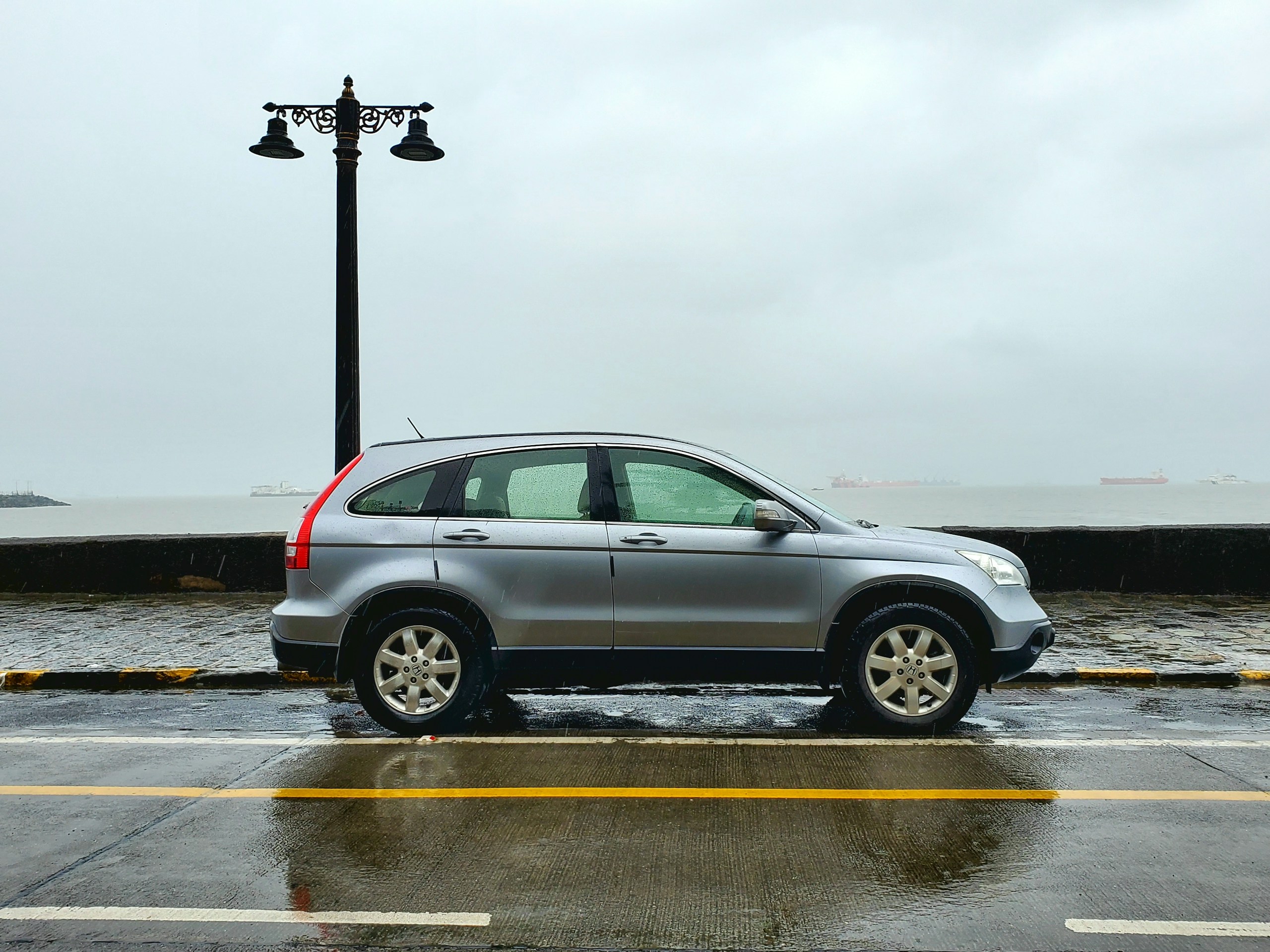
Is Your Honda CR-V Steering Sticking, Binding, or Difficult to Turn?
Steering problems are among the last issues any driver wants to experience.
A vehicle’s steering should respond predictably when the driver turns the wheel. When the steering wheel feels like it is sticking, binding, resisting small corrections, or suddenly requiring additional effort, the problem can be more than an annoyance. It can affect a driver’s confidence and potentially the safe operation of the vehicle.
If you own a 2021 Honda CR-V and have repeatedly complained about a sticking or unusual steering condition, an important question is what happened when you brought the vehicle to an authorized Honda dealer.
Was the problem repaired?
Did it return?
Did the dealership tell you it was unable to duplicate the condition?
And, perhaps most importantly, how many times did you give Honda an opportunity to address the problem while the vehicle was covered by warranty?
For Pennsylvania consumers, those questions can become important when evaluating potential rights under the Pennsylvania Automobile Lemon Law and state and federal breach-of-warranty laws.
A vehicle does not automatically become a “lemon” simply because it has a defect. But repeated unsuccessful warranty repairs can potentially give rise to significant consumer rights.
What Does “Sticky Steering” Feel Like?
Consumers use different words to describe steering problems.
One driver might say the steering “sticks.” Another might describe the steering wheel as having a notch or catching point. Others may notice that making small steering corrections at highway speeds requires more effort than expected.
The precise description matters.
In fact, federal regulators have investigated complaints of what they describe as “sticky steering” involving certain later-model Honda and Acura vehicles. A National Highway Traffic Safety Administration investigation concerning certain 2022–2023 Honda Civics, 2023 Honda CR-Vs and 2023 Acura Integras described complaints involving a momentary increase in steering effort, frequently after extended driving and at highway speeds. NHTSA also noted an especially interesting problem: the condition described by consumers could be difficult for dealership technicians to reproduce during short test drives.
That investigation concerned different model years and should not be interpreted as establishing that a 2021 CR-V has the same condition or cause.
But it illustrates an important lesson for any consumer experiencing an intermittent steering problem:
“Could not duplicate” does not necessarily mean the consumer did not experience the problem.
What If the Honda Dealer Cannot Duplicate the Steering Problem?
This is one of the most frustrating situations in automotive warranty disputes.
You experience the steering problem on your commute. You make an appointment. You explain exactly what happened.
Then the dealership drives the vehicle for several miles and hands you a repair order stating:
“Could not duplicate customer concern.”
Don’t throw that repair order away.
It may become important evidence.
Consumers should make sure the repair order accurately describes the condition they reported. Instead of accepting a vague description such as “check steering,” ask that the repair order document the actual complaint.
For example:
“Customer states steering wheel intermittently sticks and requires increased effort to make steering corrections after vehicle has been driven approximately 30 minutes at highway speeds.”
The consumer should, of course, describe only what actually happened.
Specificity matters because months or years later, the repair orders may be some of the best evidence establishing when the problem began, how frequently it occurred and how many opportunities the manufacturer received to repair it.
How Does the Pennsylvania Lemon Law Work?
Pennsylvania has enacted an Automobile Lemon Law specifically designed to protect qualifying purchasers and lessees of defective new vehicles.
PennDOT explains that the law applies to qualifying new vehicles purchased or leased and registered in Pennsylvania—or purchased or leased elsewhere and first registered in Pennsylvania—for personal, family or household use.
The law focuses on defects that substantially impair the vehicle’s use, value or safety.
For vehicles other than motorcycles, Pennsylvania’s current statutory framework generally looks to a defect occurring within one year following delivery, the first 12,000 miles, or the manufacturer’s express warranty term, whichever occurs first.
That timing requirement makes early documentation particularly important.
If your CR-V begins experiencing a steering problem, don’t simply live with it for six months hoping it disappears.
Report it.
And obtain a repair order.
Does a Steering Problem “Substantially Impair” the Vehicle?
Not every vehicle imperfection qualifies under Pennsylvania’s Lemon Law.
The statute focuses on a nonconformity that substantially impairs the use, value or safety of the vehicle.
That distinction makes the nature of the defect important.
A minor cosmetic imperfection is very different from a consumer reporting that the steering wheel intermittently resists input while the vehicle is traveling at highway speed.
Still, the existence of a steering complaint by itself does not establish a Lemon Law claim.
The specific facts matter, including:
- When the defect first appeared;
- The vehicle’s mileage at the time;
- When Honda or an authorized dealership was first notified;
- The number of repair opportunities;
- What repairs were actually performed;
- Whether the condition returned;
- How the condition affects the vehicle; and
- The terms of the applicable warranties.
A lawyer evaluating a potential claim should review the actual repair history rather than simply count dealership visits.
How Many Repair Attempts Does Pennsylvania Allow?
One of the most common questions consumers ask is:
“How many times does the dealer get to fix my car before it’s a lemon?”
The answer requires more nuance than many online summaries suggest.
Pennsylvania law gives the manufacturer a reasonable opportunity to repair a qualifying nonconformity. PennDOT’s Lemon Law materials explain that when a qualifying defect cannot be repaired within a reasonable period, a consumer may potentially become eligible for replacement or refund relief.
This is why consumers should be cautious about internet claims that a particular number of visits automatically makes a vehicle a lemon.
A repair history has to be evaluated under the applicable statute and the facts of the particular case.
Every Repair Order Matters
Suppose you took your CR-V to the dealership three times.
The first repair order says:
“Customer states steering sticks at highway speed.”
The second says:
“Steering feels notchy after extended driving.”
The third says:
“Customer states steering wheel intermittently binds.”
Although the wording differs, those repair orders may potentially document the same underlying complaint.
Conversely, simply having three repair orders does not necessarily mean there were three attempts to repair the same defect.
This is one reason consumers should keep every page of every repair order.
Don’t rely solely on the dealership to maintain the records indefinitely.
What If My 2021 Honda CR-V Is Too Old for Pennsylvania’s Lemon Law?
This question is especially important for owners of 2021 vehicles today.
A vehicle may fall outside Pennsylvania’s Lemon Law parameters and still warrant analysis under other warranty laws.
That distinction is critical:
Not qualifying under a state’s Lemon Law does not necessarily mean that the consumer has no warranty rights.
A consumer may potentially have claims arising from breach of a written warranty, applicable implied warranties or federal warranty law depending upon the facts.
That’s where the Magnuson-Moss Warranty Act can become important.
Breach of Warranty and the Magnuson-Moss Warranty Act
The Magnuson-Moss Warranty Act is a federal law governing warranties on consumer products.
The Federal Trade Commission explains that written warranties are promises by warrantors concerning the products they sell. The FTC describes a warranty as a commitment by the warrantor to stand behind its product.
That can become significant in an automobile case.
Imagine that Honda warranted a vehicle against covered defects, the consumer repeatedly presented a steering problem during the applicable warranty period, and authorized dealers repeatedly failed to correct the problem.
Even if the circumstances don’t satisfy Pennsylvania’s specific Lemon Law requirements, the repair history may warrant investigation for potential breach-of-warranty claims.
The federal Magnuson-Moss Warranty Act also provides an important feature for consumers: the FTC explains that consumers may sue over breaches of applicable written or implied warranties and that successful consumers may potentially recover reasonable attorneys’ fees and court costs.
Whether those remedies are available in a particular case depends on the facts and applicable law.
Express Warranty vs. Implied Warranty
These terms are frequently confused.
An express warranty generally involves an actual promise made concerning the vehicle—for example, the manufacturer’s written new-vehicle warranty.
An implied warranty, by contrast, can arise through state law.
The FTC explains the implied warranty of merchantability in straightforward terms: essentially, a merchantable product should do what it is supposed to do.
Automobile warranty litigation can involve complicated questions about which warranties apply, who issued them, their duration, privity requirements, disclaimers and limitations.
Consumers therefore shouldn’t assume either that they have a claim or that they don’t simply because the dealership says, “Your Lemon Law period is over.”
The analysis may not end there.
What If Honda Eventually Fixes the Steering?
Another misconception is that a manufacturer can necessarily defeat every warranty claim by eventually repairing the vehicle.
The timing and history can matter.
Was the vehicle presented once and immediately repaired?
Or was it returned repeatedly over months while the consumer continued experiencing the same problem?
Was the vehicle unavailable for significant periods?
Were components replaced without correcting the underlying condition?
Did the dealership repeatedly say it could not reproduce the problem?
Those are materially different histories.
A warranty attorney should look at the entire chronology.
What Should Pennsylvania Honda CR-V Owners Do?
If you’re experiencing sticking, binding or abnormal steering, prioritize safety and have the vehicle appropriately inspected.
From a warranty-documentation standpoint, consumers should also preserve:
Every repair order. Keep both intake paperwork and final invoices.
Warranty documents. Save the warranty booklet and relevant communications.
Emails and text messages. Communications with the dealership may establish when a problem was reported.
Videos where safely obtainable. An intermittent dashboard warning or other observable condition can sometimes be documented, but never attempt to film a steering problem yourself while driving.
Tow records and receipts. Preserve evidence of breakdowns and related expenses.
A chronology. Keep a simple record showing dates, mileage, symptoms and dealership visits.
Most importantly, read the repair order before leaving the dealership.
If you complained about sticky steering but the repair order merely says “customer requests inspection,” ask for the complaint to be accurately documented.
The Dealer Says “Operating as Designed.” Is the Case Over?
Not necessarily.
“Operating as designed” is the dealership’s characterization of what it observed.
Likewise, “could not duplicate” records the technician’s inability to reproduce a condition during that particular visit.
Neither phrase magically erases the consumer’s previous experiences.
At the same time, those phrases do not prove a defect exists.
This is precisely why the complete repair history matters.
Repeated complaints documented consistently over time can tell a very different story than one isolated service visit.
Pennsylvania Lemon Law and Your 2021 Honda CR-V
A sticking-steering complaint deserves attention, particularly when it is recurring.
For Pennsylvania consumers, the key questions aren’t simply:
“Does my Honda CR-V have sticky steering?”
They are:
When did the problem start?
At what mileage?
When was it first reported to Honda?
How many opportunities did Honda receive to repair it?
Did the problem return?
What does each repair order say?
Was the vehicle covered by a written warranty when the problem was reported or repaired?
Does the defect substantially impair the vehicle’s use, value or safety?
Those answers can help determine whether Pennsylvania’s Automobile Lemon Law, breach-of-warranty law, the Magnuson-Moss Warranty Act or another consumer remedy warrants further investigation.
Talk to Ginsburg Law Group About Your Honda CR-V
If your 2021 Honda CR-V has experienced repeated steering problems, including sticking, binding, increased steering effort or another steering condition that an authorized dealership has been unable to successfully repair, consider having your warranty and repair history reviewed.
Ginsburg Law Group represents consumers in Lemon Law and breach-of-warranty matters.
Don’t discard repair orders simply because they say “could not duplicate.” Those documents may be an important part of understanding the history of your vehicle and evaluating potential legal remedies.
Contact Ginsburg Law Group to discuss your vehicle, its warranty history and whether Pennsylvania Lemon Law or breach-of-warranty protections may apply.
This article provides general information and is not legal advice. Lemon Law and warranty claims are highly fact-specific, and prior results do not guarantee a similar outcome.