If your bank account has been frozen due to a garnishment in Florida, you may still have powerful protections—especially if your account contains Social Security or other exempt funds.
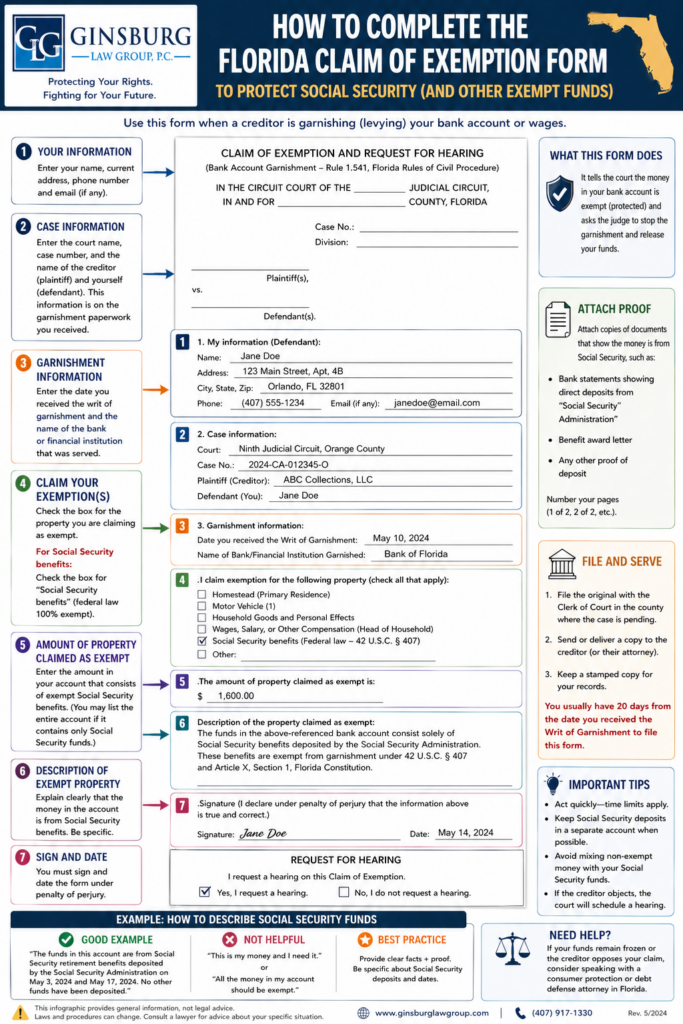
One of the most important tools available to you is the Claim of Exemption and Request for Hearing form. We’ve created a visual guide (see above) to help you understand how to complete it. Below, we break it down in plain English.
⚠️ Important: The form shown is just an example. Forms can vary slightly by county or court, but the overall process and required information are generally the same.
What Is a Claim of Exemption?
A Claim of Exemption is your formal way of telling the court:
“The money in my account is legally protected and cannot be taken by this creditor.”
In Florida, many types of funds are exempt, including:
- Social Security benefits
- SSI (Supplemental Security Income)
- Veterans benefits
- Disability income
- Head of household wages (in many cases)
If your account contains these funds, you have the right to request that the garnishment be stopped and your money released.
When Do You Use This Form?
You use this form after:
- A Writ of Garnishment has been issued
- Your bank account has been frozen or levied
You typically have 20 days from receiving the writ to file your Claim of Exemption—so timing is critical.
Step-by-Step: How to Complete the Form
While formats may differ slightly, most Florida Claim of Exemption forms follow the same structure.
1. Case Information
At the top of the form, you’ll enter:
- Court name (from your paperwork)
- Case number
- Names of the parties (plaintiff/creditor and defendant/you)
👉 This information comes directly from the garnishment documents you received.
2. Check the Correct Exemption Box
This is the most important section.
If your account contains Social Security, check:
✔️ “Social Security benefits”
This exemption is protected under federal law (42 U.S.C. § 407) and is extremely strong.
You can also check other boxes if they apply.
3. Provide Your Contact Information
Include:
- Your address
- Phone number
- Email (if available)
This is where the court will send notice of any hearing.
4. Request a Hearing
Most forms include a section to request a hearing.
✔️ You should almost always request one
This ensures:
- A judge reviews your claim
- You have a chance to explain your situation if needed
5. Certificate of Service (Very Important)
You must certify that you sent a copy of the form to:
- The creditor (or their attorney)
- The garnishee (usually your bank or their attorney)
This is typically done by:
- Hand delivery
- E-service (if applicable)
⚠️ If this section is not completed, the garnishment may not be dissolved—even if your claim is valid.
6. Sign (and Often Notarize)
You must:
- Sign under penalty of perjury
- In many cases, have the form notarized
If the form is not notarized (when required), it can delay or prevent release of funds.
What Happens After You File?
Once you file your Claim of Exemption:
- The creditor has a short period to object
- If they don’t object → your funds may be released
- If they do object → the court schedules a hearing
In cases involving clear Social Security deposits, courts routinely rule in favor of the consumer.
Tips to Strengthen Your Claim
- 📄 Attach bank statements showing Social Security deposits
- 🧾 Include benefit award letters if available
- 🚫 Avoid mixing non-exempt funds in the same account
- 🏦 Use a separate account for protected funds going forward
Why This Matters
Many people assume that once their account is frozen, the money is gone. That’s not true.
If your funds are exempt, you have the legal right to get them back—but only if you properly assert that right using this form.
Final Thoughts
The Claim of Exemption form may look intimidating, but it’s really just a structured way to tell the court:
“This money is protected under the law.”
Even though forms may vary slightly from county to county, the core process is the same:
- Identify your exemption
- Complete the form
- File it quickly
- Send copies to the right parties
Need Help?
If your account is frozen or a creditor is challenging your exemption, it’s smart to speak with a consumer protection attorney.
At Ginsburg Law Group, P.C., we help consumers fight improper garnishments and protect exempt funds.
Note: This is just a sample form. Format and appearance may vary by court location.