


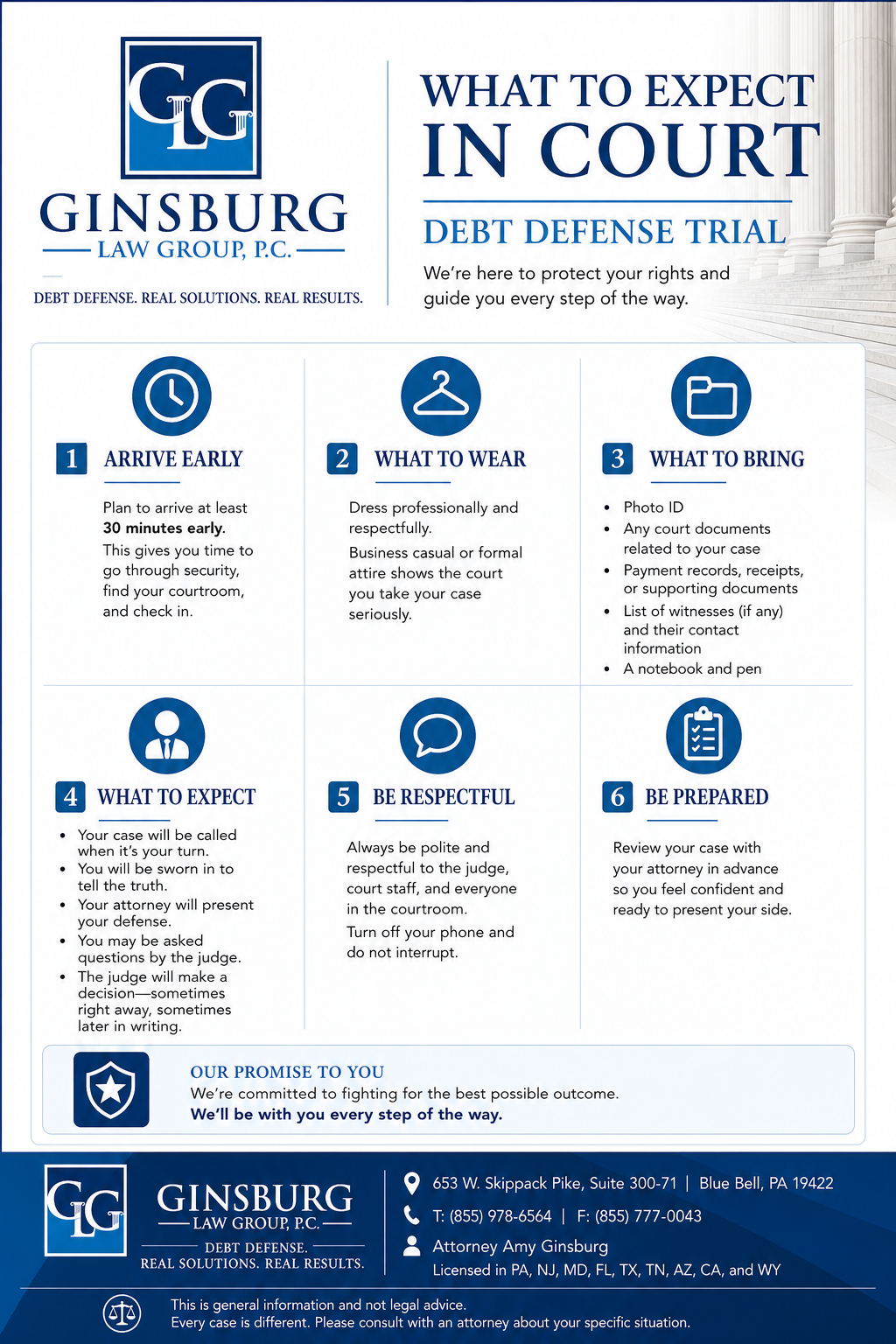
Facing a debt collection lawsuit can feel overwhelming. For many people, stepping into a courtroom is unfamiliar territory—and understandably stressful. At Ginsburg Law Group, P.C., we believe that preparation reduces anxiety and empowers you to present your case confidently.
This guide walks you through exactly what to expect during a debt defense trial, how to prepare, what to wear, and how to make the best possible impression in court.
Understanding the Purpose of a Debt Defense Trial
A debt defense trial occurs when a creditor or debt collector sues you to recover an alleged debt, and the case is not resolved beforehand through settlement or dismissal. At trial, both sides present evidence and arguments, and a judge (or sometimes a jury) decides the outcome.
The creditor must prove:
- You owe the debt
- They have the legal right to collect it
- The amount they claim is accurate
Your defense may challenge any of these points.
Step One: Arrive Early and Be Prepared
One of the simplest—and most important—things you can do is arrive early.
Plan to get to the courthouse at least 30 minutes before your scheduled time. Courts often have security checkpoints, and finding the correct courtroom can take longer than expected.
Arriving early allows you to:
- Pass through security without stress
- Locate your courtroom
- Speak with your attorney before the hearing
- Mentally prepare and settle your nerves
Being late can negatively impact your case—or worse, result in a default judgment against you.
What to Wear: Presenting Yourself Professionally
Your appearance in court matters. While there’s no strict dress code, your goal is to show respect for the court and demonstrate that you take the matter seriously.
Recommended attire:
- Business casual or formal clothing
- Collared shirts, blouses, or sweaters
- Slacks, dress pants, or modest skirts
- Closed-toe shoes
Avoid:
- Shorts, flip-flops, or overly casual clothing
- Clothing with slogans or graphics
- Hats (unless for religious reasons)
Think of it as dressing for an important job interview. First impressions count.
What to Bring to Court
Preparation is key to a strong defense. Bring all relevant materials organized and ready to access.
Essential items:
- Photo ID
- All court documents related to your case
- Payment records or receipts
- Contracts or agreements tied to the alleged debt
- Correspondence with the creditor or collector
- A list of witnesses (if applicable)
- A notebook and pen
Having your documents organized in a folder or binder can make a significant difference in how effectively your case is presented.
What Happens During the Trial
Knowing what to expect can make the courtroom experience far less intimidating.
1. Your case is called
The judge will call your case, and both parties will come forward.
2. Oath
You may be sworn in and asked to testify truthfully.
3. The creditor presents their case
The plaintiff (creditor or debt collector) will present evidence and may call witnesses.
4. Your defense is presented
Your attorney will challenge the plaintiff’s evidence and present your side of the case.
5. Questions from the judge
The judge may ask you questions directly. This depends on the jurisdiction and local rules.
6. Decision
The judge may:
- Issue a decision immediately, or
- Take the matter under advisement and issue a written decision later
Courtroom Etiquette: Be Respectful and Professional
Your behavior in court is just as important as your legal arguments.
Key tips:
- Address the judge as “Your Honor”
- Speak clearly and only when it’s your turn
- Do not interrupt the judge or opposing counsel
- Turn off your phone before entering the courtroom
- Remain calm and composed, even if you feel frustrated
Respectful conduct helps build credibility and shows the court you are taking the process seriously.
Work Closely With Your Attorney
Preparation doesn’t start in the courtroom—it starts well before your trial date.
Meet with your attorney ahead of time to:
- Review your case strategy
- Understand possible outcomes
- Practice answering questions
- Clarify any concerns
At Ginsburg Law Group, we ensure our clients feel informed, confident, and ready every step of the way.
Common Defenses in Debt Collection Cases
Every case is unique, but some common defenses include:
- Lack of proper documentation (the collector cannot prove the debt)
- Mistaken identity (the debt is not yours)
- Incorrect amount claimed
- Statute of limitations has expired
- Improper assignment of the debt
An experienced consumer attorney can identify the strongest defenses for your situation.
Managing Expectations
It’s important to understand that not all cases result in a win—but strong preparation can significantly improve your outcome.
Possible results include:
- Case dismissal
- Judgment in your favor
- Settlement
- Judgment for the creditor
Even in challenging cases, having the right legal representation can help minimize the impact and explore alternative options.
Reducing Stress Before Court
Feeling nervous is completely normal. Here are a few ways to manage anxiety:
- Review your documents ahead of time
- Get a good night’s sleep before your court date
- Arrive early to avoid rushing
- Trust your attorney’s preparation and guidance
Remember: preparation replaces fear with confidence.
Why Legal Representation Matters
Debt collectors often come prepared with legal teams and documentation. Having an experienced attorney on your side levels the playing field.
At Ginsburg Law Group, P.C., we focus on protecting consumers from unfair and unlawful debt collection practices. Our team understands the complexities of these cases and works aggressively to achieve the best possible outcome.
Our Commitment to You
We know that facing a lawsuit can feel intimidating—but you don’t have to go through it alone.
We are committed to:
- Protecting your rights
- Explaining every step of the process
- Preparing you thoroughly for court
- Fighting for the best possible outcome
Contact Ginsburg Law Group, P.C.
If you’re facing a debt collection lawsuit or have questions about your rights, we’re here to help.
Phone: (855) 978-6564
Email: debtdefense@ginsburglawgroup.com
Attorney Amy Ginsburg
Licensed in PA, NJ, MD, FL, TX, TN, AZ, CA, and WY
Attorney John Spitale
Licensed in PA and NJ
Final Thoughts
Court doesn’t have to be a mystery. With the right preparation, guidance, and legal support, you can walk in confident and ready.
If you’re unsure about your next steps, don’t wait. The earlier you prepare, the stronger your position will be.
This article is for informational purposes only and does not constitute legal advice. Every case is different. Please consult with an attorney regarding your specific situation.


