Your credit score affects more than you might think.
It can impact whether you’re approved for a credit card, car loan, or mortgage. It can influence the interest rates you’re offered. In some cases, it can even affect where you’re able to live or the deposits you’re required to pay.
But despite how important it is, many people don’t fully understand what actually goes into a credit score.
Let’s break it down in a clear, consumer-friendly way.
What Is a Credit Score?
A credit score is a number—usually between 300 and 850—that lenders use to evaluate how risky it might be to lend you money.
The higher your score, the better you look to lenders.
There are different scoring models (like FICO and VantageScore), but most of them use similar factors.
The 5 Main Factors That Make Up Your Credit Score
1. Payment History (Most Important)
This is the biggest factor in your credit score.
It answers one simple question:
Do you pay your bills on time?
Your payment history includes:
- Credit cards
- Auto loans
- Student loans
- Mortgages
- Other lines of credit
Late payments, missed payments, collections, and defaults can all hurt your score.
💡 Key takeaway: Even one missed payment can have a noticeable impact.
2. Credit Utilization (How Much You Owe)
This measures how much of your available credit you’re using.
For example:
- If your credit card limit is $10,000
- And your balance is $3,000
- Your utilization is 30%
Lower is generally better.
Experts often recommend staying below 30%, and ideally closer to 10%.
💡 Key takeaway: Maxing out cards—even if you pay on time—can lower your score.
3. Length of Credit History
This looks at how long you’ve had credit.
It includes:
- The age of your oldest account
- The age of your newest account
- The average age of all your accounts
A longer history generally helps your score because it gives lenders more data to evaluate.
💡 Key takeaway: Keeping older accounts open can benefit your score.
4. Credit Mix
This refers to the types of credit you have.
Examples include:
- Credit cards (revolving credit)
- Installment loans (auto, student, mortgage)
Having a mix of different types can help—but it’s not a major factor.
💡 Key takeaway: You don’t need every type of loan—this is a smaller piece of the puzzle.
5. New Credit (Recent Activity)
This includes:
- New credit accounts
- Hard inquiries (when lenders check your credit for applications)
Opening several accounts in a short time can signal risk.
💡 Key takeaway: Applying for too much credit at once can temporarily lower your score.
What Does NOT Affect Your Credit Score
There are also a lot of myths about credit scores. These things typically do NOT directly affect your score:
- Your income
- Your job or employment status
- Your bank account balance
- Your age (though history length matters)
- Checking your own credit (this is a “soft inquiry”)
Common Mistakes That Hurt Credit Scores
Many consumers damage their credit without realizing it.
Some of the most common issues include:
- Missing even one payment
- Carrying high credit card balances
- Closing old accounts too quickly
- Ignoring small debts that go to collections
- Not checking credit reports for errors
Why Credit Scores Matter in Real Life
Your credit score can affect:
- Loan approvals (car, mortgage, personal loans)
- Interest rates (higher scores = lower rates)
- Housing (landlords often check credit)
- Insurance rates (in some states)
- Utility deposits
In other words, your credit score isn’t just about borrowing—it can shape your everyday financial life.
How to Improve Your Credit Score
If you want to build or improve your score, focus on the basics:
✔️ Pay all bills on time
✔️ Keep credit card balances low
✔️ Avoid opening too many accounts at once
✔️ Keep older accounts open when possible
✔️ Check your credit report regularly for errors
Improving your score doesn’t happen overnight—but consistent habits make a big difference over time.
One Important Consumer Tip
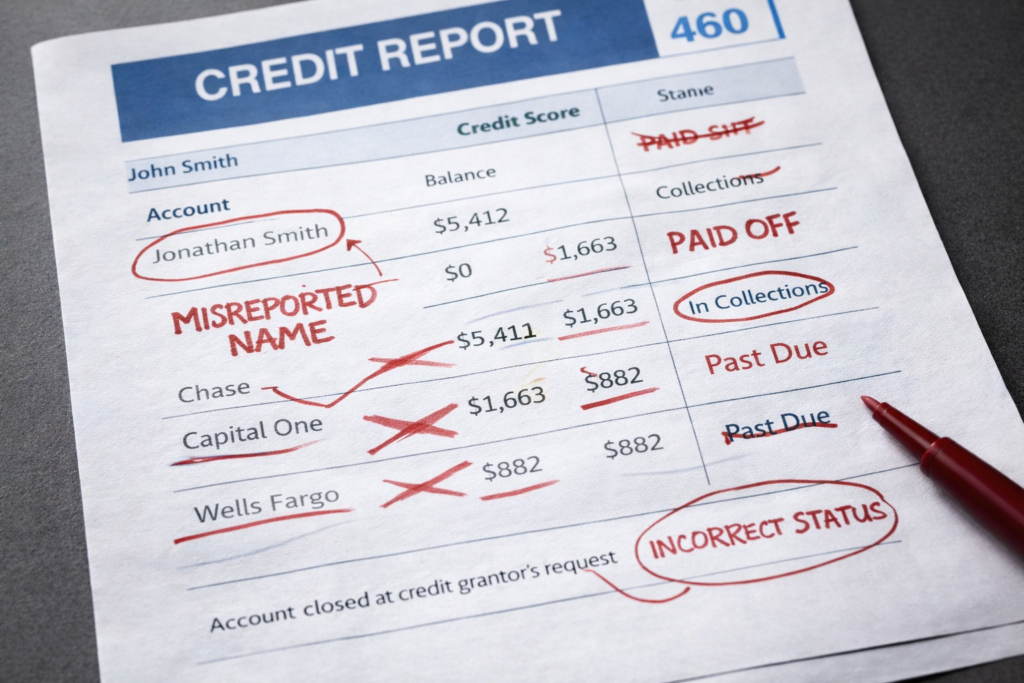
If something on your credit report doesn’t look right, you have the right to dispute it.
Errors on credit reports are more common than many people realize—and fixing them can improve your score.
Final Thoughts
Your credit score isn’t random. It’s built from a handful of key behaviors—mostly centered around how you use credit and whether you pay on time.
The good news is that once you understand how it works, you can take control of it.
You don’t need perfect credit to move forward—but understanding what affects your score can help you avoid costly mistakes and make smarter financial decisions.
If you’re dealing with credit reporting issues, debt problems, or questions about your rights, there may be legal options available to help.
This post is for informational purposes only and does not constitute legal advice.