When people think about filing for bankruptcy, they usually assume one thing:
👉 “I’m going to lose everything.”
That’s not actually how bankruptcy works.
Both federal and state laws allow you to protect certain property through exemptions—and some of those exemptions are surprisingly… unusual.
From wedding rings to livestock, and even burial plots, bankruptcy law includes protections that most people have never heard of.
Here’s a look at some of the strangest (but very real) bankruptcy exemptions—and what they mean for you.
⚖️ What Are Bankruptcy Exemptions?
Before we get into the weird stuff, let’s cover the basics.
In bankruptcy, exemptions allow you to:
- Keep certain property instead of having it sold
- Protect assets necessary for living and working
- Maintain a basic standard of living after your case
Depending on your state, you may use:
- Federal exemptions, OR
- State-specific exemptions
👉 And this is where things get interesting.
💍 1. Wedding Rings (Often Fully Protected)
Many states—and the federal system—specifically protect wedding rings.
Why?
Because lawmakers recognize:
- Their personal and emotional value
- Their role as a symbol of marriage
🧠 What’s unusual:
Some states allow unlimited or very high-value protection for wedding rings, even when other jewelry is capped.
👉 So while luxury jewelry might be at risk, your wedding band is often safe.
🐄 2. Livestock and Farm Animals
If you live in a rural state, this one matters more than you think.
Many states allow exemptions for:
- Cows
- Chickens
- Horses
- Other farm animals
🧠 Why this exists:
Historically, bankruptcy laws were designed to ensure people could:
- Continue working
- Produce food
- Support themselves after filing
👉 In agricultural states, that meant protecting livestock.
🪦 3. Burial Plots and Funeral Arrangements
Yes—your final resting place is protected.
Most states allow exemptions for:
- Burial plots
- Cemetery lots
- Prepaid funeral plans
🧠 Why it matters:
Courts recognize the importance of:
- Dignity
- Cultural and religious practices
- Avoiding hardship on surviving family members
👉 Even in bankruptcy, this is considered off-limits.
🎓 4. College Savings Accounts (With Limits)
Certain education savings accounts—like 529 plans—can be protected.
⚠️ But here’s the catch:
- Contributions made too close to filing may not be protected
- There are time-based and dollar limits
🧠 Why it’s unusual:
You’re filing bankruptcy—but still protecting money for future education.
👉 It shows bankruptcy law isn’t just about debt—it’s about preserving opportunity.
🛠️ 5. Tools of Your Trade
This one can be surprisingly broad.
Many states allow you to keep:
- Work tools
- Equipment
- Professional instruments
Examples:
- A mechanic’s tools
- A contractor’s equipment
- A hairstylist’s kit
- Even musical instruments for performers
🧠 Why it matters:
If you can’t work, you can’t recover financially.
👉 Bankruptcy is designed to help you restart, not shut you down.
📚 6. Books (Yes, Really)
Some states explicitly protect:
- Books
- Libraries
- Educational materials
🧠 Why this exists:
Historically, books were considered essential for:
- Education
- Personal development
- Livelihood (especially for professionals)
👉 It’s a small but fascinating reflection of older legal values.
🐕 7. Pets (Sometimes Protected… Sometimes Not)
Pets fall into a strange legal category.
Technically, they are:
- Considered property
But in practice:
- Courts are often reluctant to force surrender of pets
- Some states have specific protections
🧠 The reality:
Even where not explicitly exempt, trustees rarely pursue pets unless:
- They are extremely valuable (e.g., breeding animals)
👉 Still, the law hasn’t fully caught up with how people view pets—as family.
💰 8. Public Benefits (Broad Protection)
This includes:
- Social Security
- Disability benefits
- Unemployment compensation
- Veterans benefits
🧠 Why it matters:
These funds are often:
- Fully protected
- Shielded from creditors
👉 Even outside bankruptcy, these protections are strong.
🏠 9. The Homestead Exemption (Not Weird—But Powerful)
While not “weird,” this one can feel surprising.
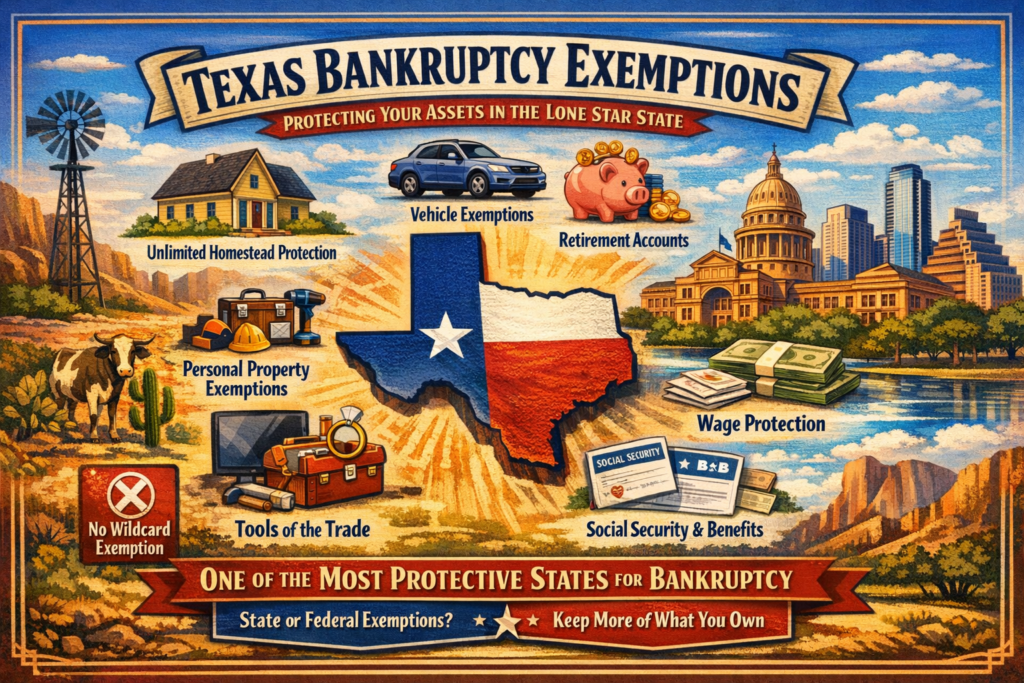
Some states (like Texas and Florida) allow:
- Very large or even unlimited home equity protection
🧠 Why it stands out:
You could:
- File bankruptcy
- Discharge debt
- Keep a home with significant equity
👉 This is one of the most powerful tools in bankruptcy law.
🎁 10. “Wildcard” Exemptions (Use Them for Anything)
Wildcard exemptions allow you to protect:
- Any property you choose
Examples:
- Cash
- Electronics
- Extra vehicle equity
- Personal items
🧠 Why this is interesting:
It gives flexibility to protect what matters most to you, not just what the law lists.
⚠️ The Biggest Misconception About Bankruptcy
Most people believe:
👉 “If I file bankruptcy, I lose everything.”
That’s simply not true.
In many cases, people:
- Keep their home
- Keep their car
- Keep their personal belongings
- Eliminate overwhelming debt
🧠 Why These “Weird” Exemptions Matter
These unusual protections reveal something important:
👉 Bankruptcy law is designed to preserve dignity, not just wipe out debt.
It recognizes that people need:
- Stability
- Tools to earn a living
- Basic human needs and values
⚠️ But Timing and Strategy Matter
Even with generous exemptions, mistakes can cost you:
❌ Transferring assets before filing
❌ Cashing out protected funds improperly
❌ Waiting too long (or filing too early)
❌ Choosing the wrong exemption system
👉 Bankruptcy is as much about strategy as it is about relief.
💡 Do You Need a Lawyer to Protect Your Assets?
While you can file bankruptcy on your own, exemptions are one of the most technical parts of the process.
An attorney can help:
- Maximize what you keep
- Avoid costly mistakes
- Apply the right exemption laws
- Protect assets you didn’t even realize were safe
📉 The Bottom Line
Bankruptcy isn’t about losing everything—it’s about getting a fresh start.
And thanks to exemption laws, that fresh start often includes:
- Your home
- Your personal property
- Your ability to work
- And even some surprisingly unique assets
📞 Thinking About Bankruptcy or Dealing with Debt?
If you’re overwhelmed by debt, you may have more options—and more protections—than you realize.