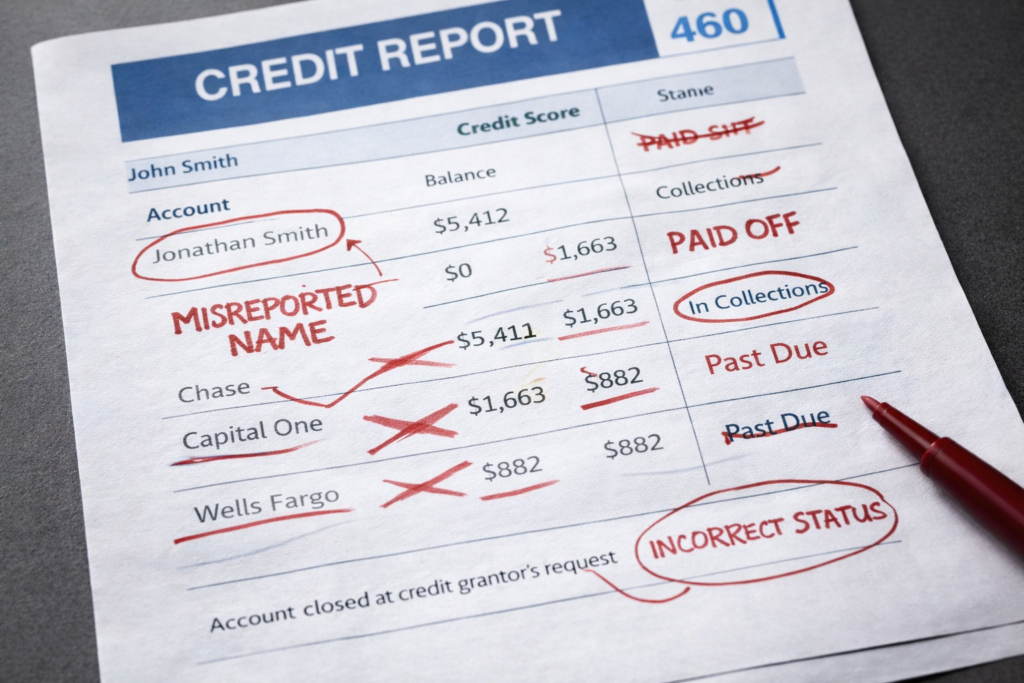
Errors on credit reports are far more common than most consumers realize—and the consequences can be serious. A single inaccurate late payment, collection account, or charge-off can drop a credit score by dozens of points and cost thousands in higher interest rates.
Fortunately, federal law gives consumers powerful rights to challenge inaccurate information. But how you dispute—online, through apps like Credit Karma, or by mail—can significantly impact the outcome.
This article breaks down:
- How credit disputes work under the law
- The differences between online, third-party, and mailed disputes
- How credit bureaus actually process disputes behind the scenes
- Which method is most effective (and why)
The Legal Foundation: Your Right to Dispute
Credit disputes are governed primarily by the Fair Credit Reporting Act (FCRA).
Under the FCRA:
- You have the right to dispute any inaccurate, incomplete, or unverifiable information
- Credit bureaus must conduct a reasonable investigation within 30 days
- If the information cannot be verified, it must be deleted
The process involves three key players:
- Consumer (you)
- Credit bureaus (Experian, Equifax, TransUnion)
- Furnishers (creditors, debt collectors, lenders)
Once a dispute is filed, the credit bureau forwards it to the furnisher, who must investigate and respond. If the furnisher verifies the account, it stays. If not, it must be corrected or removed.
How Credit Bureaus Actually Handle Disputes
Most consumers assume disputes are carefully reviewed by trained analysts. In reality, the process is often highly automated.
The e-OSCAR System
Credit bureaus use a system called e-OSCAR to process disputes. This system:
- Converts your dispute into standardized codes
- Sends those codes electronically to the furnisher
- Receives a simple response: verified, updated, or deleted
Why This Matters
Instead of reviewing your full explanation:
- The system often reduces your dispute to a short code (e.g., “not mine”)
- Supporting documentation may not be fully considered
- The furnisher may only respond to the coded issue—not your full argument
This is critical when comparing dispute methods.
The Three Main Types of Credit Disputes
Consumers typically dispute credit errors in three ways:
- Online disputes (direct with bureaus)
- Third-party platform disputes (Credit Karma, etc.)
- Mail disputes (written letters)
Each method triggers the same legal framework—but the quality of the dispute and how it’s processed differ dramatically.
1. Online Credit Disputes (Direct with Credit Bureaus)
Online disputes are submitted through:
- Experian Dispute Center
- Equifax online portal
- TransUnion dispute portal
Pros of Online Disputes
Speed and convenience
- Can be completed in minutes
- Immediate confirmation of submission
Faster processing
- Eliminates mailing delays
- Often resolved quickly due to automation
User-friendly interfaces
- Step-by-step guidance
- Easy document uploads
Cons of Online Disputes
Limited explanation and customization
- You must select from preset dispute reasons
- Often restricted in how much you can write
Reduced legal leverage
- Some systems may limit your ability to:
- Request method of verification
- Create a strong evidentiary record
Less documentation for litigation
- Online disputes may not create a strong paper trail
Bottom Line on Online Disputes
Online disputes are:
- Good for simple errors (e.g., incorrect balance)
- Less effective for complex or strategic disputes
2. Credit Karma & Third-Party Disputes
Platforms like Credit Karma, Credit Sesame, and similar apps allow users to dispute items directly through their interfaces.
How These Work
- They act as intermediaries
- Your dispute is submitted electronically to the credit bureau
- The bureau still processes it through its automated system
Pros
Convenience and accessibility
- Everything is centralized in one app
- Easy to identify errors
Guided experience
- Simplifies the process for beginners
Cons
Even more limited than direct online disputes
- Pre-written dispute templates
- Minimal customization
No strategic control
- You cannot tailor legal arguments
- No ability to cite FCRA provisions or request specific remedies
Reduced effectiveness for serious disputes
- Often treated as basic “checkbox disputes”
Key Insight
Credit Karma disputes are essentially:
“Simplified online disputes with less control.”
They may be helpful for:
- First-time users
- Identifying obvious errors
But they are generally not ideal for aggressive credit repair or legal disputes.
3. Mail (Written) Credit Disputes
Mail disputes involve sending a written letter directly to the credit bureau.
The FTC recommends:
- Clearly identifying each disputed item
- Explaining why it is incorrect
- Including supporting documentation
- Sending via certified mail with return receipt
Pros of Mail Disputes
1. Full Control Over Your Argument
You can:
- Explain the issue in detail
- Cite specific laws (FCRA, FDCPA, etc.)
- Raise multiple issues in one dispute
2. Strong Paper Trail
Mail disputes create:
- Proof of delivery
- Copies of everything sent
- Evidence for potential litigation
3. More Thorough Investigations
Mail disputes are more likely to:
- Be reviewed by a human
- Include full documentation
- Trigger deeper investigation
4. Legal Leverage
Written disputes:
- Strengthen future claims under the FCRA
- Help establish “willful noncompliance” if ignored
Cons of Mail Disputes
Slower process
- Mailing delays
- Longer turnaround time
More effort required
- Drafting letters
- Gathering documents
Key Differences at a Glance
| Feature | Online Dispute | Credit Karma / Apps | Mail Dispute |
|---|---|---|---|
| Speed | Fast | Fast | Slower |
| Ease of Use | Very easy | Easiest | Moderate |
| Customization | Limited | Very limited | Full control |
| Documentation | Weak | Weak | Strong |
| Legal Strength | Moderate | Low | High |
| Best For | Simple errors | Beginners | Complex disputes |
Why Mail Disputes Are Often More Effective
While online disputes are faster, mail disputes are often more effective for removal, especially when:
- The account is complex
- The furnisher is likely to “verify” automatically
- You need to challenge accuracy or documentation
Here’s why:
1. Avoiding Oversimplification
Online systems reduce disputes to codes like:
- “Not mine”
- “Incorrect balance”
Mail disputes allow you to:
- Explain why it’s incorrect
- Challenge multiple data points at once
2. Forcing a Real Investigation
Under the FCRA, bureaus must conduct a reasonable investigation.
A detailed written dispute:
- Makes it harder to justify a superficial review
- Increases the likelihood of meaningful scrutiny
3. Litigation Advantage
If a dispute is mishandled:
- A well-documented mail dispute provides evidence
- Online disputes may not
This can be critical in:
- FCRA lawsuits
- FDCPA claims
- Consumer protection cases
What Happens After You File a Dispute
Regardless of the method, the process generally follows the same steps:
Step 1: Bureau Receives the Dispute
- Online or mail submission is logged
Step 2: Bureau Sends to Furnisher
- All relevant information is forwarded
Step 3: Furnisher Investigates
- Reviews records
- Confirms or corrects the data
Step 4: Bureau Updates Report
Possible outcomes:
- Deleted
- Updated
- Verified as accurate
Step 5: Consumer Notified
- Written results provided
- Updated report sent if changes occur
Common Mistakes Consumers Make
1. Relying Only on Online Disputes
Many consumers:
- File one online dispute
- Accept a “verified” response
This often leads to frustration.
2. Using Generic Templates
Credit bureaus may:
- Recognize boilerplate disputes
- Treat them as less credible
3. Disputing Without Strategy
Not all disputes are equal.
Effective disputes:
- Target specific inaccuracies
- Include supporting documentation
4. Failing to Dispute with Furnishers
You can (and often should) dispute:
- With the bureau
- Directly with the creditor or collector
When to Use Each Type of Dispute
Use Online Disputes When:
- The error is simple and obvious
- You want quick results
- Documentation is minimal
Use Credit Karma / Apps When:
- You are just starting
- You want to identify potential errors
Use Mail Disputes When:
- The issue is complex
- The account has been verified before
- You may need legal recourse
- You want maximum leverage
Final Thoughts: Strategy Matters More Than Method
The dispute process is not just about filing a dispute—it’s about how effectively you present your case.
While all dispute methods trigger the same legal obligations, they are not equal in practice:
- Online disputes prioritize speed and efficiency
- Third-party apps prioritize simplicity
- Mail disputes prioritize control and legal strength
For consumers dealing with serious credit issues—especially collections, charge-offs, or identity theft—a well-crafted written dispute is often the most powerful tool available.