If you’re considering bankruptcy in New Jersey, your first question is likely:
“Will I lose my home or my car?”
The fear of losing everything keeps many people from exploring bankruptcy — even when it could provide life-changing relief.
The truth is, bankruptcy exemptions are designed to protect the property you need to live and work. But New Jersey’s exemption laws are unique, and understanding them is critical before filing.
Here’s what you need to know.
What Are Bankruptcy Exemptions?
Bankruptcy exemptions are laws that allow you to protect certain property from being taken by a Chapter 7 trustee or considered in a Chapter 13 repayment plan.
They determine:
- What property you can keep
- Whether Chapter 7 is safe for you
- How much you may have to repay in Chapter 13
- Whether your home equity is protected
Choosing the correct exemption system is one of the most important strategic decisions in any bankruptcy case.
New Jersey Does NOT Have a Traditional Homestead Exemption
Unlike many states, New Jersey does not provide a meaningful state homestead exemption for most homeowners.
That surprises many people.
Because of this, most people filing bankruptcy in New Jersey choose to use the federal bankruptcy exemptions instead of New Jersey’s state exemptions.
New Jersey State Exemptions (Limited Protections)
New Jersey’s state exemptions are relatively narrow. They include protections for:
- Certain personal property
- Limited protections for clothing
- Some retirement accounts
- Certain life insurance proceeds
- Public benefits (Social Security, disability, unemployment)
However, there is no strong homestead protection under state law, which is why federal exemptions are often the better option.
Federal Bankruptcy Exemptions (Commonly Used in NJ)
Most New Jersey filers elect the federal exemption system because it offers significantly broader protection.
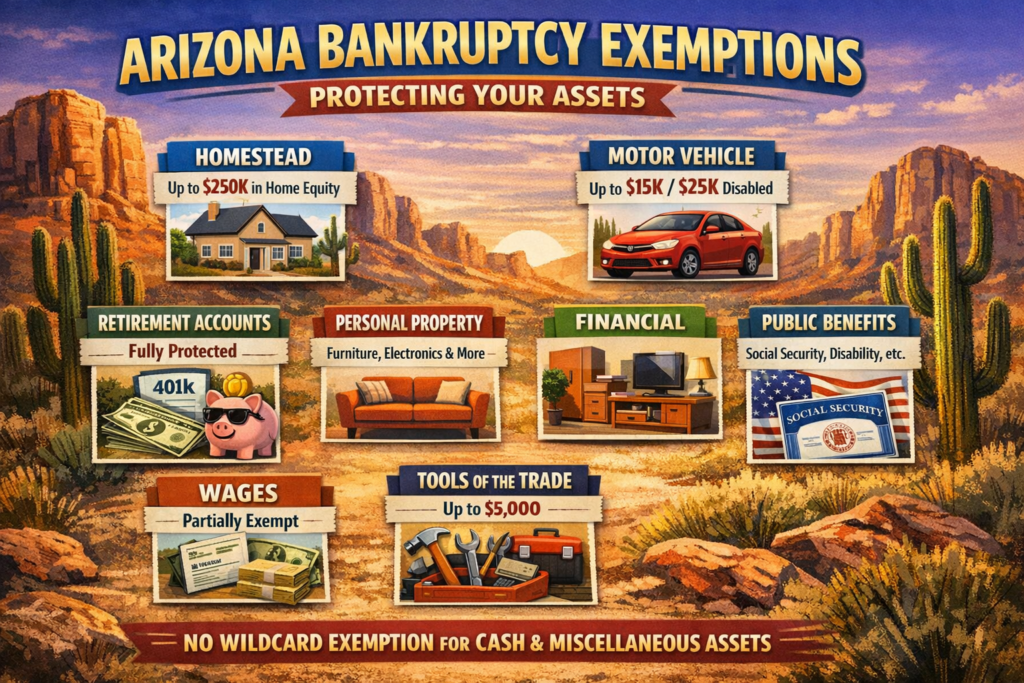
🏠 Homestead Exemption
Protects a substantial amount of equity in your primary residence (amount adjusts periodically).
If you have home equity, this exemption can make the difference between safely filing Chapter 7 and risking a forced sale.
🚗 Motor Vehicle Exemption
Protects equity in your vehicle.
🛋 Household Goods & Personal Property
Covers:
- Furniture
- Clothing
- Appliances
- Electronics
- Household goods (subject to limits per item)
💍 Jewelry Exemption
Limited protection for jewelry.
💼 Tools of the Trade
Protects equipment or tools necessary for your job.
💰 Wildcard Exemption
One of the most flexible protections available. The wildcard exemption allows you to protect any property of your choosing — cash, tax refunds, vehicles, or other assets — up to a certain amount.
🧓 Retirement Accounts
Most tax-qualified retirement accounts are fully protected under federal law.
How Exemptions Work in Chapter 7
In Chapter 7 bankruptcy:
- A trustee may sell non-exempt property to pay creditors.
- Exempt property is protected.
- Most consumer cases are “no-asset” cases — meaning nothing is taken.
Proper planning is critical. Many people qualify for Chapter 7 and lose nothing — but filing without strategic analysis can be risky.
How Exemptions Work in Chapter 13
In Chapter 13:
- You keep all your property.
- You enter a 3–5 year repayment plan.
- The amount you must repay unsecured creditors depends partly on the value of non-exempt property.
Even in Chapter 13, exemptions directly impact how affordable your repayment plan will be.
Important Rules to Know
1. Residency Requirement
To use New Jersey exemptions (or the federal exemptions applicable to NJ), you must have lived in New Jersey for at least 730 days (2 years) before filing.
If you recently moved, different rules may apply.
2. Exemptions Protect Equity — Not Total Value
Exemptions apply only to the equity in property.
Example:
- Car value: $18,000
- Loan balance: $15,000
- Equity: $3,000
The exemption applies to the $3,000 — not the full $18,000.
3. You Cannot Transfer Property Before Filing
Attempting to give away or hide assets before bankruptcy can lead to serious consequences, including denial of discharge.
Is Bankruptcy the Right Option?
Bankruptcy is not a failure — it is a legal solution provided under federal law to give people a fresh start.
If you are facing:
- Credit card lawsuits
- Wage garnishment
- Foreclosure
- Repossession
- Medical debt
- Business-related personal liability
You may have options — including Chapter 7, Chapter 13, or debt defense strategies.
Speak With an Experienced Consumer Bankruptcy Attorney
Exemption planning is not something you should guess about.
The right strategy can mean:
- Protecting your home
- Protecting your car
- Protecting your business tools
- Eliminating overwhelming debt
- Avoiding costly mistakes
If you are overwhelmed by debt in New Jersey, get answers before making decisions.
📞 Contact our office today to schedule a consultation and explore your options.