If you’ve been sued by a debt buyer like Midland Funding or Portfolio Recovery Associates, you are not alone.
These companies file thousands of lawsuits every year, often for credit card accounts that were charged off and sold by the original creditor. Many consumers panic and assume:
- “They must have proof.”
- “I’m going to lose automatically.”
- “I don’t have a defense.”
But here’s the truth:
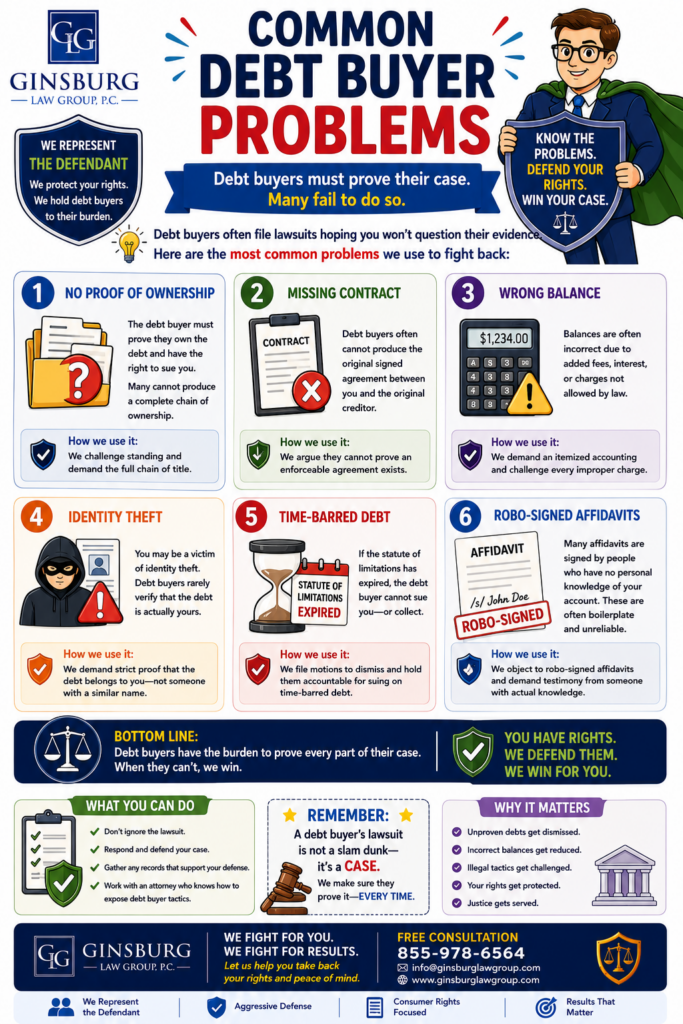
Debt buyers frequently sue without the documentation needed to prove their case.
That means you may have defenses — and in many cases, the right strategy can result in a dismissal, a favorable settlement, or a significantly reduced judgment.
Below are some of the most common and effective defenses against debt buyers.
First: What Is a Debt Buyer?
A debt buyer is a company that purchases old debts (usually for pennies on the dollar) from:
- banks
- credit card companies
- lenders
- collection agencies
Midland Funding and Portfolio Recovery Associates are among the largest debt buyers in the U.S.
They often buy debts in large bundles and attempt to collect through:
- letters
- phone calls
- credit reporting
- lawsuits
The Best Defenses Against Midland Funding or Portfolio Recovery
1️⃣ Lack of Standing (They Can’t Prove They Own the Debt)
This is one of the strongest defenses in debt buyer cases.
To win, the debt buyer must prove:
- they purchased your specific account
- the purchase is valid
- they have legal rights to sue you
Debt buyers often rely on generic “bill of sale” documents that do not clearly identify your account.
Common problems:
- missing chain of title
- incomplete assignment records
- account not listed in the purchase documents
- missing supporting documentation
If they can’t prove ownership, they may not have standing to sue.
SEO keyword angle: “prove debt ownership” and “chain of title debt lawsuit”
2️⃣ Insufficient Documentation (They Can’t Prove the Debt Amount)
Debt buyers often sue for a balance amount but do not provide:
- full account statements
- itemized charges
- interest calculations
- payment history
- the original credit agreement
Without proper documentation, they may not be able to prove:
- how the balance was calculated
- whether fees were added correctly
- whether the amount is accurate
Many cases include inflated balances.
3️⃣ Statute of Limitations (The Debt May Be Too Old)
Every state has a statute of limitations for filing lawsuits on credit card debt.
If too much time has passed since the last payment or default, the debt may be time-barred.
Debt buyers sometimes file lawsuits right before the deadline — or after the deadline, hoping the consumer won’t respond.
Warning signs:
- the account is several years old
- you haven’t made payments in a long time
- you don’t recognize the “last payment date” they claim
If the statute of limitations has expired, this can be a strong defense.
4️⃣ Improper Service (You Were Not Properly Served)
If you were never properly served, you may be able to challenge the lawsuit.
Examples:
- papers left at the wrong address
- served on someone else
- mailed improperly
- “sewer service” (fake service claims)
Improper service is especially important if a default judgment has already been entered.
5️⃣ Mistaken Identity or Wrong Person
Debt buyers sometimes sue the wrong person.
This can happen due to:
- similar names
- old addresses
- mixed credit files
- identity theft
- wrong Social Security number
If the account is not yours, you may have a defense — but you must respond in court to avoid judgment.
6️⃣ Failure to State a Claim
Many debt buyer complaints are vague and generic.
They may allege:
- “Defendant owes money”
- “Plaintiff purchased the debt”
- “Balance is due”
But without facts and documentation, the complaint may fail to properly state a claim.
Depending on your state’s rules, this can support a motion to dismiss or require them to amend their filing.
7️⃣ No Valid Contract (Missing Cardholder Agreement)
In many credit card cases, the plaintiff must prove there was an agreement.
Debt buyers often do not have:
- signed contracts
- original cardholder agreement
- complete account opening records
Instead, they rely on a generic agreement or affidavit.
This may not be enough in court depending on the circumstances and local rules.
8️⃣ Hearsay Objections to Affidavits and Records
Debt buyers often attempt to prove their case using:
- affidavits from “legal specialists”
- business record declarations
- account summaries
But these documents may be vulnerable to hearsay objections if:
- the witness lacks personal knowledge
- the documents are not properly authenticated
- the plaintiff is relying on records from another company
This is a powerful trial defense.
9️⃣ Payment or Settlement Already Made
If you already paid the debt, settled it, or disputed it previously, that can be a defense.
Many consumers are sued for debts that were:
- already resolved
- discharged in bankruptcy
- included in a prior settlement
- paid through a debt management program
Always gather documentation if you believe this applies.
🔟 The Balance Includes Unauthorized Fees or Interest
Debt buyers sometimes add:
- interest
- attorney fees
- collection fees
- late fees
In some cases, they cannot legally collect those amounts without proper contractual support.
If the balance seems inflated, it may be challengeable.
Do Midland Funding and Portfolio Recovery Usually Have Proof?
Sometimes they do — but many times they don’t have enough to win if you fight back.
Debt buyers count on one thing:
Consumers not responding.
A large percentage of debt buyer lawsuits result in default judgments because consumers ignore the summons.
Once you respond, the debt buyer often has to work harder and may be more willing to settle.
What Happens If You Fight the Case?
If you file an Answer and assert defenses, several outcomes may happen:
✔ They dismiss the case
This happens when documentation is weak.
✔ They offer a reduced settlement
Debt buyers often settle for less than the full balance.
✔ They attempt to prove the case
Some cases proceed to trial, but many are resolved before then.
Can You Negotiate With Midland Funding or Portfolio Recovery?
Yes — but negotiation should be done carefully.
If you want to settle, it’s best to:
- get the settlement in writing
- confirm the case will be dismissed (preferably with prejudice)
- confirm the amount satisfies the entire debt
- confirm whether credit reporting will be updated
- avoid agreeing to terms you cannot meet
What You Should Do Immediately If You’re Sued by a Debt Buyer
Step 1: Don’t ignore the summons
Default judgment is the biggest risk.
Step 2: Confirm the deadline to respond
Most courts give 20–30 days.
Step 3: Identify the plaintiff
Midland Funding? Portfolio Recovery? Another debt buyer?
Step 4: Check the date of last payment
Statute of limitations may apply.
Step 5: File an Answer
Even if you plan to settle, file an Answer first.
Frequently Asked Questions
Can I win against Midland Funding?
Yes. Many consumers win or settle favorably when they respond and force proof.
What if I admit the debt is mine?
Even if the debt is yours, the debt buyer still has to prove the amount and their legal right to sue.
Should I request a jury trial?
It depends on the court and strategy. In some cases it can increase leverage, but it may also increase risk.
Can Midland Funding garnish my wages?
Only if they obtain a judgment first. Responding helps prevent that.
The Bottom Line
Debt buyers like Midland Funding and Portfolio Recovery file massive numbers of lawsuits, often using limited documentation.
The strongest defenses often involve:
- lack of standing
- lack of documentation
- statute of limitations
- improper service
- mistaken identity
- hearsay challenges
The most important thing you can do is respond before the deadline and explore your options before a judgment is entered.
Need Help Defending a Debt Buyer Lawsuit?
If you’ve been sued by Midland Funding, Portfolio Recovery, or another debt buyer, an attorney may be able to help you:
- file an Answer
- assert defenses
- negotiate settlement
- avoid judgment
- identify FDCPA/FCRA violations
The sooner you act, the more leverage you may have.