Summary
The Telephone Consumer Protection Act (TCPA) provides critical legal safeguards against the rising tide of automated sales pitches and synthetic voice calls. Under recent FCC clarifications, AI-generated voices that mimic human speech are subject to the same strict regulations as traditional prerecorded messages. For marketing purposes, businesses must secure prior express written consent before contacting mobile phones using these technologies. This consent cannot be buried in fine print or pre-checked boxes and can be revoked at any time through any reasonable method. While narrow exceptions exist for emergency alerts, healthcare notifications, and purely informational messages, the law remains stringent regarding commercial intrusion. The TCPA imposes strict liability, allowing consumers to seek statutory damages ranging from $500 to $1,500 per violation without needing to prove actual financial loss. Victims of illegal robocalls should maintain a detailed log of incoming numbers and message content to build a legal case. Because many consumer rights attorneys work on contingency, pursuing legal action against persistent violators is an accessible way to enforce privacy rights and hold companies accountable for unauthorized automated outreach that consumes personal battery, data, and time.
Your phone rings, you answer, and a voice immediately launches into a sales pitch, except it’s not a real person. These automated calls have become a daily annoyance for millions of Americans, but the prerecorded messages TCPA regulations provide real legal protections against this type of intrusion. The Telephone Consumer Protection Act sets strict rules about when and how businesses can contact you using recorded or artificial voices.
Recent developments have made these protections even more relevant. In 2024, the FCC clarified that AI-generated voices fall under TCPA restrictions, closing a potential loophole that companies might have exploited as voice synthesis technology improves. This means the same consent requirements that apply to traditional robocalls now extend to calls using artificial intelligence to mimic human speech.
At Ginsburg Law Group, we help consumers who’ve been targeted by illegal robocalls and automated messages pursue legal remedies, often at no upfront cost, since TCPA cases typically require the violating company to pay attorney fees. Our experience with TCPA litigation means we understand both the technical requirements of the law and the practical realities of how companies violate it.
This guide covers the consent standards for prerecorded voice messages, explains how the FCC’s recent AI ruling affects your rights, and identifies the limited exceptions where prior consent isn’t required. By the end, you’ll know exactly what protections you have and when a call crosses the legal line.
What counts as a prerecorded or artificial message
The TCPA defines prerecorded messages broadly to cover any telephone call that plays a recorded message or uses an artificial voice rather than a live human operator speaking in real time. This includes everything from the classic robocall with a pre-recorded sales pitch to sophisticated AI systems that generate speech on the fly. If you pick up the phone and don’t hear a person actually speaking to you at that moment, you’re almost certainly dealing with a covered technology.
Traditional prerecorded voice messages
A prerecorded message involves someone recording audio ahead of time and then having an automated system play that recording when the call connects. The telltale signs include an unnatural pause after you say “hello,” a perfectly polished delivery that never stumbles, and the inability of the voice to respond appropriately if you interrupt or ask a question. Companies often use these for marketing campaigns because one recording can reach thousands of people without paying for live callers.
The FCC considers a message prerecorded even if a live agent eventually joins the call after the recording plays. This matters because some companies try to claim they’re making live calls when they actually use a recording to screen or introduce the conversation before transferring you to a salesperson.
AI-generated and synthetic voices
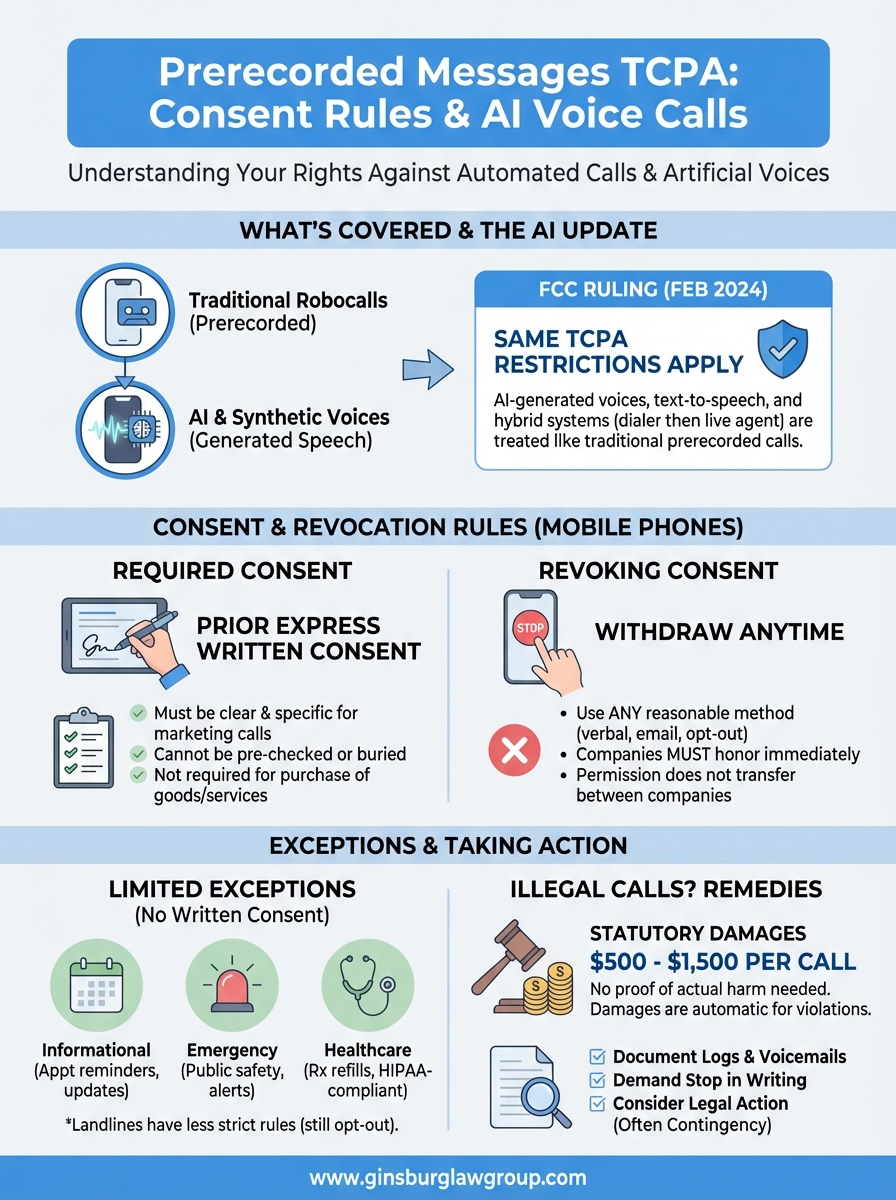
The February 2024 FCC ruling eliminated any ambiguity about artificial intelligence voices and text-to-speech systems. These technologies create speech by synthesizing human-like audio from text input rather than playing back a recording of an actual person. The FCC explicitly stated that calls using AI-generated voices fall under the same prerecorded messages TCPA restrictions as traditional recordings.
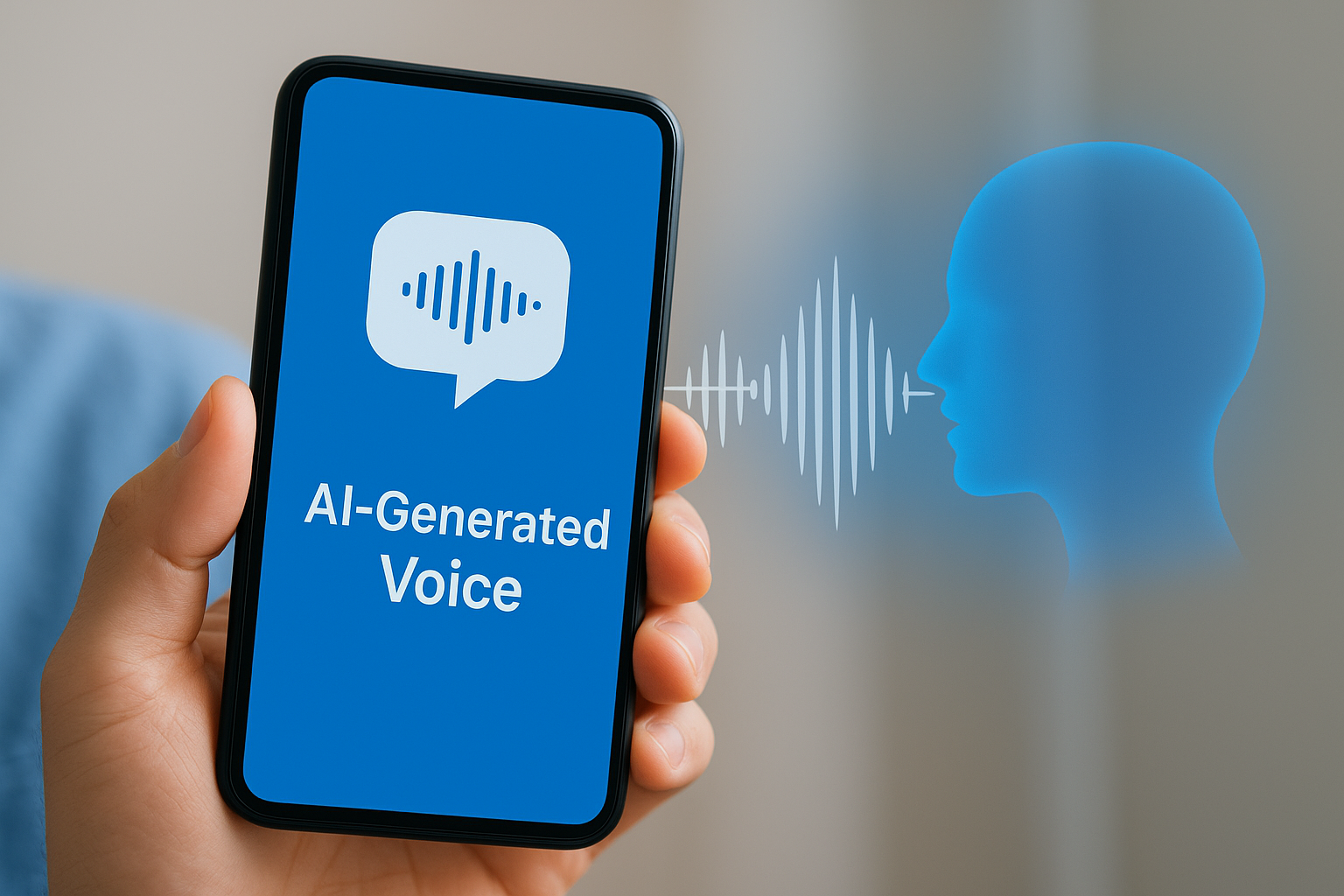
AI voice technology that mimics human speech receives the same legal treatment as pre-recorded messages, meaning companies must obtain your prior express consent before using these systems to contact your phone.
This ruling closed a potential loophole as voice synthesis technology has improved dramatically. Some AI voices now sound remarkably natural, with realistic inflections, pauses, and conversational patterns. You might not immediately realize you’re talking to a machine, but the legal standard doesn’t depend on how convincing the voice sounds. What matters is whether a live person is speaking to you in real time or whether technology is generating the words you hear.
Companies experimenting with conversational AI phone systems that can respond to your questions still violate TCPA rules if they contact you without proper consent. The sophistication of the technology makes no difference to your legal protections.
Live agent transfers and hybrid systems
Many companies use hybrid dialing systems that combine automated and live elements. A common setup involves an automatic dialer contacting your number and playing a brief message before connecting you to a live agent if you stay on the line. The TCPA treats these situations as prerecorded message calls because the initial contact uses automation.
You might also encounter calls where a recording plays first, asking you to press a button for more information or to be connected to a representative. The initial recorded portion triggers TCPA coverage even if your interaction eventually involves a real person. This design doesn’t create an exception to the consent requirements that apply to fully automated calls.
Why prerecorded messages trigger TCPA liability
Congress specifically targeted prerecorded voice calls because they create a unique invasion of privacy that regular telemarketing doesn’t. When you receive a live call, you can interrupt, ask questions, or demand removal from a calling list, and the caller must respond to you. Prerecorded messages eliminate this two-way communication, forcing you to either listen passively or hang up without any meaningful interaction. The technology shifts all power to the caller while treating your time and attention as worthless.
The invasion of privacy and lack of consent
Automated calling systems can contact thousands of people simultaneously at virtually no cost per call, which incentivizes companies to bombard consumers without regard for whether you actually want to hear from them. A live telemarketer might hesitate after multiple rejections, but a robocall system operates without conscience or restraint. This scalability turns what might be a minor annoyance into a massive privacy problem affecting millions of Americans daily.
Prerecorded messages TCPA provisions exist specifically because automated calling technology allows companies to intrude on your privacy at scale without the natural limitations that govern person-to-person communication.
Your phone becomes effectively hijacked when an automated system decides to occupy your time with a message you never requested. Unlike physical mail that you can ignore, a ringing phone creates an immediate demand for your attention. The TCPA recognizes that allowing unrestricted prerecorded messaging would make your phone unusable as companies compete for your attention through increasingly aggressive automated campaigns.
The cost burden transferred to consumers
Prerecorded calls to mobile phones create direct financial harm when you pay for incoming calls or consume limited minutes in your plan. Even on unlimited plans, these calls use your phone’s battery and data connection, effectively forcing you to subsidize marketing you didn’t authorize. Wireless carriers charge consumers for the privilege of receiving calls, which means every unauthorized robocall transfers the cost of that marketing from the company to you.
The law imposes strict liability for violations because consent-free prerecorded messaging represents such a clear overreach. Companies cannot claim ignorance or argue they meant well when their systems contact you without permission. If you receive an unauthorized prerecorded call to your mobile phone, the violation is complete regardless of whether the company profits from that specific call.
Consent rules for prerecorded and AI voice calls
The prerecorded messages TCPA rules require companies to obtain your prior express written consent before calling your mobile phone with a recorded or artificial voice message for marketing purposes. This consent standard creates a high legal bar that protects you from unwanted automated calls. Companies cannot assume you want to hear from them just because you bought something or gave them your phone number for another purpose.
The prior express written consent requirement
You must provide written consent that meets specific legal criteria before a company can legally send you marketing robocalls. This consent must be in writing, which includes electronic formats like website forms or checkbox agreements, but it cannot be buried in fine print or obtained through deceptive means. The agreement must clearly disclose that you’re authorizing prerecorded or artificial voice calls and specify the phone number you’re authorizing for contact.
Your signature or electronic acknowledgment must appear on the consent document. Companies cannot use pre-checked boxes or default opt-ins to satisfy this requirement. You need to take an affirmative action that demonstrates you knowingly agreed to receive these automated calls. The written consent must also inform you that providing consent isn’t required to purchase goods or services unless the calls are directly related to the transaction itself.
Companies must obtain your clear, written permission specifically for prerecorded or artificial voice calls before contacting your mobile phone, and they cannot condition purchases or services on you granting this consent.
How to revoke consent and stop calls
You can withdraw your consent at any time using any reasonable method, and companies must honor your revocation. If you tell a caller to stop contacting you, send an email requesting removal, or use an automated opt-out system the company provides, they must stop calling you with prerecorded messages going forward. The company cannot require you to use a specific revocation method or make the process unreasonably difficult.
Your consent doesn’t last forever or transfer between companies. When you authorize one business to contact you with automated calls, that permission doesn’t extend to other companies unless you separately consent to each one. Selling or sharing your consent with third parties violates TCPA rules, which means you should only receive prerecorded calls from businesses you specifically authorized.
Exceptions and special situations under the TCPA
The prerecorded messages TCPA framework includes several narrow exceptions where companies can contact you without prior express written consent. These exceptions exist because certain types of calls serve important public interests or involve situations where you’ve already established a relationship with the caller. Understanding these exceptions helps you identify when a call might be legal despite lacking formal consent.
Informational and emergency calls
Companies can send you prerecorded messages for non-commercial purposes without obtaining written consent first. These informational calls include appointment reminders, flight cancellations, package delivery notifications, and similar transactional updates related to existing business you have with that company. The content must be purely informational and cannot include any marketing or sales pitch.
Emergency calls and public safety messages also fall outside normal TCPA restrictions. Government entities, schools, and utilities can use automated systems to alert you about severe weather, power outages, school closures, or other urgent situations affecting your safety or welfare. Financial institutions may contact you about suspected fraud on your account using prerecorded messages because the call serves your direct financial protection.
Informational calls related to existing business relationships and emergency notifications represent limited exceptions to consent requirements, but these calls cannot include any marketing content or promotional offers.
Healthcare-related communications
Healthcare providers operate under special TCPA provisions that recognize the importance of patient communication while still protecting your privacy. Your healthcare provider can use automated calls to remind you about upcoming appointments, prescription refills, or test results without obtaining separate written consent, provided you previously gave them your phone number for contact purposes.
These healthcare calls must be HIPAA-compliant and cannot share sensitive medical information in voicemails or with anyone other than you. Providers can only use these automated systems for treatment-related purposes, not for marketing elective procedures or selling health products.
Calls to landlines vs. mobile phones
The consent requirements differ significantly between residential landlines and mobile phones. Companies can make prerecorded telemarketing calls to your home landline without written consent, though they must still comply with Do Not Call registry rules and provide an automated opt-out mechanism during the call. This exception exists because landline calls don’t impose the same cost burden on you that mobile calls create.
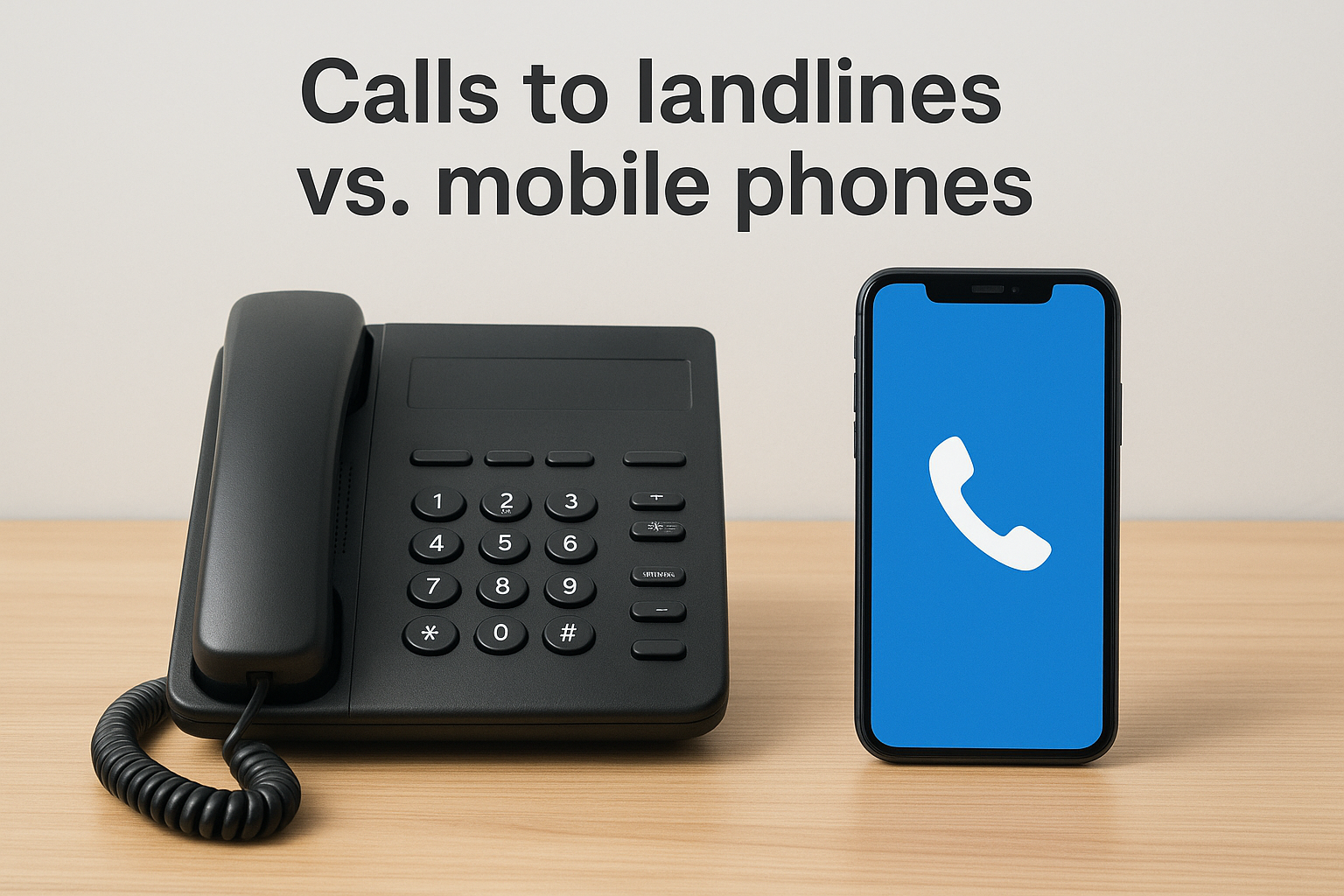
Your mobile phone receives much stronger protection because you typically pay for incoming calls or have limited plan resources. Any prerecorded marketing call to your cell phone requires prior express written consent regardless of your relationship with the company.
What to do if you get illegal prerecorded calls
You have several concrete steps you can take when companies violate prerecorded messages TCPA rules by contacting you without proper consent. Taking immediate action protects your rights and creates a record that strengthens any potential legal claim. The law provides you with powerful remedies, including statutory damages that don’t require you to prove actual financial harm.
Document the violation details
Start keeping a detailed log of every illegal prerecorded call you receive. Write down the date, time, and phone number that called you, along with any information the message provides about the company making the call. Record the specific content of the message, including any product or service being marketed, because this helps prove the commercial nature of the call.
Save voicemails and take screenshots of your call history showing the incoming number. Many smartphones let you record calls or capture audio, which provides the strongest evidence of the violation. Note whether you previously gave this company any consent and document any attempts you make to stop the calls, as this pattern of continued contact after revocation significantly strengthens your case.
Contact the company and demand they stop
Reach out directly to the company making the calls and explicitly demand they stop contacting you with prerecorded messages. Send this request in writing through email or certified mail so you have proof of your revocation. Companies must honor your opt-out request, and any subsequent automated calls after you’ve clearly withdrawn consent show willful disregard for TCPA rules.
Companies that continue calling you with prerecorded messages after you’ve revoked consent face significantly higher liability, as continued violations after clear notice can support claims of willful misconduct.
Consider legal action under TCPA
The TCPA entitles you to $500 per illegal call, and courts can triple this amount to $1,500 per violation if they find the company acted willfully or knowingly. You don’t need to prove actual damages because the statutory penalty exists automatically for each violation. Most consumer lawyers handle these cases on contingency, meaning you pay nothing upfront, and the law requires violating companies to pay your attorney fees.
Reach out to a TCPA attorney if you’ve received multiple illegal prerecorded calls from the same company. A pattern of violations quickly adds up to substantial statutory damages that make legal action worthwhile.
A quick path forward
You now understand the prerecorded messages TCPA regulations that protect you from unwanted automated calls, including the recent expansion covering AI-generated voices. Companies must obtain your written consent before contacting your mobile phone with these messages, and you can revoke that permission anytime. The exceptions remain narrow and focused on informational or emergency communications rather than marketing.
When you receive illegal robocalls, document each violation carefully and demand the company stop contacting you. Statutory damages of $500 to $1,500 per call create real accountability for violations, and you don’t need to prove actual harm to recover these penalties.
If a company continues calling you after you’ve withdrawn consent, contact our consumer rights attorneys for a free case evaluation. We handle TCPA cases on contingency, which means you pay nothing upfront and the violating company covers your legal fees when we win.