If your Subaru Outback, Forester, Crosstrek, or Ascent keeps returning to the dealership with the same unresolved problems, Texas law may entitle you to a full refund, a replacement, or a proper repair — at no cost to you.
Subaru has built a devoted following among Texas drivers who value all-wheel drive capability, long-term reliability, and safety technology. The brand’s reputation for dependability has made models like the Outback, Forester, and Crosstrek perennial favorites for families, outdoor enthusiasts, and daily commuters alike. But that reputation, as loyal Subaru owners have discovered, does not make every vehicle immune to serious, recurring defects.
From CVT transmission failures and excessive oil consumption to malfunctioning EyeSight driver-assist systems and electrical gremlins that no software update seems to cure, some Subaru vehicles have generated a meaningful volume of consumer complaints and NHTSA recalls in recent years. If your Subaru has been through repeated dealership visits without a lasting fix, you are not alone — and you are not without options.
The Texas Lemon Law exists precisely for this situation. It gives you a structured legal path to force Subaru to make things right, and it doesn’t require you to sue anyone in open court to use it. This guide covers everything a Texas Subaru owner needs to know.
What Is the Texas Lemon Law?
The Texas Lemon Law is a consumer protection statute found in the Texas Occupations Code, Chapter 2301. Administered and enforced by the Texas Department of Motor Vehicles (TxDMV), the law applies to buyers and lessees of new motor vehicles who face repeated, unresolved defects under the manufacturer’s original warranty.
The principle is simple: if you purchase or lease a new vehicle and it has a substantial defect that the dealer cannot fix after a reasonable number of attempts, the manufacturer — in this case, Subaru of America — is legally required to either repair it properly, replace it with a comparable vehicle, or repurchase it at the original purchase price. Since enforcement began in 1985, the Texas Lemon Law has helped consumers recover more than $121 million through refunds and vehicle replacements statewide.
That protection extends to every new Subaru sold or leased in Texas.
Which Subaru Vehicles Are Covered in Texas?
The Texas Lemon Law covers all new motor vehicles purchased or leased from a Texas dealer, which includes Subaru’s complete lineup:
Subaru Outback — the brand’s flagship crossover, long marketed on a promise of rugged reliability and available in standard and turbocharged XT trims.
Subaru Forester — a compact SUV popular with families for its spacious interior, available EyeSight safety suite, and standard AWD.
Subaru Crosstrek — a subcompact crossover known for off-road agility and fuel efficiency.
Subaru Ascent — Subaru’s three-row family SUV, introduced in 2019.
Subaru Legacy and Impreza — Subaru’s core sedan and hatchback models.
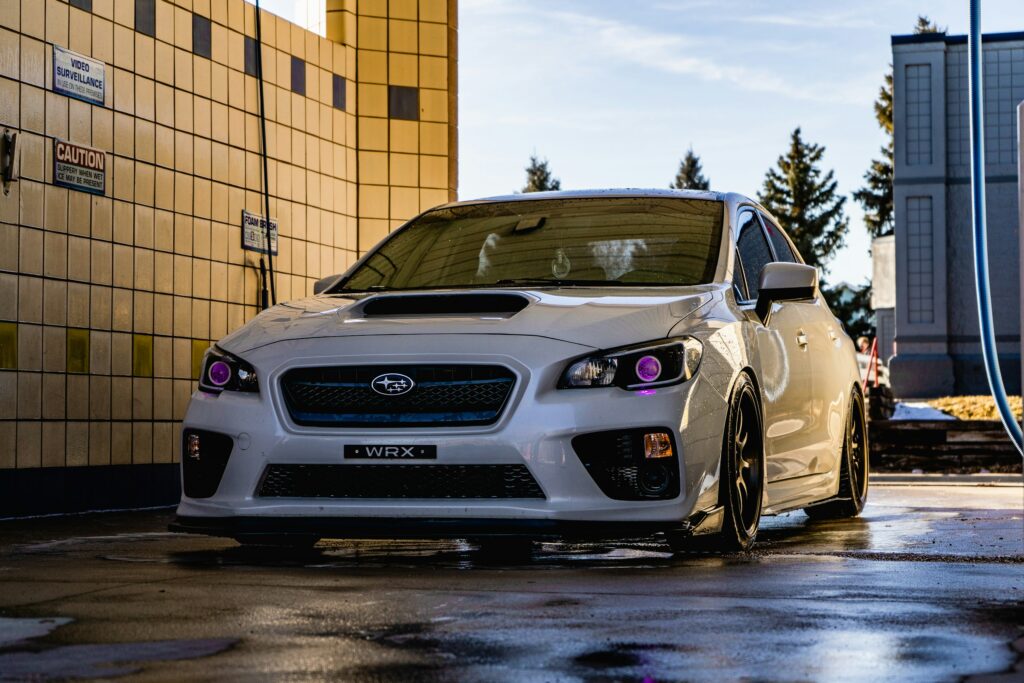
Subaru WRX and WRX STI — performance sedans with turbocharged Boxer engines.
Subaru Solterra — Subaru’s electric SUV, developed jointly with Toyota.
Demonstrator vehicles that have not been previously titled are treated as new under the law. In limited circumstances, a used Subaru still covered under the original manufacturer’s warranty may also be eligible.
Common Subaru Defects That May Qualify Under Texas Lemon Law
To qualify under Texas law, a defect must be “substantial” — meaning it significantly impairs the vehicle’s use, safety, or market value. Minor inconveniences like radio static or a loose cup holder don’t qualify. But Subaru vehicles have a well-documented pattern of recurring problems that often do meet that threshold.
CVT Transmission Failures — Outback, Forester, Crosstrek, Legacy Subaru’s Continuously Variable Transmission has been one of the most consistently reported sources of owner frustration across the lineup. Symptoms include hesitation during acceleration, delayed throttle response, slipping during gear transitions, shuddering in stop-and-go traffic, and CVT fluid leaks appearing within the first few thousand miles of ownership. The CVT’s complexity makes it difficult to diagnose and repair definitively, and many owners report returning to the dealership multiple times for the same symptoms with no lasting resolution. Subaru has issued extended CVT warranty programs for certain affected models, but the underlying problems have persisted for many owners.
EyeSight System Malfunctions — Outback, Forester, Ascent, Crosstrek Subaru’s EyeSight driver-assist technology — which powers automatic emergency braking, adaptive cruise control, and lane-keeping assist — has generated significant complaints in recent model years. Owners have reported phantom emergency braking with no obstacle present, sometimes at highway speeds. EyeSight has also been known to deactivate unexpectedly in rain, snow, or low-light conditions, disabling adaptive cruise control and emergency braking precisely when driving conditions are most demanding. Dealership responses have frequently involved software updates and recalibration attempts that fail to eliminate the problem, sending owners back again and again. One 2025 Outback owner documented three dealership visits in three months, including a full software reinstallation, with EyeSight safety functions still intermittently nonfunctional after each repair attempt.
Excessive Oil Consumption — Boxer Engines across multiple models Subaru’s horizontally-opposed Boxer engine has a documented history of consuming oil at rates that many owners consider abnormal and that some regulators and attorneys have flagged as a defect. Owners have reported needing to add a quart or more of oil between regular service intervals, and some have experienced engine damage as a result. Subaru has acknowledged oil consumption concerns in certain models and issued service programs — but owners who continue to experience the problem despite dealer-performed remedies may have a viable lemon law claim.
Electrical System and Battery Failures — Ascent, Outback, Crosstrek Electrical problems have been a recurring theme across multiple Subaru models, particularly the Ascent. Owners have reported sudden battery drain causing the vehicle to fail to start, warning lights cycling without explanation, gear shifters locking up, and body control module failures that trigger cascading problems across multiple systems. The 2024 Subaru Ascent was subject to a service bulletin related to undersized batteries; dealership delays in diagnosing and repairing this issue led to multiple owners exceeding the 30-day threshold under Texas’s lemon law.
Infotainment and Software Failures — Outback, Ascent, Forester Touchscreen systems in recent Subaru models have generated substantial complaints, including frequent disconnections of Apple CarPlay and Android Auto, unresponsive displays, system crashes, and screens going completely blank. While infotainment failures may seem minor, they affect critical functions — navigation, rear camera display, climate control — and can substantially impair the vehicle’s intended use and resale value.
Driveshaft Separation Risk — 2023 Outback, Legacy, Ascent, Impreza A significant safety recall covered certain 2023 Subaru Outback, Legacy, Ascent, and Impreza vehicles after it was determined that center support bolts for the driveshaft could loosen and cause the front end of the driveshaft to disconnect. A separating driveshaft creates a serious crash risk. When recall repairs fail to fully resolve the underlying issue, owners may have grounds for a lemon law claim.
Inhibitor Switch Failure and Rearview Camera — 2021–2023 Legacy, Outback, Crosstrek, Forester A water ingress issue related to an insufficient weld could allow moisture into the inhibitor switch, causing it to fail. A failed inhibitor switch can prevent the reverse lights from activating and the rearview camera from displaying — both of which increase crash risk. Subaru issued a recall, but when the repair doesn’t solve the problem, owners have legal options.
Fuel Pump Failures — Multiple models Subaru recalled more than 165,000 vehicles for a low-pressure fuel pump failure that can cause the engine to stall unexpectedly while driving. Engine stalls at speed are among the clearest examples of a serious safety hazard under Texas law.
The Three Tests That Determine Whether Your Subaru Is a Lemon
Your Subaru only needs to satisfy one of these three tests to qualify for lemon law protection under Texas law:
The Four-Times Test
If the same defect has been the subject of four or more repair attempts within the first 24 months or 24,000 miles of ownership — and the problem still hasn’t been resolved — your vehicle passes this test. This is the most commonly used path for Subaru CVT, EyeSight, and electrical complaints.
The 30-Day Test
If your Subaru has been out of service for a combined total of 30 or more days within the first 24 months or 24,000 miles due to warranty-covered repairs, your vehicle qualifies under this test. Days do not need to be consecutive — they accumulate across multiple service visits. If the dealership provided a comparable loaner vehicle during that time, those days typically don’t count toward your total. Owners dealing with undiagnosed Ascent electrical failures or prolonged CVT repairs have frequently met this threshold.
The Serious Safety Hazard Test
If your Subaru’s defect constitutes a life-threatening malfunction — one that substantially impairs your ability to control the vehicle or creates a risk of fire or explosion — and the dealer failed to fix it after just two attempts within the first 12 months or 12,000 miles, your vehicle may qualify. Unexpected engine stalls at highway speed, phantom emergency braking at high speeds, or a separating driveshaft would all fall within this category under Texas law’s definition of a serious safety hazard.
What You Can Recover
If the TxDMV determines your Subaru qualifies as a lemon, Subaru of America can be ordered to provide one of the following remedies:
Full Repurchase: Subaru buys back your vehicle at the original purchase price — including sales tax, title, and registration fees — minus a statutory mileage deduction calculated from the miles driven before the defect was first reported. This formula is defined by state law, and Subaru is required to follow it precisely. Note that the deduction is based on mileage at the first report of the defect, not total mileage — a distinction that matters and that some manufacturers have tried to dispute.
Vehicle Replacement: Subaru provides a comparable replacement vehicle acceptable to you, adjusted for prior use. You typically receive the balance of the original factory warranty.
Proper Repair with Reimbursement: Subaru is required to fix the defect. You may also be reimbursed for out-of-pocket repair costs that should have been covered under warranty, along with rental car fees and towing expenses incurred because of the defect.
How to File a Texas Lemon Law Complaint Against Subaru
Step 1 — Document Every Visit Each time you bring your Subaru in for service, verify that the repair order accurately describes the problem you are reporting. Get your own copy. If the service advisor’s paperwork understates or mischaracterizes the defect, that repair visit may not count toward your total. Bring written notes describing your symptoms to every appointment.
Step 2 — Keep a Personal Log Maintain a running record of every visit — date, mileage, the symptoms you experienced, and what the dealership told you. Photographs and short videos of the defect in action can be powerful supporting evidence.
Step 3 — Notify Subaru in Writing Send a certified letter to Subaru of America’s customer service or warranty department describing the defect and formally providing Subaru one final opportunity to repair it. Subaru’s customer service number is 1-800-782-2783. This written notice step is important — under Texas law, the manufacturer must receive notice and an opportunity to cure before a formal complaint can proceed.
Step 4 — File Your Complaint With the TxDMV Submit your formal lemon law complaint through the Motor Vehicle Dealer Online Complaint System on the TxDMV website. The filing fee is $35. Your complaint must be filed within six months of whichever occurs first: 24 months after vehicle delivery, 24,000 miles driven, or the expiration of your express warranty. This deadline is firm — missing it can permanently forfeit your rights, regardless of how strong your underlying case is.
Step 5 — Mediation and, If Needed, a Formal Hearing After filing, TxDMV staff will review your complaint and attempt to mediate a resolution between you and Subaru. Most cases resolve at this stage. If mediation fails, an administrative law judge holds a formal hearing, and a written decision is issued within 60 days. If the TxDMV has not resolved your complaint within 150 days, you may also file a civil lawsuit in district court, where a judge can order Subaru to replace or repurchase the vehicle and may award attorney’s fees.
Federal Backup: The Magnuson-Moss Warranty Act
Even when a case doesn’t fit neatly within the Texas Lemon Law’s strict 24-month/24,000-mile window, the federal Magnuson-Moss Warranty Act of 1975 may provide an alternative path to relief. If Subaru provided a written warranty and failed to repair your vehicle’s defects within a reasonable time and number of attempts, you may have a federal warranty claim — and if you prevail, Subaru may be required to pay your attorney’s fees. Compensation received under this act does not brand your vehicle as a lemon and carries no disclosure obligation when you sell or trade.
Should You Work With an Attorney?
The TxDMV complaint process is designed to be accessible to ordinary consumers without legal representation. That said, an experienced lemon law attorney can help you build a complete and well-documented claim, avoid missing critical deadlines, and negotiate effectively with Subaru in mediation. Because both Texas law and the Magnuson-Moss Act include fee-shifting provisions — meaning Subaru may pay your attorney’s fees if you win — many lemon law attorneys handle these cases at zero out-of-pocket cost to the consumer.
The Bottom Line for Subaru Owners in Texas
Subaru’s reputation for reliability is real — but it is not universal, and it does not override your legal rights when a vehicle falls short of the standard you paid for. Whether it’s a CVT that shudders through every stoplight, an EyeSight system that brakes without warning, an engine that burns through oil between changes, or an Ascent that spent its second month of life in a dealership bay, Texas law gives you a clear and enforceable path to a resolution.
Document everything. File on time. And don’t let Subaru or its dealership wear you down into accepting a vehicle that should have worked from the start.
This article is for informational purposes only and does not constitute legal advice. For guidance specific to your situation, consult a licensed Texas attorney with experience in lemon law and consumer protection matters. Y