(“I heard Texas lets you keep basically everything… is that true?”)
Not everything—but pretty close.
Texas is widely considered one of the most debtor-friendly states in the country when it comes to bankruptcy exemptions. In many cases, people filing bankruptcy in Texas are able to keep far more of their property than they expected.
But like everything in bankruptcy law, the details matter.
Let’s break down Texas bankruptcy exemptions, how they work, what they protect, and how to use them strategically.
First: What Are Bankruptcy Exemptions?
At the most basic level:
Exemptions are laws that protect your property when you file bankruptcy.
Without exemptions, creditors could potentially take everything you own.
With exemptions, you get to keep:
- Essential assets
- Necessary property
- The foundation for a financial reset
Think of exemptions as a legal shield—they determine what stays with you after your bankruptcy case.
Texas Gives You a Choice: State vs. Federal Exemptions
Here’s a key advantage:
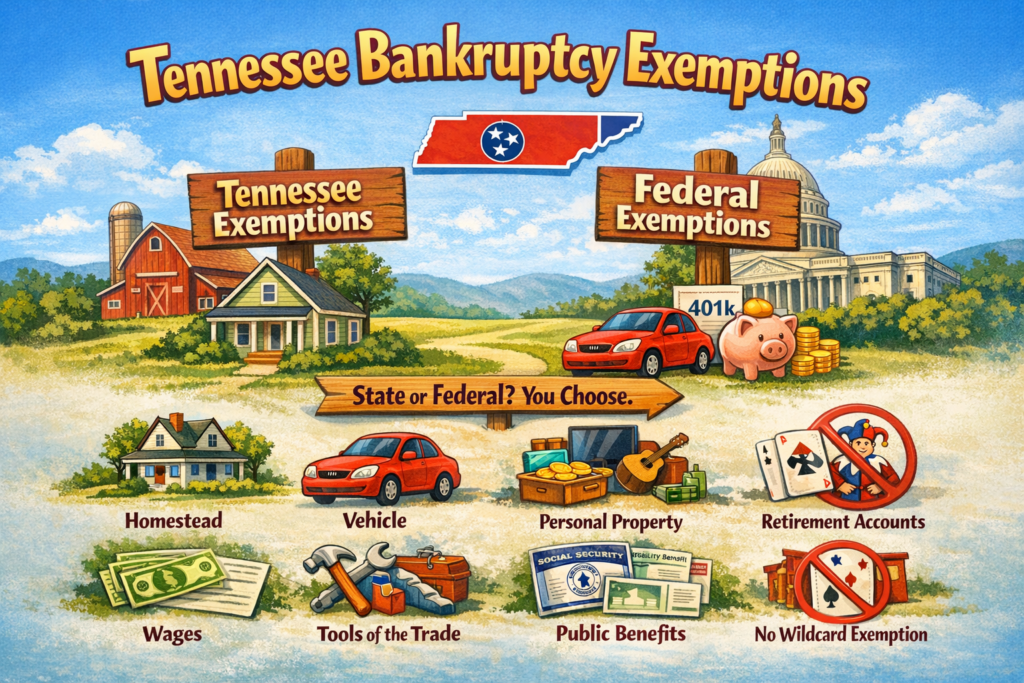
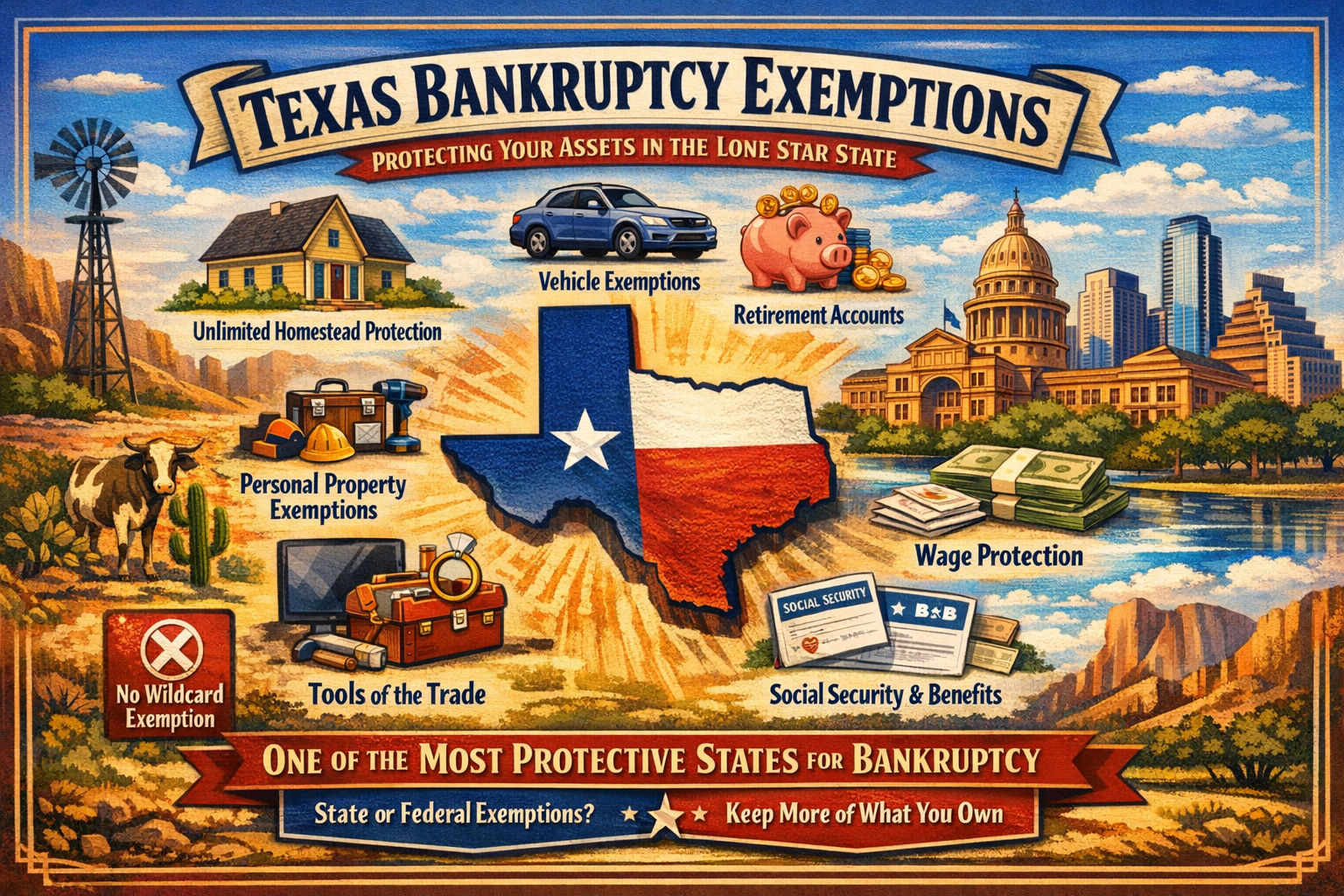
Texas allows you to choose between Texas exemptions OR federal bankruptcy exemptions.
But you cannot mix and match—you must pick one system.
Why this matters:
Texas exemptions are extremely strong in some areas (especially homestead), but federal exemptions offer flexibility (like a wildcard).
Choosing the right system depends on your assets.
The Crown Jewel: Texas Homestead Exemption
This is what Texas is famous for.
What it does:
Protects your primary residence.
What makes it unique:
Texas offers UNLIMITED homestead protection.
Yes—unlimited.
But there are limits:
- Up to 10 acres in an urban area
- Up to 100 acres (single) or 200 acres (family) in rural areas
Example:
- Home value: $900,000
- Mortgage: $400,000
- Equity: $500,000
In many states, that equity would be at risk.
In Texas?
It can be fully protected.
Important Caveat: Residency Rule
To get full protection:
- You must meet residency requirements (generally 1,215 days for full federal protection of large equity)
2. Personal Property Exemption (Very Generous)
Texas is extremely strong here.
Protection:
- Up to $50,000 (single)
- Up to $100,000 (family)
What counts toward this limit:
- Furniture
- Clothing
- Electronics
- Jewelry (within limits)
- Tools
- Livestock (yes—even chickens)
- Vehicles
Why this matters:
This is one of the broadest and most flexible personal property exemptions in the country.
3. Motor Vehicle Exemption
Texas does something unique:
You can exempt one vehicle per licensed household member.
Example:
A family of four with four drivers:
Potentially four fully protected vehicles.
There is no strict dollar cap per vehicle—just that it must fall within the overall personal property limits.
4. Retirement Accounts (Very Strong Protection)
Good news:
Most retirement accounts are fully protected.
This includes:
- 401(k)s
- IRAs
- Pensions
- Profit-sharing plans
5. Wages (Extremely Strong Protection)
Texas is one of the strongest states for wage protection.
Key rule:
Wages are generally NOT subject to garnishment for most debts in Texas.
This protection exists both inside and outside of bankruptcy.
6. Public Benefits
Fully protected:
- Social Security
- Disability benefits
- Unemployment
- Veterans benefits
7. Life Insurance and Annuities
Texas provides strong protection for:
- Life insurance proceeds
- Cash value of policies
- Annuities
8. Tools of the Trade
Protection:
- Included within the personal property cap
Covers tools needed for your profession.
What Texas Does NOT Have
Here’s an important limitation:
Texas does NOT have a traditional wildcard exemption.
Why this matters:
You cannot freely protect:
- Large amounts of cash
- Miscellaneous assets outside defined categories
Everything must fit within:
- Homestead
- Personal property limits
Texas vs. Federal Exemptions: When to Choose Each
Choose Texas exemptions if:
- You own a home (especially with equity)
- You have multiple vehicles
- You have substantial personal property
Choose federal exemptions if:
- You don’t own a home
- You have cash or savings
- You need a wildcard for flexibility
Real-World Comparison
Let’s say you have:
- $300,000 home equity
- $10,000 in savings
- Two vehicles
Texas exemptions:
- Home = protected
- Vehicles = protected
- Savings = may be exposed
Federal exemptions:
- Home = limited protection
- Savings = protected with wildcard
- Vehicles = partially protected
You choose based on what matters most.
Chapter 7 vs. Chapter 13 in Texas
Chapter 7
- Exemptions determine what you keep
- Non-exempt assets may be liquidated
Chapter 13
- You keep everything
- Exemptions determine repayment amount
Common Misconceptions About Texas Exemptions
❌ “I can keep everything no matter what.”
Not quite.
Texas is generous—but not unlimited for every asset type.
❌ “My house is always protected.”
Only if:
- It qualifies as a homestead
- You meet residency requirements
❌ “Cash is safe.”
Cash is often one of the least protected assets.
❌ “I don’t need to plan.”
This is a big mistake.
Even in Texas, strategy matters.
Strategic Planning in Texas
Because Texas exemptions are strong but structured, planning is key.
Before filing, people sometimes:
- Pay necessary expenses
- Adjust timing
- Allocate assets appropriately
Important:
This must always be done legally and transparently.
Never hide assets.
Why Texas Is Considered One of the Best States for Bankruptcy
Texas stands out because of:
- Unlimited homestead protection
- Generous personal property limits
- Strong vehicle protections
- Wage protections
- Broad asset coverage
Few states offer this level of protection.
The Emotional Reality
Most people worry:
“Am I going to lose everything?”
In Texas, the answer is often:
“You may keep far more than you think.”
A Simple Way to Think About It
If bankruptcy is the reset button…
Texas exemptions determine how much of your life stays intact when you press it.
Practical Tips for Texas Filers
1. Understand Your Home Equity
This is the biggest advantage in Texas.
2. Don’t Ignore Cash
Cash is often the most exposed asset.
3. Count Your Vehicles
Each licensed household member matters.
4. Stay Within Personal Property Limits
Track total value carefully.
5. Work With an Experienced Attorney
Texas exemption strategy is powerful—but not something to guess on.
Final Thoughts: Texas Is Exceptionally Protective—If Used Correctly
Texas bankruptcy exemptions are among the most powerful in the country—but they require understanding and planning.
So if you’re considering filing, remember:
- You have a choice between Texas and federal exemptions
- Your home may be fully protected
- Your vehicles and personal property are strongly protected
- Cash requires careful planning
And most importantly:
Bankruptcy in Texas isn’t about losing everything—it’s about protecting what matters most while creating a path forward.