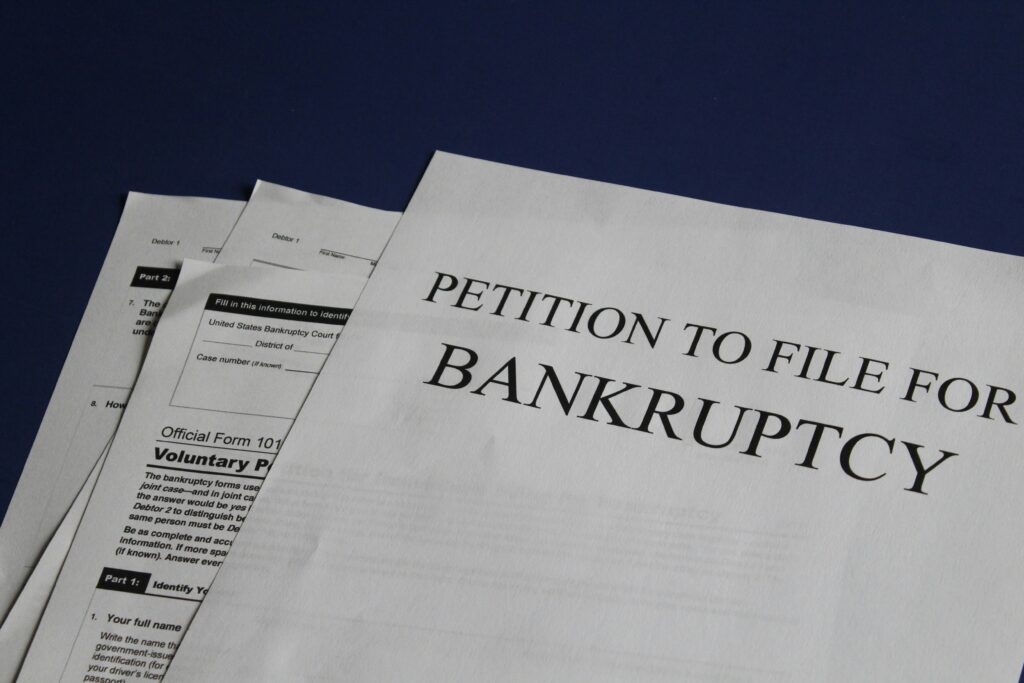
Section 523(a) of the Bankruptcy Code excepts certain debts from discharge. In consumer and small-business cases, the most frequently litigated nondischargeability claims typically arise under:
- § 523(a)(2) – false pretenses, false representation, or actual fraud
- § 523(a)(4) – fraud/defalcation while acting in a fiduciary capacity; embezzlement; larceny
- § 523(a)(6) – willful and malicious injury
These claims are litigated through an adversary proceeding and often turn on fact-intensive intent standards, reliance, and credibility.
1) Burden of Proof and General Construction
Burden of proof: preponderance of the evidence
The creditor bears the burden to establish nondischargeability by a preponderance of the evidence. Grogan v. Garner, 498 U.S. 279 (1991).
Discharge exceptions are narrowly construed
Courts generally construe discharge exceptions narrowly in favor of the debtor and the “fresh start,” while still enforcing § 523’s policy of preventing discharge of debts arising from specified misconduct.
2) § 523(a)(2): Fraud-Based Nondischargeability
A. § 523(a)(2)(A): False pretenses, false representation, or actual fraud
Section 523(a)(2)(A) covers fraud other than statements “respecting the debtor’s financial condition.” While phrasing varies by circuit, a typical creditor must prove:
- A misrepresentation, false pretense, or fraudulent conduct
- Knowledge of falsity (or reckless disregard, depending on the theory)
- Intent to deceive
- Justifiable reliance by the creditor
- Causation and damages
Reliance standard: The Supreme Court has applied justifiable (not reasonable) reliance in this context.
Intent: Direct evidence is rare; courts routinely permit intent to be inferred from circumstantial evidence and the totality of the circumstances.
Practice note: In credit card cases, litigation frequently focuses on whether the debtor incurred charges without intent to repay, and whether the creditor can prove the required reliance and causation elements under the governing circuit’s framework.
B. § 523(a)(2)(B): Written statement fraud (financial condition)
Section 523(a)(2)(B) applies when the debt was obtained by use of a statement in writing:
- In writing
- Materially false
- Respecting the debtor’s (or an insider’s) financial condition
- On which the creditor reasonably relied
- Made or published with intent to deceive
Key differences from (a)(2)(A):
- Must be written
- Must concern financial condition
- Reliance is typically reasonable (a higher standard than justifiable)
3) § 523(a)(4): Fiduciary Defalcation, Embezzlement, Larceny
Section 523(a)(4) contains multiple, distinct theories. The “fiduciary” prong is often the most litigated.
A. Defalcation while acting in a fiduciary capacity
To prevail on fiduciary defalcation, a creditor generally must establish:
- The existence of an express or technical trust (not merely a contractual relationship)
- The debtor acted in a fiduciary capacity with respect to that trust
- A defalcation occurred under the applicable mental state
Mental state: The Supreme Court held that defalcation requires a culpable state of mind involving knowledge of, or gross recklessness in respect to, the improper nature of the fiduciary behavior. Bullock v. BankChampaign, N.A., 569 U.S. 267 (2013).
B. Embezzlement and larceny (no fiduciary relationship required)
- Embezzlement typically involves fraudulent appropriation of property by a person to whom such property was entrusted or into whose hands it lawfully came.
- Larceny typically involves a wrongful taking of property with fraudulent intent at the time of the taking.
These claims can be pleaded without proving an express/technical trust, but still require proof of wrongful intent.
4) § 523(a)(6): Willful and Malicious Injury
Section 523(a)(6) excepts debts “for willful and malicious injury by the debtor to another entity or to the property of another entity.”
Willful = intent to cause injury (not merely intent to act)
The Supreme Court requires a deliberate or intentional injury, not merely a deliberate act that leads to injury. Kawaauhau v. Geiger, 523 U.S. 57 (1998).
Malicious = wrongful and without just cause (varies by circuit)
“Malicious” is often analyzed separately from “willful.” Many courts look for conduct that is:
- wrongful,
- done intentionally,
- and without just cause or excuse.
Practice note: § 523(a)(6) litigation frequently overlaps with state-law tort theories (conversion, intentional interference, assault, etc.), but the bankruptcy standard still requires proof of the specific willful-and-malicious elements.
5) Procedure: Adversary Proceedings, Deadlines, and Litigation Posture
Adversary proceeding required
A request to determine nondischargeability under § 523(a)(2), (4), or (6) must be brought by adversary proceeding. See FRBP 7001.
Deadline (most common § 523 claims)
For many § 523(a) claims (including (a)(2), (a)(4), and (a)(6)), the complaint deadline is generally 60 days after the first date set for the § 341 meeting of creditors. See FRBP 4007(c).
Summary judgment and settlement dynamics
- Summary judgment is common where the record is developed (e.g., prior findings, admissions, documentary proof).
- Settlement is frequent due to litigation cost, evidentiary uncertainty, and the leverage created by the dischargeability risk.
Practical Takeaways (Attorney-Facing)
- § 523 litigation is typically intent-driven and document-heavy; credibility and circumstantial evidence matter.
- Reliance standards differ: justifiable under (a)(2)(A) vs reasonable under (a)(2)(B).
- Fiduciary defalcation under (a)(4) requires an express/technical trust plus the Bullock mental state.
- (a)(6) requires intent to injure, not merely intent to act (Geiger).
- Calendar the FRBP 4007(c) deadline immediately; extensions require timely motion.