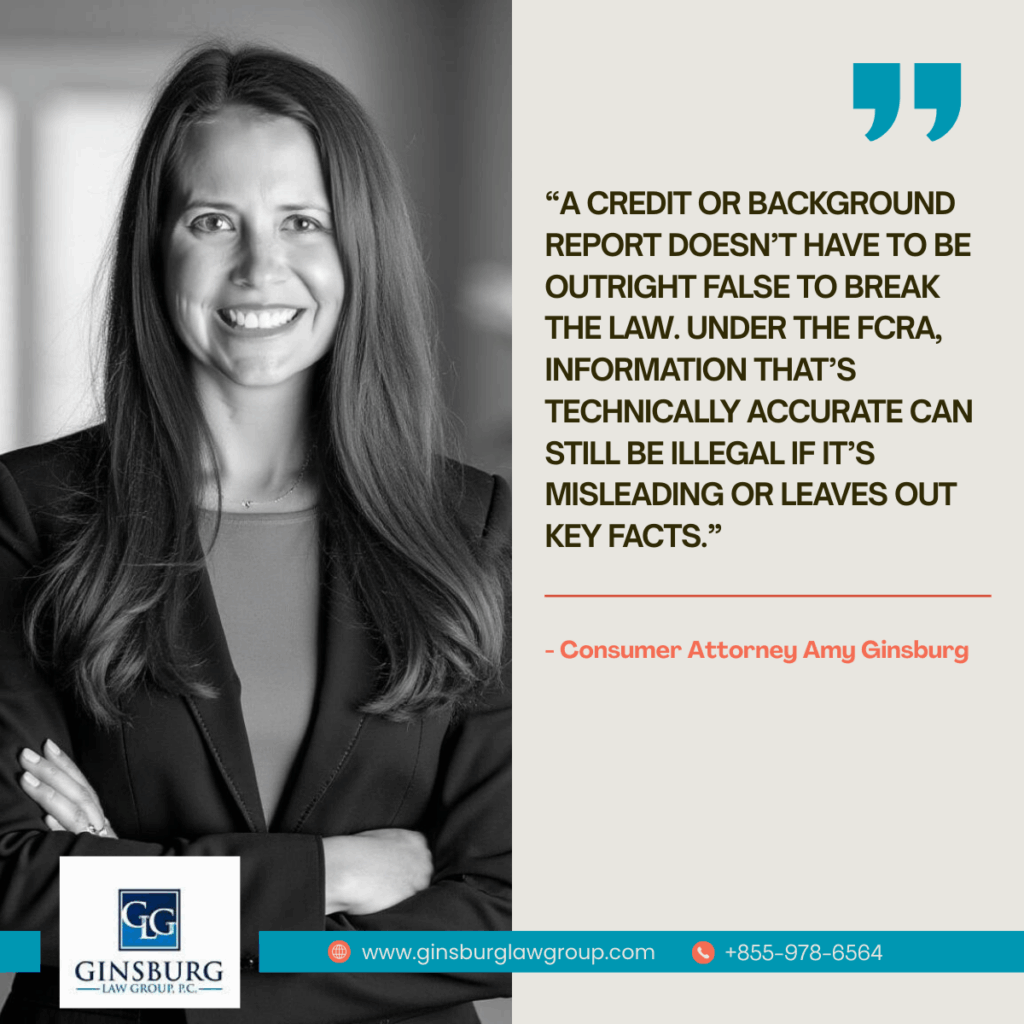
Consumers are often told that a credit report or background check is “accurate” because the information isn’t outright false. But a recent federal court decision makes something very clear:
👉 Leaving out important information can violate the Fair Credit Reporting Act (FCRA).
The Case: Claybrook v. Carco Group, Inc.
In Claybrook, a consumer challenged a criminal background report that failed to include a favorable disposition of a criminal matter. While the report contained some correct information, it omitted critical context that materially changed how the record appeared.
The defendant argued that because the report wasn’t technically false, it couldn’t be inaccurate under the FCRA.
The court disagreed.
What the Court Said Matters
The court held that under the FCRA:
- Information can be “inaccurate” even if it is partially true
- Omissions can be misleading
- This is especially important in criminal background reports, where incomplete information can unfairly cost someone a job, housing, or opportunity
In short:
📌 Accuracy under the FCRA means fairness and completeness — not just technical correctness.
Why This Is a Big Deal for Consumers
Many consumers are denied jobs, apartments, or credit because of reports that:
- Leave out dismissals
- Exclude favorable dispositions
- Present incomplete histories as if they are the full story
This case reinforces that consumer reporting agencies have a legal duty to present information in a way that is not misleading.
If a report creates the wrong impression — even by omission — it may violate federal law.
What You Should Do If This Happens to You
If you’ve been harmed by a credit report or background check that:
- Leaves out important information
- Misrepresents the outcome of a case
- Makes your history look worse than it really is
You may have rights under the Fair Credit Reporting Act.
📌 Disputing the report is often just the first step.
📌 A “verified” response does not always mean the report is lawful.
Bottom Line
This decision sends a strong message:
Consumer reporting agencies cannot hide behind “technical accuracy” when their reports mislead.
If something feels unfair about your credit or background report, trust that instinct — and get advice from someone who knows how the FCRA actually works.