One of the most common questions people ask before speaking with a bankruptcy attorney is:
“How much debt do you need to file bankruptcy?”
The short answer surprises many people:
👉 There is no minimum amount of debt required to file bankruptcy.
Watch this quick explainer on how much debt you really need before considering bankruptcy — including tips many people don’t know:
Bankruptcy eligibility is not based on hitting a magic dollar amount. Instead, it depends on whether your debt has become unmanageable and whether bankruptcy provides a meaningful benefit in your situation.
Is There a Minimum Debt Amount to File Bankruptcy?
No. Federal bankruptcy law does not require a minimum debt balance to file either Chapter 7 or Chapter 13 bankruptcy.
People file bankruptcy with:
- $10,000 in debt
- $30,000 in debt
- $100,000+ in debt
The real question isn’t how much you owe — it’s whether your debt can realistically be repaid without causing long-term financial harm.
When Is Bankruptcy Usually Worth Considering?
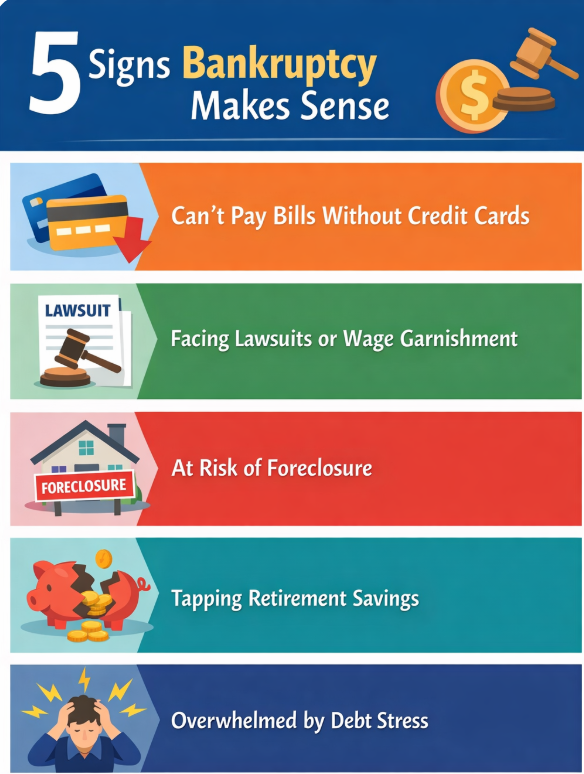
Although there is no minimum, bankruptcy is often appropriate when:
- You cannot pay your monthly bills without using credit cards
- Your debt continues to grow despite making payments
- You are behind on mortgage or car payments
- You are facing lawsuits, wage garnishment, or bank levies
- Most of your income goes toward unsecured debt
For many consumers, bankruptcy becomes a practical option once unsecured debt exceeds annual income or when minimum payments no longer reduce balances.
Does the Type of Debt Matter More Than the Amount?
Yes — the type of debt matters more than the total amount owed.
Debts Commonly Eliminated in Bankruptcy
- Credit card debt
- Medical bills
- Personal loans
- Payday loans
- Old utility bills
- Certain judgments
If most of your debt falls into these categories, bankruptcy may provide significant relief even if the total balance is relatively modest.
Debts That Require Special Analysis
- Student loans
- Child support and alimony
- Recent tax debt
- Secured debts (mortgage and auto loans)
This is why speaking with a bankruptcy attorney before filing is critical.
Chapter 7 vs. Chapter 13: Does Debt Amount Matter?
Chapter 7 Bankruptcy
There is no debt limit for Chapter 7. Eligibility is based primarily on income and the means test, not the amount of debt you owe.
Chapter 7 is often ideal for consumers with:
- High unsecured debt
- Limited disposable income
- No ability to repay creditors
Chapter 13 Bankruptcy
Chapter 13 does have debt limits, but they are very high and rarely prevent consumers from filing.
Chapter 13 is often used to:
- Stop foreclosure
- Catch up on mortgage arrears
- Reorganize tax debt
- Protect assets
Most individuals worried about debt amounts still qualify.
Can You File Bankruptcy With “Only” Credit Card Debt?
Yes. In fact, credit card debt is one of the most common reasons people file bankruptcy.
If your credit card balances:
- Keep increasing
- Carry high interest rates
- Require large minimum payments
Bankruptcy may eliminate that debt entirely and allow you to reset financially.
Signs You May Be Waiting Too Long to File
Many people delay filing because they think they “don’t owe enough yet.” Warning signs include:
- Borrowing from retirement accounts
- Taking payday loans
- Skipping necessities to pay creditors
- Ignoring collection calls
- Feeling constant financial stress
Waiting often makes the situation worse — not better.
Talk to a Bankruptcy Attorney Before Deciding
There is no universal debt threshold for bankruptcy. The right time to file depends on your income, assets, goals, and the type of debt you owe.
A bankruptcy consultation can help you:
- Understand your options
- Avoid costly mistakes
- Determine whether bankruptcy — or an alternative — makes sense
📞 Contact our office today at 855-978-6564 to schedule a confidential consultation and find out whether bankruptcy can help you regain control of your finances.