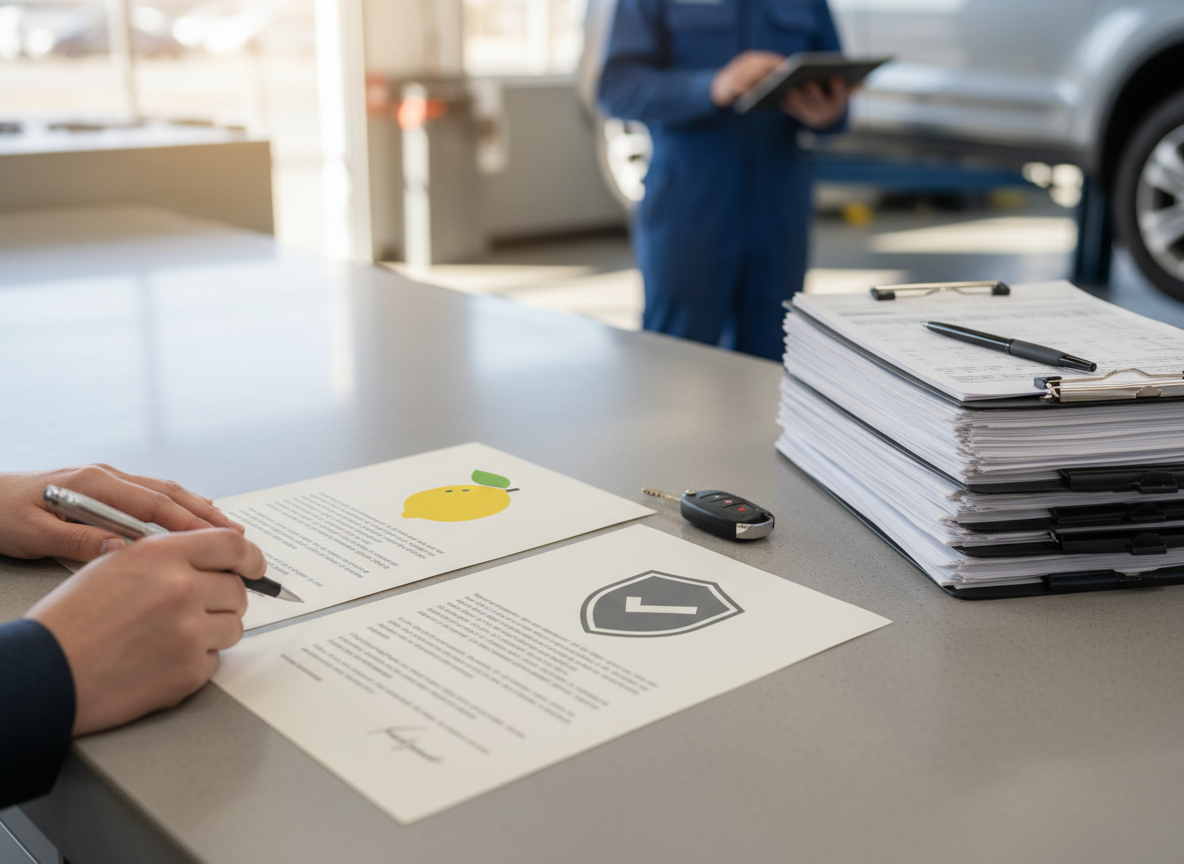
When your vehicle keeps breaking down, you don’t care what the legal label is—you just want it fixed, replaced, or bought back.
But the difference between “lemon law” and “breach of warranty” can affect your timeline, your leverage, and what you may be able to recover.
What is “lemon law” in plain English?
Lemon laws are state-specific statutes designed to protect consumers who buy or lease vehicles that have serious defects the manufacturer can’t (or won’t) fix within a reasonable number of attempts.
While the details vary by state, lemon law claims often focus on:
- A defect that substantially impairs use, value, or safety
- Multiple repair attempts for the same issue
- A certain time/mileage window
- Time out of service (in some states)
Potential remedies may include repurchase (buyback), replacement, or cash settlement depending on the facts and jurisdiction.
What is “breach of warranty”?
Warranty claims are broader. They can apply when a manufacturer or seller fails to honor written warranties (and sometimes implied warranties).
Breach of warranty claims may be used when:
- The defect doesn’t fit neatly into lemon law requirements
- The vehicle is used (and still under warranty)
- The time/mileage window for lemon law is unclear or expired
- The issue involves repeated failures to repair under warranty
Why the distinction matters
1) Different eligibility rules
Lemon law often has strict requirements. Warranty claims can sometimes provide an alternative path.
2) Different deadlines
Each claim type has its own statute of limitations and notice requirements.
3) Different remedies and leverage
Some statutes include fee-shifting provisions (meaning the manufacturer may have to pay attorney’s fees if you prevail). That can impact whether a consumer can pursue a claim without paying fees upfront.
What should you do if your car keeps going back to the shop?
Start building your “paper trail” now:
- Keep every repair order (even if “no problem found”)
- Take photos/videos of the issue
- Write down dates, symptoms, and safety concerns
- Save towing receipts and rental car invoices
- Track days out of service
What if the dealer says “that’s normal”?
Sometimes consumers are told a defect is “within spec” or “could not be duplicated.” That doesn’t automatically end your rights.
The key is documentation and persistence.
Bottom line
Lemon law and breach of warranty claims are related, but not identical. If your vehicle has repeated defects, you may have more than one legal avenue.
If you’re not sure which applies to your situation, Ginsburg Law Group can help you evaluate your repair history and next steps.