Your phone buzzes with yet another call from an unknown number. You answer, and it’s SiriusXM asking you to reactivate a subscription, again. If Sirius calls have become a regular annoyance in your life, you’re not alone. These persistent telemarketing attempts have prompted thousands of consumer complaints and even a $28 million class-action settlement.
The good news? You have options. Federal laws like the Telephone Consumer Protection Act (TCPA) give consumers real legal protections against unwanted robocalls and telemarketing. At Ginsburg Law Group, we help clients enforce those rights every day, holding companies accountable when they cross the line with aggressive calling tactics.
This guide walks you through how to stop SiriusXM calls, how to tell if a call is legitimate or a scam, and what legal recourse you may have if the calls keep coming despite your requests.
Why SiriusXM calls and what counts as spam
SiriusXM contacts customers for several reasons, from legitimate account notifications to aggressive subscription renewals. The company maintains a large telemarketing operation focused on converting free trial users into paying subscribers and reactivating lapsed accounts. While some of these calls serve valid business purposes, many cross the line into harassment that violates federal consumer protection laws.
Common reasons for SiriusXM outreach
The company typically reaches out for subscription renewals, payment issues, or promotional offers on inactive accounts. You might receive a call when your free trial ends, when a credit card on file expires, or when SiriusXM wants to offer you a discounted rate to come back. Customer service may also contact you about technical support issues or to confirm changes you requested to your account.
Legitimate business calls from SiriusXM usually involve your existing account relationship. These include payment reminders for active subscriptions, confirmation of service changes you initiated, or responses to customer service inquiries you submitted. The company has a valid reason to contact you about services you’re already using or bills you owe.
When marketing becomes illegal spam
Marketing calls become illegal when they ignore your explicit consent preferences or continue after you’ve asked to stop. The Telephone Consumer Protection Act makes it unlawful for companies to call your cell phone using an automatic dialing system or prerecorded voice without your prior express written consent. This protection applies whether you’re a current customer, former subscriber, or never signed up at all.
If you receive Sirius calls after revoking consent or telling them to stop, the company may owe you $500 to $1,500 per illegal call under federal law.
Repeated calls to the same number within a short timeframe often signal TCPA violations. The 2014 class-action lawsuit against SiriusXM alleged the company made millions of unwanted autodialed and prerecorded calls to consumers who had revoked their consent or were on the National Do Not Call Registry. Courts recognize that ignoring do-not-call requests and using prohibited calling technology constitutes illegal telemarketing, regardless of whether the calls relate to an existing business relationship.
Step 1. Confirm the call is really SiriusXM
Before you take any action on Sirius calls, you need to verify the caller is actually from SiriusXM and not a scammer impersonating the company. Fraudsters often spoof legitimate business phone numbers to trick consumers into sharing payment information or account credentials. A quick verification check protects you from identity theft while ensuring you address genuine account issues appropriately.
Official SiriusXM contact numbers
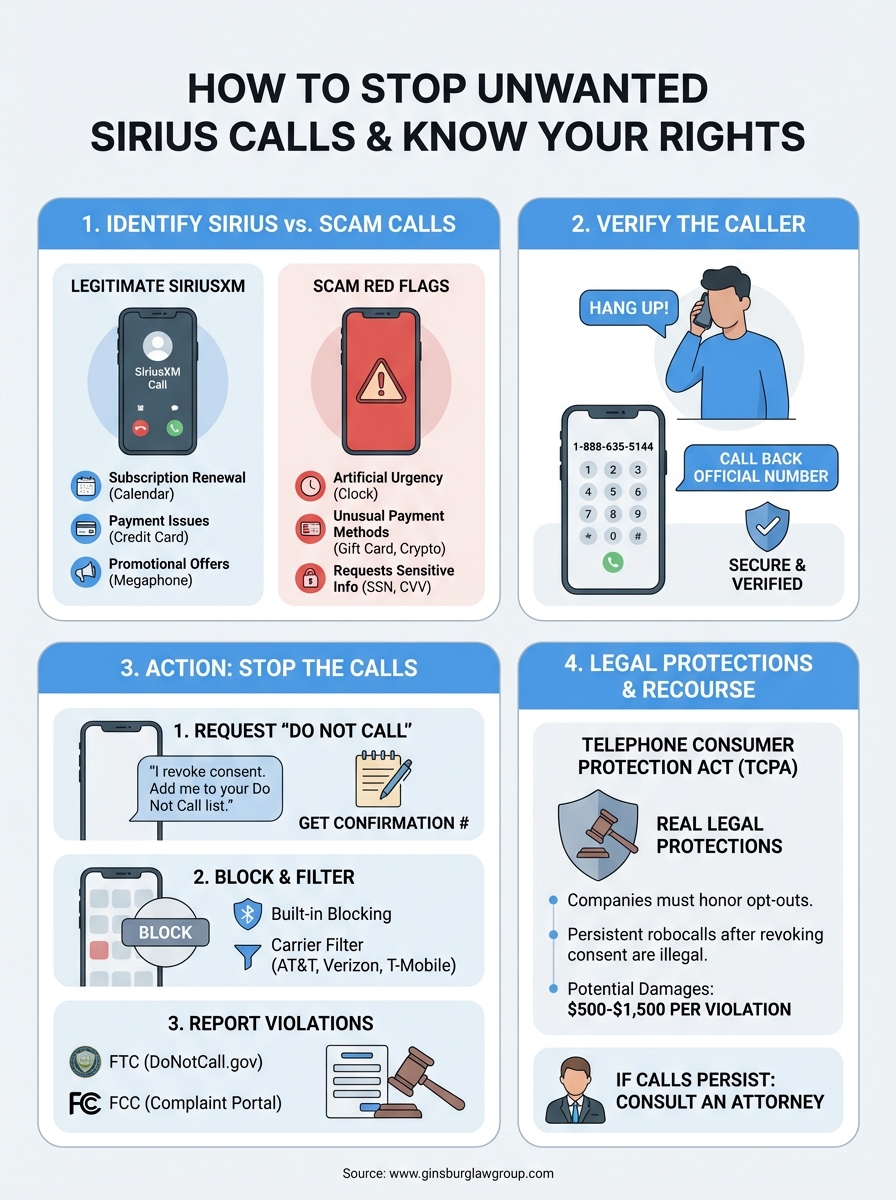
SiriusXM uses a limited set of phone numbers for outbound customer contact. The company’s official customer service line is 1-888-635-5144, and legitimate calls typically originate from numbers within this range or from 877 and 866 area codes. You can verify any incoming number by comparing it against the contact information listed on your billing statements or within your online account portal.
When you receive a call claiming to be from SiriusXM, hang up and call back using the official customer service number directly. This simple step confirms whether the outreach was genuine. Real SiriusXM representatives will have access to your account when you call back.
Red flags that signal a scam
Watch for warning signs that indicate a fraudulent call rather than legitimate contact. Scammers often create artificial urgency by claiming your account will close immediately or that you’ll lose a special offer unless you act right now. Requests for payment through wire transfers, gift cards, or cryptocurrency always indicate fraud.
If a caller asks for your full Social Security number, credit card CVV code, or banking passwords, hang up immediately. SiriusXM never requests this sensitive information over the phone.
Legitimate representatives never threaten legal action for unpaid subscriptions or ask you to download remote access software during a call.
Step 2. Get on SiriusXM’s do not call list
The most direct way to stop Sirius calls is to request removal from the company’s telemarketing lists. Federal law requires SiriusXM to maintain an internal do-not-call list and honor your opt-out requests. You can submit these requests through multiple channels, and the company must comply within 30 days of receiving your clear instruction to stop calling.
Opt out during the call
When you receive a call from SiriusXM, tell the representative directly that you want to be placed on their do-not-call list. Use clear, specific language that leaves no room for interpretation. State your request like this:
“I revoke consent for SiriusXM to call me. Add my number to your internal do-not-call list immediately.”
Ask the representative for a confirmation number or case ID documenting your request. Write down the date, time, representative’s name, and confirmation details. This documentation becomes critical evidence if the calls continue after your opt-out request.
Document every opt-out request with names, dates, and confirmation numbers. This paper trail proves you revoked consent if you later need to pursue legal action.
Submit written opt-out requests
You can also submit your do-not-call request in writing for stronger documentation. Send a clear opt-out letter to SiriusXM Customer Service, 1221 Avenue of the Americas, New York, NY 10020. Your letter should include:
- Your full name and phone number(s) you want removed
- Statement revoking consent for all telemarketing calls
- Date of the request
- Your signature
Keep a copy of your letter and send it via certified mail with return receipt requested. The mailing receipt proves SiriusXM received your opt-out demand.
Step 3. Block, filter, and report unwanted calls
Beyond opting out directly with SiriusXM, you can add layers of protection using phone blocking technology and government reporting channels. Your smartphone, carrier, and federal agencies all provide tools to stop unwanted calls from reaching you. These methods work together to reduce harassment and build evidence if you need to pursue legal action against persistent violators.
Use your phone’s built-in blocking features
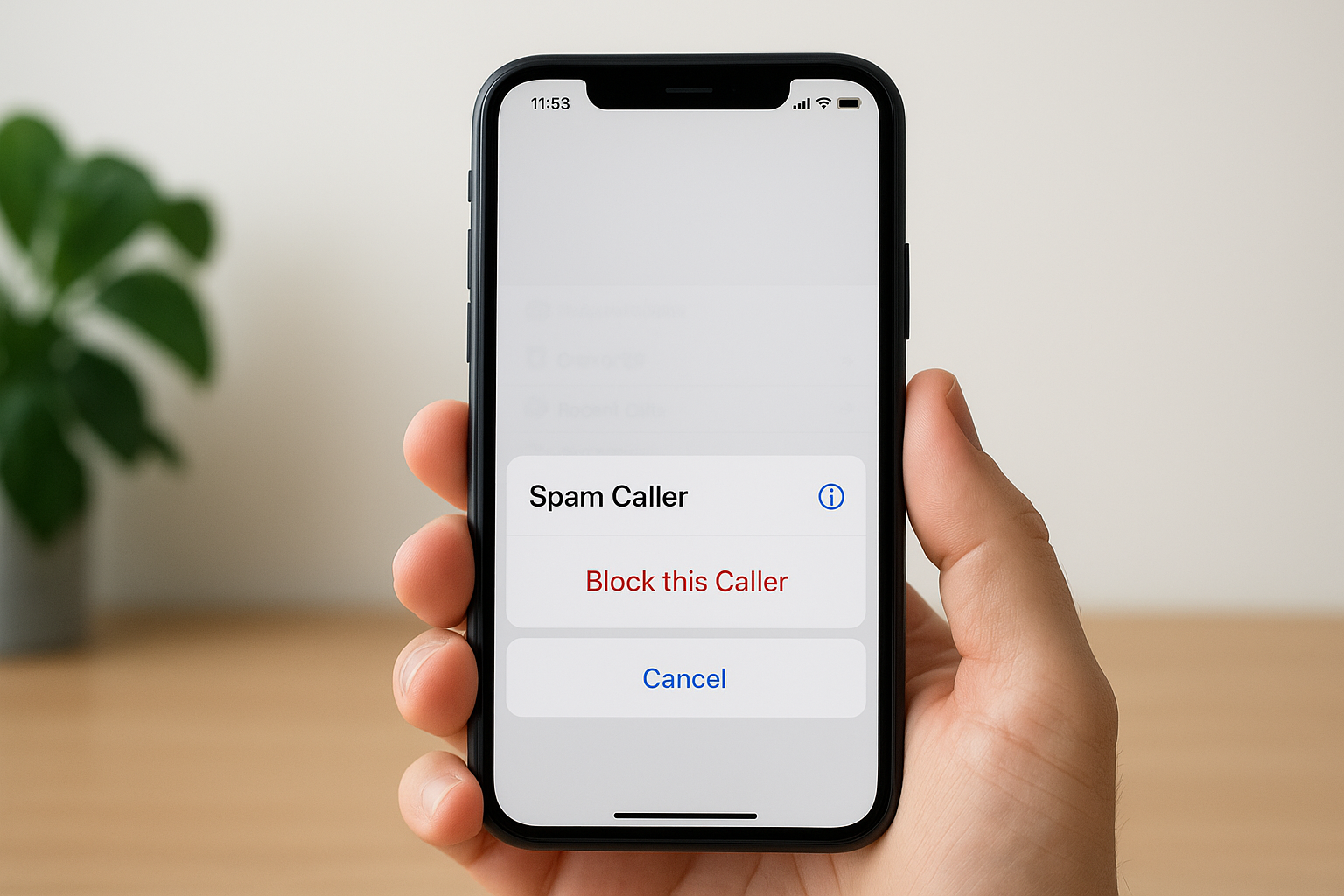
Your iPhone or Android device includes native call blocking functions that work immediately. On iPhone, tap the information icon next to the number in your recent calls list, scroll down, and select “Block this Caller.” Android users can open the Phone app, tap recent calls, select the number, and choose “Block/report spam.”
Carrier-level call filtering provides even stronger protection. AT&T’s Call Protect, Verizon’s Call Filter, and T-Mobile’s Scam Shield offer automatic spam detection and blocking at the network level before calls reach your device. These services identify known spam numbers and let you create custom block lists for sirius calls and other unwanted contacts.
Many carriers include basic call blocking free with your plan, while premium versions with enhanced filters cost around $5 per month.
Report violations to federal authorities
File complaints with the Federal Trade Commission at DoNotCall.gov when SiriusXM calls continue after you’ve opted out. Include specific details such as the date and time of each call, the phone number that appeared, and whether the call used a prerecorded message or autodialer. The FTC uses complaint data to identify companies violating telemarketing laws and can impose substantial fines.
You can also report violations to the Federal Communications Commission through their consumer complaint portal. Document each unwanted call with screenshots of your call log showing the frequency and timing of contacts. This evidence strengthens both your regulatory complaints and any potential TCPA lawsuit.
Step 4. See if you qualify for the $28M settlement
SiriusXM agreed to pay $28 million to settle a class-action lawsuit alleging the company violated the TCPA by making millions of unwanted automated calls. The settlement covered consumers who received sirius calls on their cell phones between October 2009 and April 2014 using an automatic telephone dialing system or prerecorded voice. If you received these calls during this period, you may be entitled to compensation even if you never took legal action yourself.
Settlement eligibility requirements
You qualified for the settlement if you received autodialed or prerecorded calls from SiriusXM or its agents on your cell phone between October 22, 2009, and April 23, 2014. The calls must have been made without your prior express written consent, or after you revoked that consent. You also qualified if you were on the National Do Not Call Registry and received marketing calls from SiriusXM during this timeframe.
Settlement class members received between $50 and $350 per claim, depending on the total number of valid claims submitted.
How to verify your participation
The settlement deadline has passed, and the claims process closed in early 2017. You cannot submit new claims for this particular settlement. Check your bank records or email archives from 2016 to 2017 to see if you received settlement notice letters or payments. The settlement administrator sent notices to all potential class members at their last known addresses.
Future TCPA violations by SiriusXM may result in new legal actions and settlement opportunities. Continue documenting unwanted calls with dates, times, and call frequency. This evidence becomes valuable if additional class-action lawsuits emerge or if you decide to pursue an individual TCPA claim for recent violations.
If the calls continue, get legal help
When sirius calls persist after you’ve opted out and exhausted all self-help remedies, you have legal options under the TCPA. The law allows you to collect between $500 and $1,500 for each violation, and many consumer protection attorneys handle these cases on a contingency basis, meaning you pay nothing unless you win. Courts have consistently ruled that companies cannot ignore clear opt-out requests or continue calling numbers on internal do-not-call lists.
You should consult with an attorney if SiriusXM calls you more than once after your documented opt-out request, uses prerecorded messages without your consent, or contacts you despite your registration on the National Do Not Call Registry. Document every unwanted call with screenshots, dates, times, and any voicemails left. This evidence strengthens your case and helps your attorney calculate potential damages.
Ginsburg Law Group offers free case evaluations for consumers dealing with illegal telemarketing calls. Our team has nearly two decades of experience holding corporations accounta