Summary
Estate planning is the essential process of arranging the management and distribution of assets during life and after death, serving anyone with dependents or property, regardless of wealth. Without a comprehensive plan, state laws and probate courts dictate asset division and guardianship, often leading to significant legal expenses, delays, and family conflict. Key documents include wills for naming executors and guardians, trusts to bypass probate and maintain control, and powers of attorney for critical financial and healthcare decisions during incapacity. Advanced tools like beneficiary designations on retirement accounts and life insurance must also be maintained, as these override will instructions. Successful planning involves assessing assets, identifying beneficiaries, and executing legally binding documents through professional guidance. Because life circumstances like marriage, divorce, or business ownership change over time, regular updates are necessary to ensure the plan reflects current family dynamics and protects vulnerable beneficiaries. Ultimately, proactive estate planning replaces legal uncertainty with clear instructions, preserving a legacy while providing peace of mind for loved ones during difficult transitions.
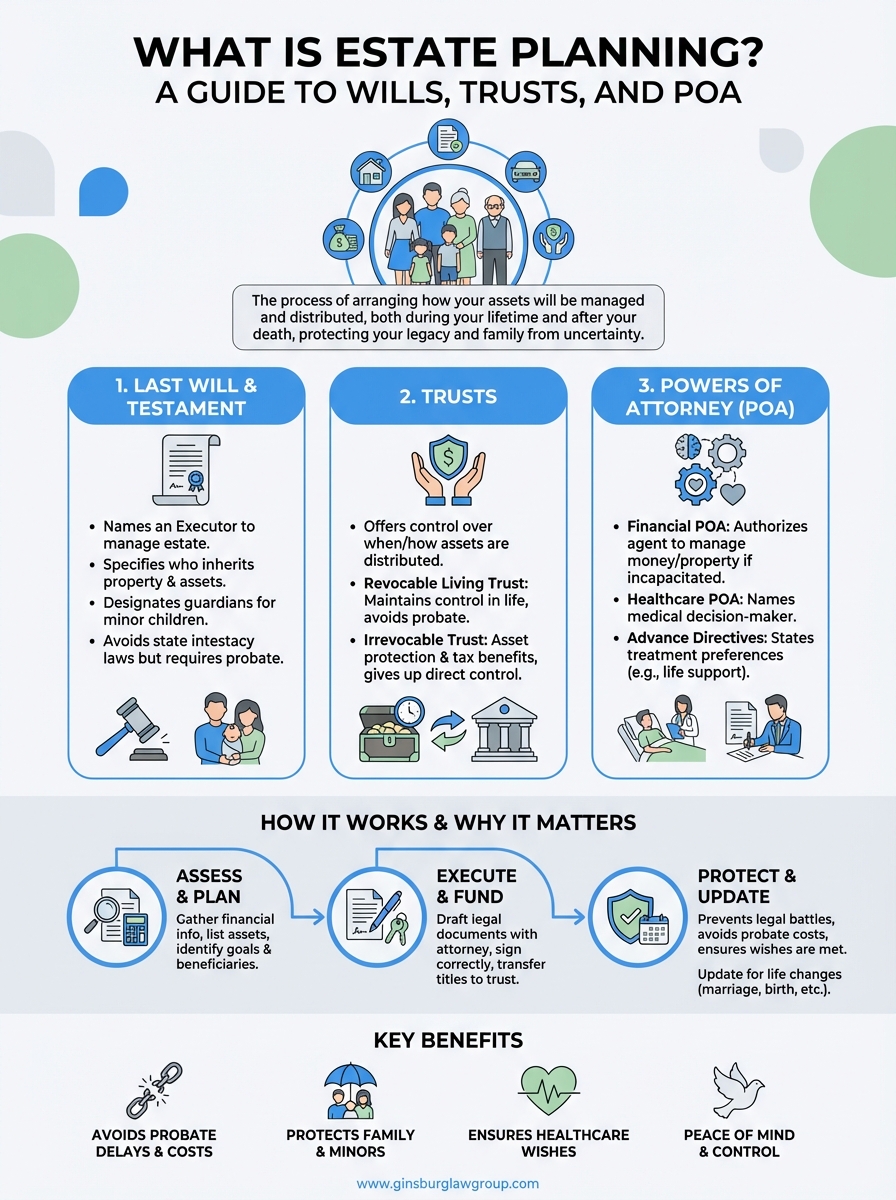
Most people assume estate planning is something only the wealthy need to worry about. The reality? Anyone with assets, dependents, or specific wishes about their medical care should have a plan in place. Understanding what is estate planning means recognizing it as the process of arranging how your assets will be managed and distributed, both during your lifetime and after your death.
Without a proper estate plan, state laws dictate what happens to your property, courts decide who cares for your children, and your family may face unnecessary legal battles and expenses. An estate plan gives you control over these decisions while you’re still able to make them. It also protects your loved ones from confusion and conflict during already difficult times.
At Ginsburg Law Group, we help individuals create comprehensive estate plans tailored to their unique circumstances and goals. This guide breaks down the essential components of estate planning, including wills, trusts, and powers of attorney, so you can make informed decisions about protecting your legacy and your family. Whether you’re just starting to think about these issues or ready to put a plan into action, understanding the basics is the first step toward peace of mind.
Why estate planning matters
The absence of an estate plan doesn’t mean the state ignores your affairs. Instead, default laws step in and make all the decisions for you. These laws follow a rigid formula that treats every situation the same, regardless of your actual wishes or family dynamics. Your children might end up with guardians you never would have chosen, your assets could go to relatives you haven’t spoken to in years, and your surviving spouse might not receive the protection they need. The question isn’t whether someone will make these decisions, it’s whether you or the government will be in control.
Protecting your family from legal uncertainty
Courts become heavily involved in your family’s life when you die without an estate plan. Probate proceedings can drag on for months or even years while judges determine who inherits what. Your loved ones spend this time stuck in legal limbo, unable to access bank accounts, sell property, or move forward with their lives. They also face the emotional burden of guessing what you wanted rather than following clear instructions you left behind.
Without a will, state intestacy laws dictate how your property gets divided. These formulas don’t account for which child needs more financial support, which friend deserves recognition for their care, or which charity matters most to you. Blended families face particularly difficult situations under default laws, as stepchildren often receive nothing while biological children from previous relationships automatically inherit. Understanding what is estate planning reveals how a simple document prevents these painful scenarios and ensures your wishes actually matter.
Estate planning transforms potential family conflicts into clear, legally binding instructions that protect relationships when emotions run high.
Avoiding unnecessary costs and delays
Probate without proper planning costs your estate thousands of dollars in court fees, attorney expenses, and administrative charges. These costs come directly out of the assets you intended for your beneficiaries. A typical probate process consumes between 3% and 7% of your total estate value, money that could have stayed with your family through proper advance planning.
The timeline adds another layer of frustration. Courts operate on their own schedule, and probate proceedings rarely conclude quickly. Your family waits six months to two years on average before receiving their inheritance. During this period, they still need to pay bills, maintain properties, and handle daily expenses, often without access to the resources you left for exactly these purposes. Strategic estate planning bypasses most of these delays by transferring assets outside the probate system.
Maintaining control over your healthcare decisions
Medical emergencies don’t wait for convenient moments. Without advance directives, your family faces impossible decisions about your care when you cannot speak for yourself. They argue among themselves about what you would want, second-guess every choice, and live with that uncertainty forever. Hospitals and doctors refuse to share information or follow family preferences when no legal authority exists to guide them.
A healthcare power of attorney names someone you trust to make medical decisions on your behalf. This person accesses your medical records, consults with doctors, and makes treatment choices aligned with your values. They can authorize surgery, refuse interventions you wouldn’t want, or ensure you receive comfort care. Advance healthcare directives spell out your preferences about life support, organ donation, and end-of-life care, removing the burden from your loved ones to guess what you wanted during their most vulnerable moments.
What estate planning includes
A complete estate plan consists of multiple coordinated documents working together to protect your assets and express your wishes. Understanding what is estate planning requires looking beyond just a will to see how each component addresses different aspects of your life and legacy. These documents range from simple beneficiary designations to complex trust structures, each serving a specific purpose in your overall strategy.

Core estate documents
Your last will and testament forms the foundation of most estate plans. This document names an executor to manage your estate, specifies who inherits your property, and designates guardians for minor children. Without a will, state intestacy laws determine everything from who raises your kids to who gets your grandmother’s jewelry. Personal property, real estate, bank accounts, and investments all pass according to your written instructions rather than a judge’s interpretation of default rules.
Trusts offer additional control over when and how beneficiaries receive assets. A revocable living trust lets you maintain control of your property during your lifetime while avoiding probate after your death. You transfer ownership of assets into the trust, manage them as trustee, and name successors to distribute everything according to your terms. Irrevocable trusts provide asset protection and tax benefits but require giving up direct control, making them useful for specific situations like protecting government benefit eligibility or reducing estate tax liability.
Powers of attorney for life decisions
Financial powers of attorney authorize someone you trust to manage your money and property if you become incapacitated. Your agent pays bills, files taxes, manages investments, and handles business transactions on your behalf. This document prevents the need for court-appointed conservatorship, which strips you of legal rights and costs your estate thousands in legal fees. You choose whether the power takes effect immediately or only upon your incapacity, depending on your comfort level and circumstances.
Healthcare powers of attorney and living wills protect your medical preferences when you cannot communicate them yourself.
Healthcare documents include both a healthcare power of attorney naming your medical decision maker and advance directives stating your treatment preferences. You specify whether you want life support, organ donation, pain management priorities, and other critical choices. These instructions guide both your agent and medical providers through difficult decisions while honoring your values and beliefs.
Additional planning tools
Beneficiary designations on retirement accounts, life insurance policies, and bank accounts transfer assets directly to named individuals outside probate. These designations override your will, so keeping them current matters as much as updating the will itself. Transfer-on-death registrations for investment accounts and vehicles serve the same purpose, creating automatic transfers that bypass court involvement entirely.
How estate planning works step by step
Creating an estate plan follows a logical sequence that builds from understanding your current situation to implementing legal protections. Most people complete this process over several weeks or months, depending on the complexity of their assets and family circumstances. You don’t need to finish everything at once, but starting the process matters more than perfecting every detail immediately.

Assess your current situation
Begin by listing everything you own and everyone who depends on you. Gather statements for bank accounts, retirement plans, investment portfolios, life insurance policies, and real estate holdings. Include business interests, valuable personal property, and digital assets like cryptocurrency or online accounts. This inventory shows you the total value of what you’re planning to protect and helps identify which planning strategies make sense for your circumstances.
Document your current legal protections or lack thereof. Review existing beneficiary designations, check whether you’ve signed any powers of attorney, and determine if you already have a will or trust. Outdated documents create as many problems as missing ones, especially if they name ex-spouses, deceased individuals, or people you no longer trust. Understanding what is estate planning becomes clearer when you see the gaps between your current situation and adequate protection.
Identify your goals and beneficiaries
Decide who receives your assets and under what conditions. You might want your children to inherit equally, or you might need to provide more support to a child with disabilities. Specific circumstances require tailored solutions, like protecting assets from a beneficiary’s creditors or preventing an inheritance from disqualifying someone from government benefits. Consider whether you want to support charities, provide for pets, or leave meaningful personal items to specific individuals.
Clear goals transform vague intentions into concrete legal instructions that protect your family and honor your values.
Name the people you trust to handle critical roles. Your executor manages your estate through probate, your trustee controls trust assets, and your agents make financial and medical decisions if you’re incapacitated. These individuals need sound judgment, availability, and willingness to serve. Backup choices protect your plan when your first choice cannot or will not act.
Execute and fund your plan
Work with an attorney to draft documents matching your goals. Sign everything with proper witnesses and notarization according to your state’s requirements. Informal documents lack legal validity regardless of how clear your intentions seem. Transfer titled assets into your trust if you created one, update beneficiary designations to align with your plan, and ensure all coordinating documents work together rather than contradicting each other.
Common mistakes and how to avoid them
Even people who understand what is estate planning often make preventable errors that undermine their entire strategy. These mistakes range from simple oversights to fundamental misunderstandings about how estate documents work. You can avoid most problems by recognizing the common pitfalls before they create legal chaos for your family.
Failing to update beneficiary designations
Your retirement accounts and life insurance policies transfer directly to named beneficiaries regardless of what your will says. This feature bypasses probate, but it also creates disasters when you forget to update designations after major life changes. Divorced spouses regularly inherit assets meant for new partners because you never filed updated forms with your account custodian.
Check every beneficiary designation annually and immediately after marriages, divorces, births, or deaths in your family. Your ex-spouse might legally claim your entire retirement account if you listed them years ago and never changed the form. Financial institutions only honor the most recent designation on file, so verbal promises or written wishes elsewhere carry zero legal weight.
Outdated beneficiary designations override even the most carefully drafted will, sending assets to people you never intended to benefit.
Using DIY documents without legal review
Online templates and form documents seem like cost-effective shortcuts until they fail when your family needs them most. These generic forms miss state-specific requirements, use outdated language, or create conflicts between different parts of your plan. You might think you’re saving money, but improper execution means your documents hold no legal authority at all.
State laws dictate precise witness requirements, notarization rules, and signing procedures that vary significantly across jurisdictions. Your unsigned trust accomplishes nothing, your improperly witnessed will gets thrown out in probate court, and your power of attorney drafted for another state might not work where you currently live. Small technical errors create the same outcome as having no plan at all.
Ignoring tax and title issues
Transferring property into a trust requires actually changing legal titles with banks, county recorders, and other institutions. You can create a perfect trust document, but if you never retitle your assets, they still pass through probate. Real estate particularly requires recorded deeds showing the trust as the new owner, a step many people skip entirely.
Consider tax implications before making major transfers or gifts. Your children might face unexpected capital gains taxes if you gift appreciated property instead of letting them inherit it with a stepped-up basis. Professional guidance prevents these costly mistakes while ensuring your generosity doesn’t create financial burdens for the people you’re trying to help.
When to update your plan and special situations
Your estate plan needs regular maintenance to stay effective. Major life changes require immediate updates to your documents, while routine reviews every three to five years catch smaller adjustments. Treating what is estate planning as a one-time task sets up your family for the same problems you tried to prevent in the first place. Your circumstances evolve, laws change, and people you trust move, die, or become unreliable.
Life events that require updates
Marriage completely changes your estate planning needs. You now have a spouse to protect, joint assets to manage, and potentially conflicting documents from before the wedding. Update your beneficiary designations, will, and powers of attorney within months of getting married to ensure your new spouse receives proper protection. Divorce requires equally urgent changes, especially removing your ex-spouse from financial accounts, healthcare decisions, and inheritance plans.
The birth or adoption of a child demands immediate attention to guardianship provisions and financial protections. You need to name guardians in your will, consider life insurance to support your children if you die, and potentially create trusts to manage assets until they reach maturity. Deaths in your family require updates when beneficiaries, executors, trustees, or agents named in your documents pass away or when you inherit significant assets that need incorporation into your plan.
Regular updates ensure your estate plan protects the family you have today, not the situation that existed when you first signed documents years ago.
Unique circumstances needing special planning
Blended families face complex challenges that standard documents don’t address adequately. You might want to provide for your current spouse while ensuring children from previous relationships still inherit family assets. Second marriages often require trusts that balance competing interests between stepchildren and biological children, preventing one group from being disinherited when the surviving spouse remarries or changes their own will.
Business owners need succession plans beyond personal estate documents. Your operating agreements should specify what happens to your ownership interest when you die, whether partners can buy out your share, and how your family receives value from the business. Professional practices and closely held companies require valuations, buy-sell agreements, and strategies to minimize tax burdens while transferring control smoothly.
Special needs beneficiaries require trusts that preserve their eligibility for government benefits while supplementing their care. Direct inheritances disqualify them from Medicaid and Supplemental Security Income, creating financial disasters despite your good intentions. Special needs trusts provide resources without jeopardizing the essential support systems these beneficiaries depend on for housing, healthcare, and daily living expenses.
Next steps for peace of mind
Starting your estate plan today protects your family from uncertainty tomorrow. You’ve learned what is estate planning encompasses and why each component matters for your unique situation. Taking action now prevents your loved ones from facing legal battles, unnecessary expenses, and difficult decisions during already painful times.
Begin by gathering your financial documents and identifying the people you trust most. Professional guidance ensures your plan meets legal requirements and addresses all your specific needs, from protecting minor children to managing complex assets. You don’t need perfect clarity on every detail to start the process.
At Ginsburg Law Group, we help individuals create comprehensive estate plans tailored to their goals and circumstances. Schedule your free consultation to discuss your situation and discover which planning strategies make sense for your family. Peace of mind comes from knowing you’ve protected the people and causes that matter most to you.